


Engraved Crystal Wine Glasses
These engraved crystal wine glasses bring drinking vessels from Georgian and Victorian centuries directly to the modern table.
Engraved Crystal Wine Glasses
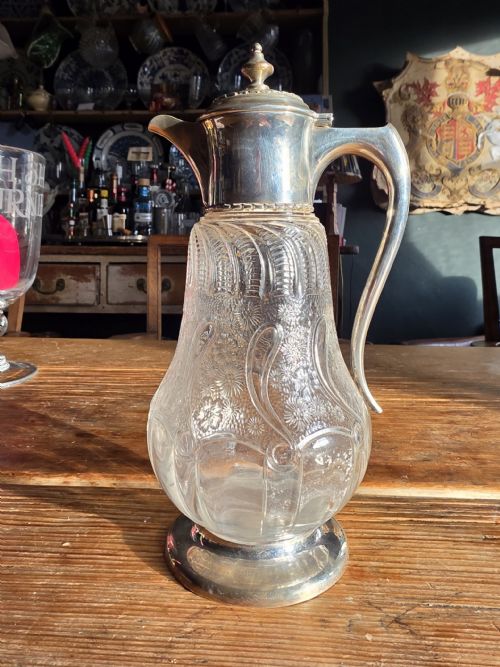
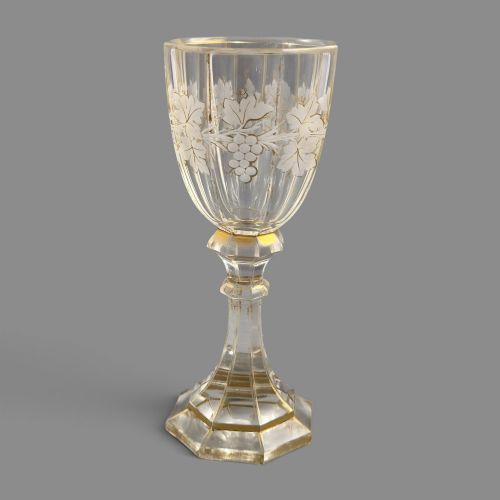
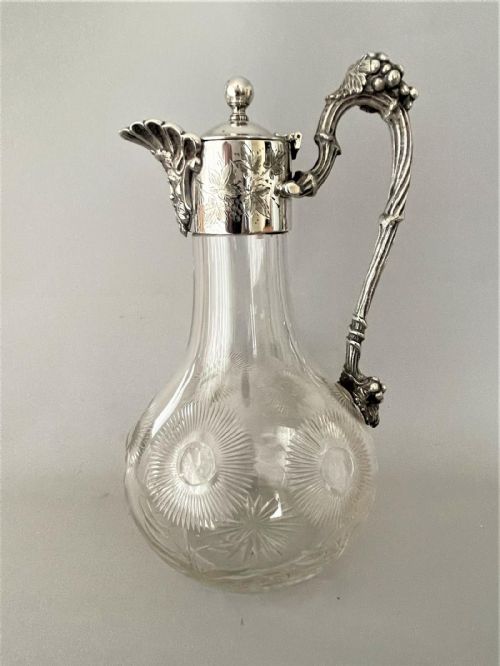
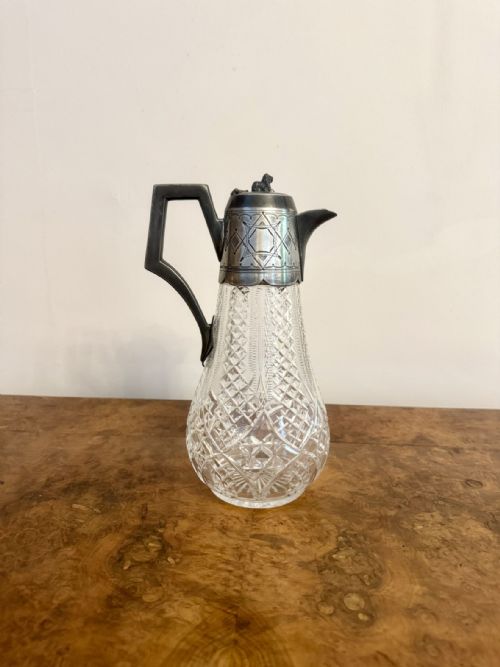
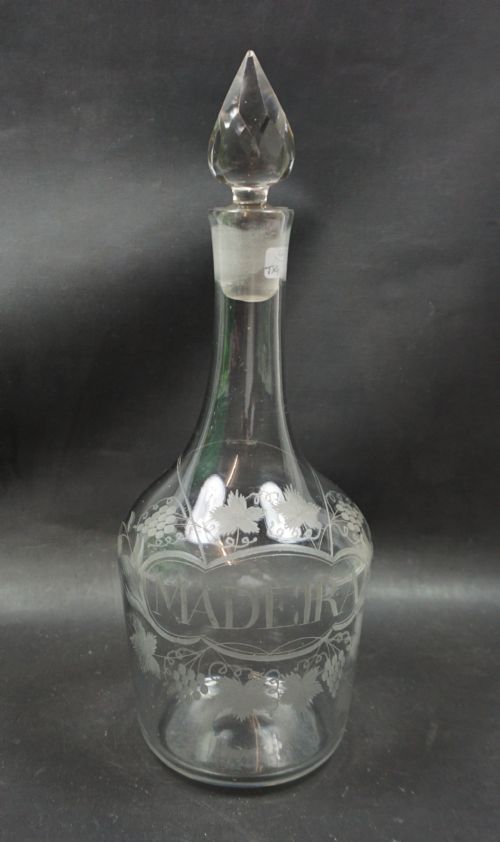
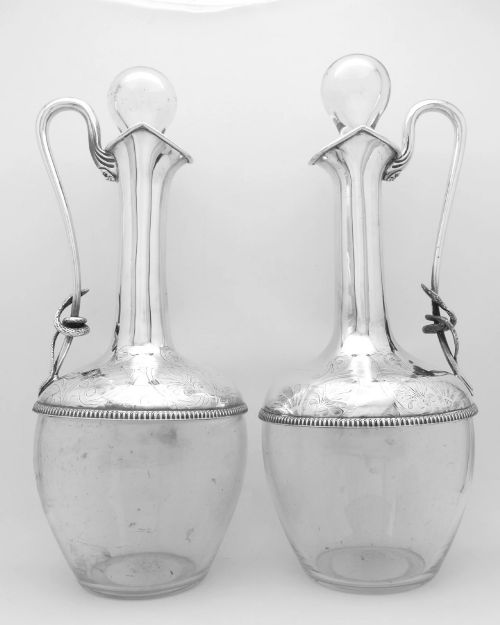
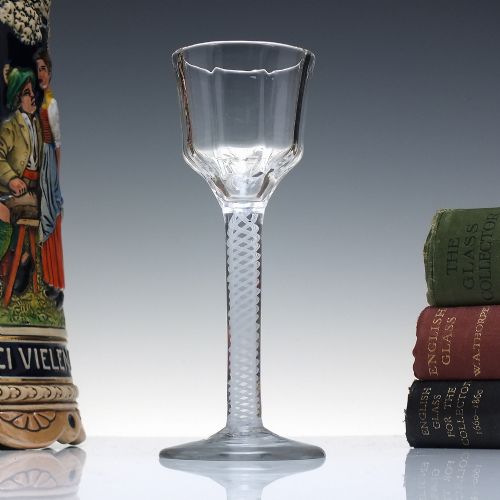
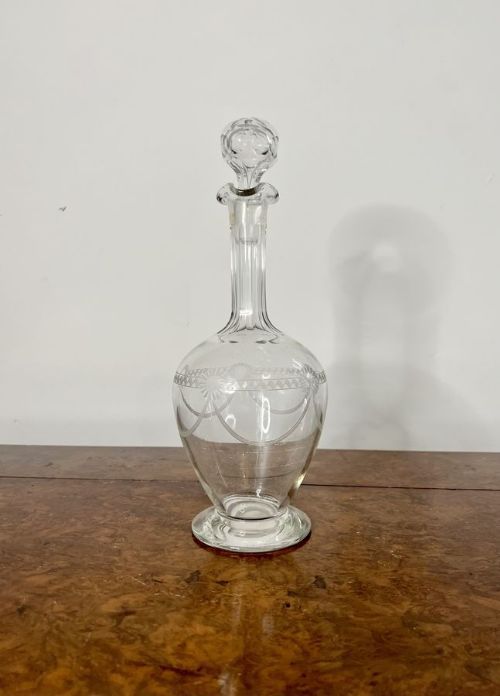
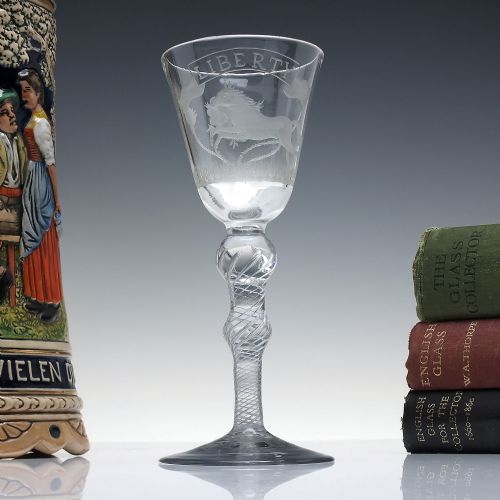
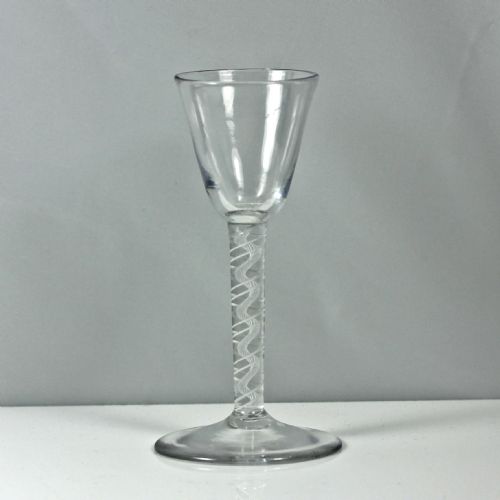
When you search for engraved crystal wine glasses, you are looking at drinking vessels and stemware spanning the Georgian and Victorian periods, alongside Edwardian examples. These pieces range from plain stem goblets and opaque twist wine glasses to elaborately cut decanters, claret jugs, and amber Roemers.
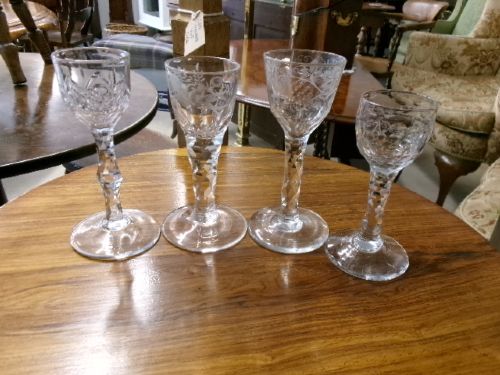
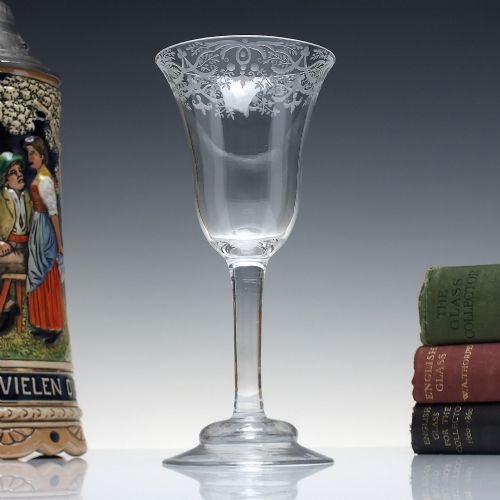
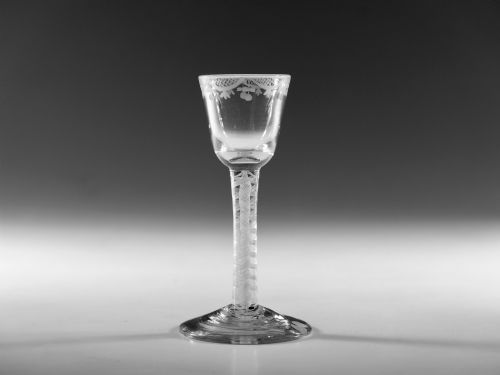
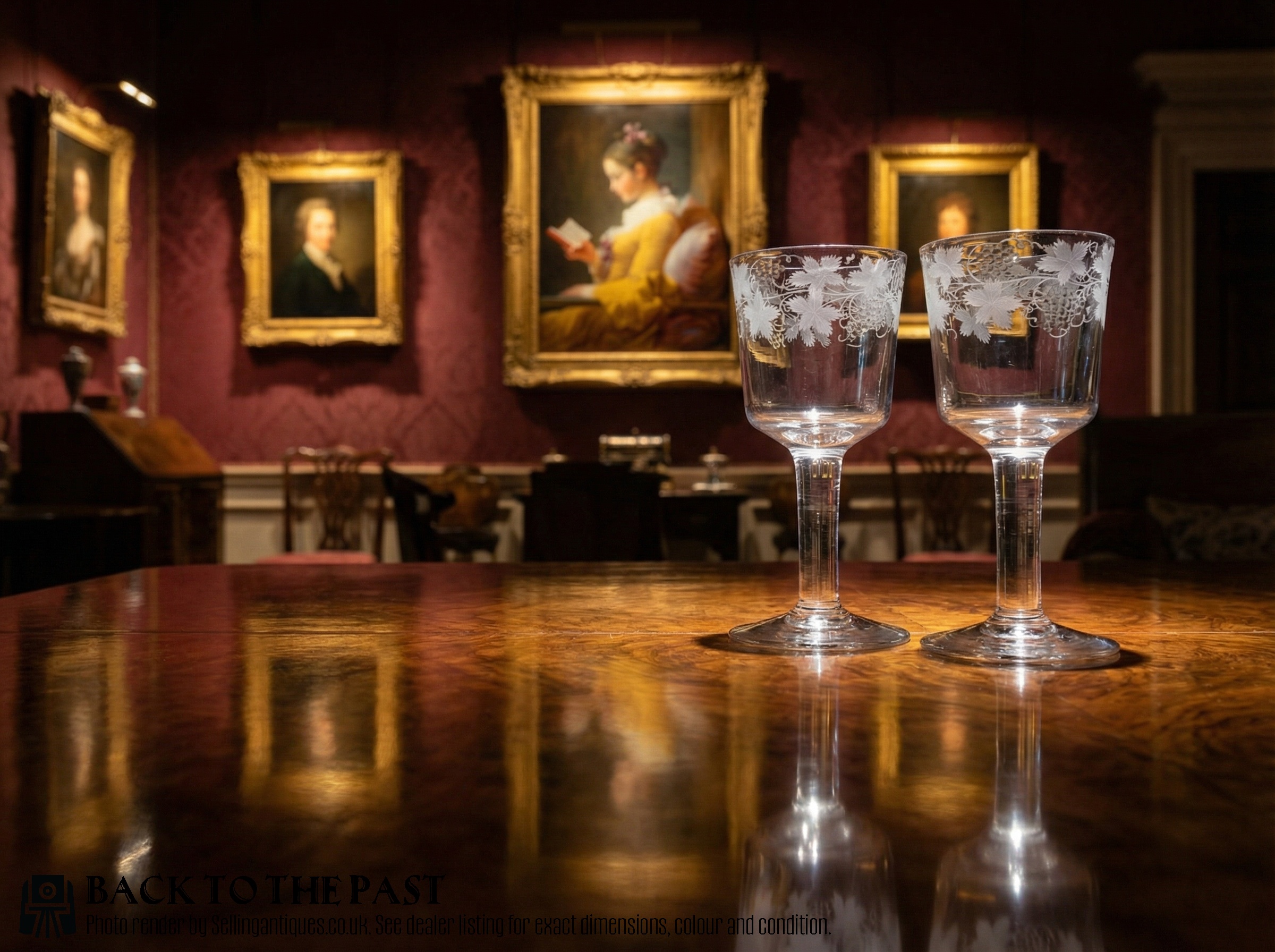
The most common form you will meet on this page is the 18th-century English wine glass featuring wheel-engraved bowls, often displaying Jacobite motifs, fruiting vines, or commemorative c1760 designs. Alongside these sit later Victorian services and Bohemian coloured crystal goblets.
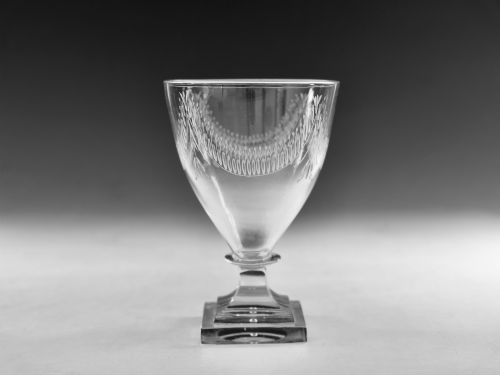
The selection includes drinking glasses with facet stems, ogee bowls, and square lemon squeezer feet, reflecting the domestic and celebratory drinking habits of past centuries. Each piece preserves the hand-finished wheel cutting and surface decoration characteristic of its workshop origin.
Materials and Working Methods
These items are shaped from lead glass, clear glass, and lead crystal, sometimes paired with silver plate or solid silver mounts. Workshops utilised lead flux to increase the weight and brilliance of the material, allowing craftsmen to cut deep facets and delicate surface details.
Decoration was achieved through wheel engraving, where artisans held the glass against small rotating copper or stone wheels fed with an abrasive slurry. This technique produced intaglio designs, floral sprays, and armorial crests with distinct matte and polished textures.
Secret political toasts hid inside floral stems when polite society drank to kings across the water.
Distinctions in Quality
The distinction between standard domestic glassware and superior examples rests on the crispness of the wheel engraving and the optical clarity of the lead crystal. Master workshops achieved finer linework, deeper relief on intaglio motifs, and better proportioned stems without distracting internal bubbles.
Weight and balance also set pieces apart, as denser lead crystal components provide a more substantial feel in the hand. Furthermore, the precision of facet cutting on stems and bases marks the difference between hurried commercial output and careful studio production.
Asprey and Co. Ltd·Moser·Webb Corbett
The Engraved Crystal Wine Glasses Glossary
- Lead Crystal
- Glass containing a high percentage of lead oxide, which increases the weight, refractive index, and resonance of the material. This composition allows for sharper wheel engraving and deeper brilliance.
- Jacobite Glass
- Drinking vessels bearing covert political symbols, such as roses, oak leaves, or the Fiat motto, used by secret societies supporting the exiled Stuart dynasty during the eighteenth century.
- Air Twist
- A stem style created by drawing elongated air bubbles inside the molten glass and twisting the stem during formation. This produces internal spiral threads of air within the glass body.
- Ogee Bowl
- A drinking vessel profile featuring an 'S'-shaped curve, starting concave near the lip and convex towards the base. This form was widely utilised in eighteenth-century English wine glasses.
- Roemer
- A traditional Germanic or Bohemian goblet style with a wide, ribbed base and a spherical or conical bowl, frequently rendered in green, amber, or red overlay crystal.
- Intaglio
- A decorative technique where the design is carved into the surface of the crystal rather than left in relief. The resulting recessed patterns catch the light from within the glass wall.
Engraved Crystal Wine Glasses: Frequently Asked Questions
How do I identify an 18th-century wine glass?
Eighteenth-century wine glasses typically feature specific stem formations such as air twists, opaque twists, or plain stems paired with folded feet and hand-blown bowls.
Examination under magnification often reveals the slight irregularities of hand-tooling and the characteristic wear patterns on the underside of the base.
Can I use antique wine glasses for dining?
Many buyers successfully incorporate these historic drinking glasses into contemporary dining settings, provided they receive careful handling and hand washing.
Thermal shock and modern dishwashers must be avoided to protect the fragile lead crystal and historic wheel-engraved surfaces from damage.
What is a Jacobite engraving?
Jacobite engravings are symbolic motifs including specific rose sprays, butterflies, and Latin mottos applied to mid-eighteenth-century glasses to toast the exiled Stuart king.
These covert political symbols distinguished supporters of the Jacobite cause during gatherings where direct loyalty toasts remained dangerous.
Why do some glasses have square feet?
Square lemon squeezer feet appeared on rummers and wine glasses around eighteen hundred, pressed into moulds to provide stable bases for heavy drinking vessels.
This distinct architectural foot shape prevents tipping while adding a geometric contrast to the rounded bowls above.