



Engraved Crystal Claret Jug
An engraved crystal claret jug brings Victorian dining tables to life, combining deep wheel-cut glass with gleaming silver mounts for serving wine.
Engraved Crystal Claret Jug
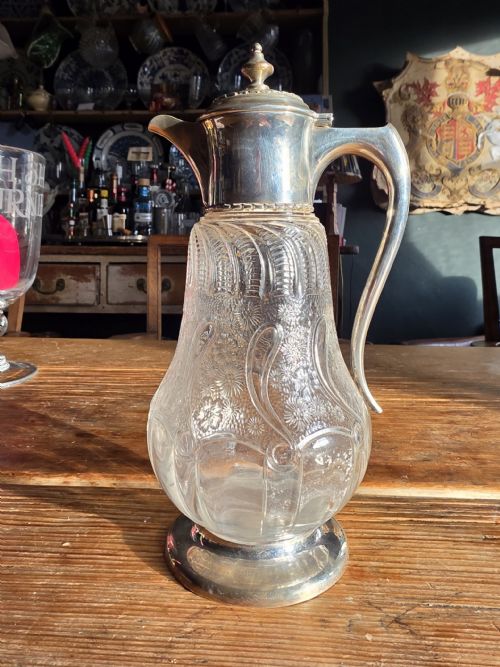
An engraved crystal claret jug is a serving vessel designed for the dining table, most frequently encountered in Victorian and Edwardian forms from the nineteenth and early twentieth centuries. These pieces combine substantial glass bodies with metal mounts, serving as both practical tableware and decorative objects.
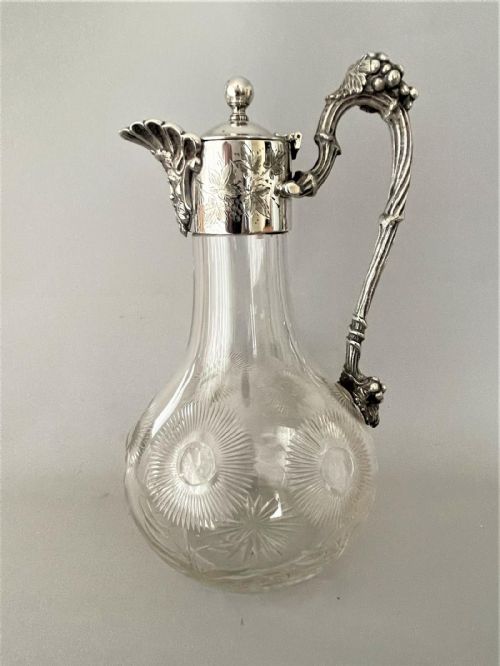
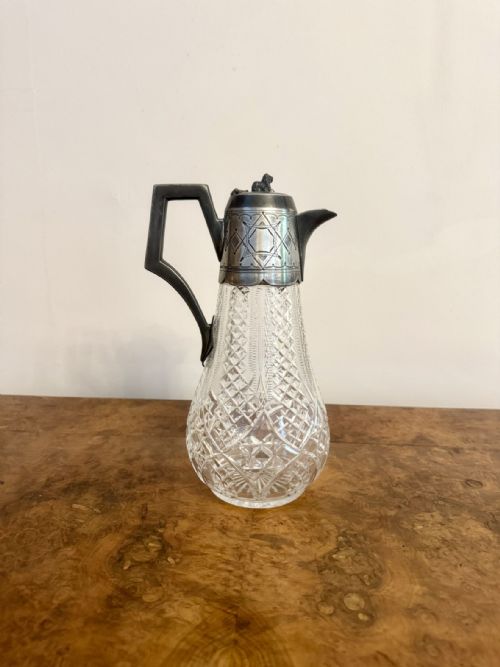
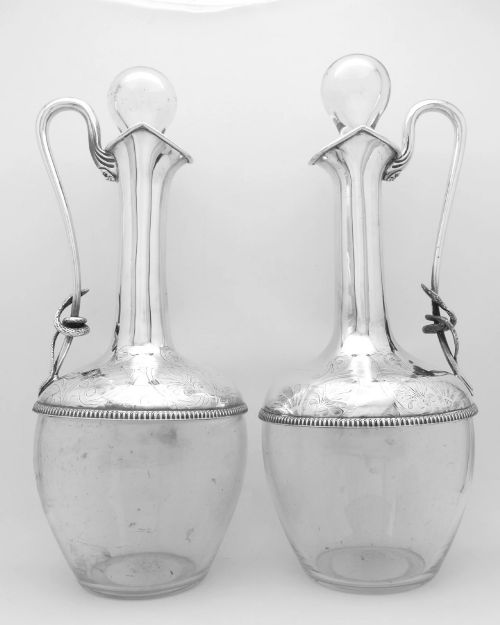
The selection ranges from robust silver-plated mounts paired with cut glass to solid sterling silver mountings fitted to heavy lead crystal. Makers utilised varied forms including ewers, pitchers, and traditional decanters, often decorated with elaborate wheel-engraving showing fruiting vines, dolphins, or heraldic motifs.
Materials and technique
The construction relies on heavy lead crystal or glass blown and shaped into substantial jugs, then finished with deep cut glass geometric patterns or hand-etched surface details. Glasscutters used wheels of varying sizes to carve motifs directly into the material, creating contrast between clear polished surfaces and frosted engraved sections.
Mounts were cast and worked in sterling silver or silver plate, then fitted securely around the neck and lip of the glass vessel. Handles often incorporate sculptural elements such as serpent forms, bacchus masks, or classical scrollwork, attached firmly to the metal collars.
Some Victorian jugs feature mischievous Bacchus masks peering from the handle base, keeping a watchful eye on the claret supply.
Standards of execution
Quality rests primarily on the depth and crispness of the glass engraving, where superior pieces exhibit precise control and fine detail rather than shallow surface scratching. The weight and clarity of the crystal vessel itself also determine the overall standard, alongside the thickness and purity of the metal used for the mounts.
The integration between the glass body and the metal collar reveals the maker's competence, with better examples showing secure, well-fitted mounts and balanced handles. The sophistication of the handle design, whether cast into a serpent or a classical mask, elevates the piece beyond standard utilitarian ware.
William Comyns·Asprey and Co. Ltd·Richardsons·William Hutton
The Engraved Crystal Claret Jug Glossary
- Claret jug
- A specialised pouring vessel created for serving red wine at the formal dining table. These pieces usually feature a hinged lid and a substantial handle.
- Lead crystal
- A high-clarity glass containing metal oxide that increases weight, brilliance, and the refractive index. This material responds well to deep wheel-cutting and engraving.
- Silver plate
- A layer of silver fused or electroplated onto a base metal core such as copper or britannia metal. It allowed makers to produce ornate mounts at a lower cost than solid silver.
- Wheel engraving
- A technique where a rotating abrasive wheel cuts intricate designs into the glass surface. This method creates varied textures and deep relief patterns.
Engraved Crystal Claret Jug: Frequently Asked Questions
How do I date an engraved crystal claret jug?
Dating relies on combining the style of the glass engraving with any hallmarks stamped onto the silver mounts. Victorian examples often display registration marks or specific metal stamps that narrow the production window.
Changes in mount design and glass weight also help distinguish mid-nineteenth-century pieces from later Edwardian or twentieth-century interpretations.
Were these jugs used exclusively for claret?
While intended primarily for claret and other red wines during formal meals, they served various table functions. Some accommodated white wine, champagne, or dessert wines.
The interchangeable nature of serving vessels meant households adapted them to whatever beverage suited the occasion.
How should I clean and display a glass claret jug?
Cleaning requires warm water and mild detergent, avoiding harsh abrasives that might scratch the crystal or damage silver plating. Hand washing prevents thermal shock and protects delicate engraved surfaces.
Displaying them in cabinet lighting highlights the deep cuts and allows the crystal to refract light effectively.
What is the difference between cut glass and crystal?
Lead crystal contains additives that increase density, sonority, and light dispersion compared to standard glass. This weight and clarity make crystal more suitable for deep wheel-cutting.
Cut glass encompasses a broader category of vessels finished with geometric facets carved into the material.