



English Yew Chair
An English yew chair offers the deep grain and warm lustre of native timber shaped into traditional vernacular seating.
English Yew Chair
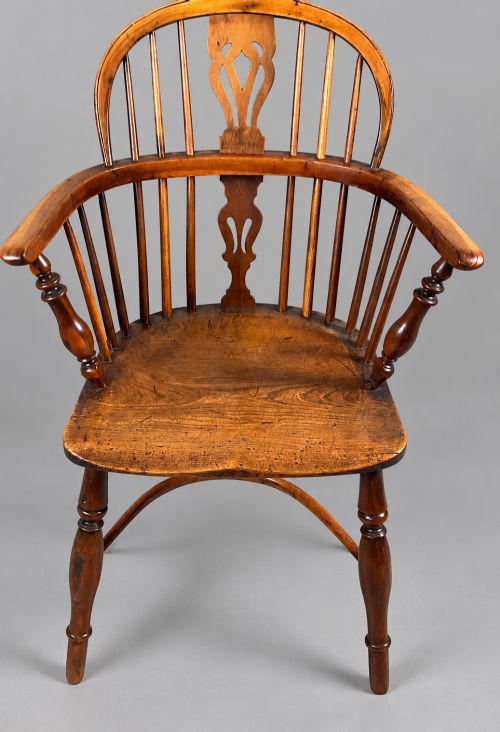
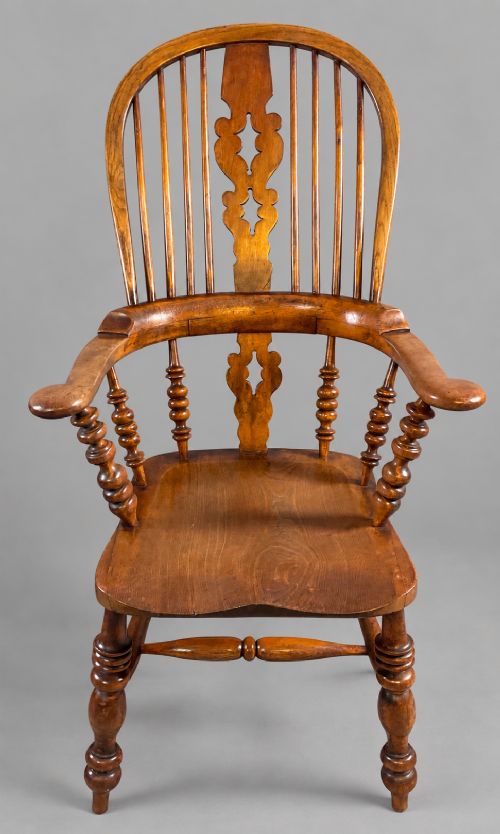
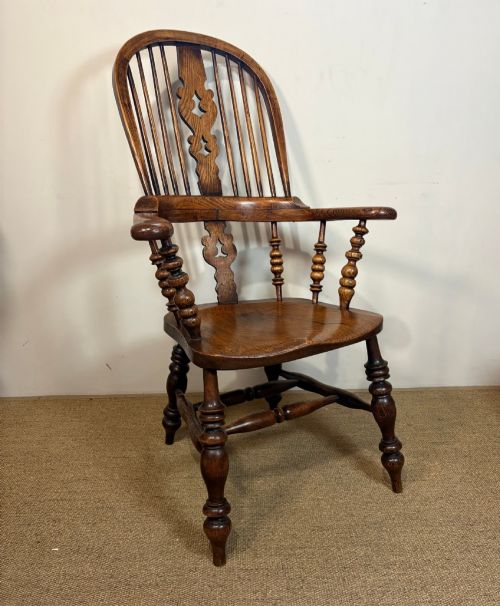
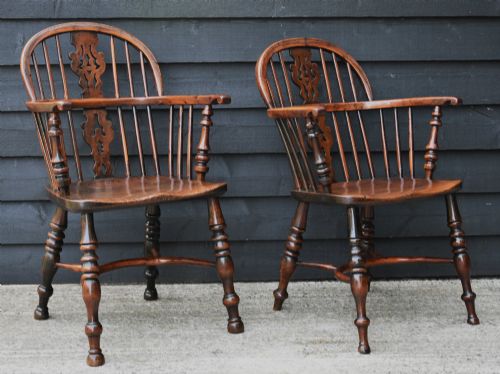
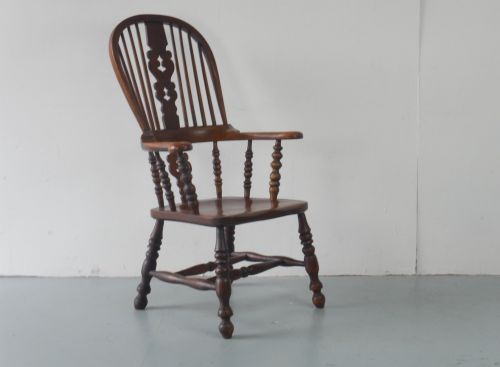
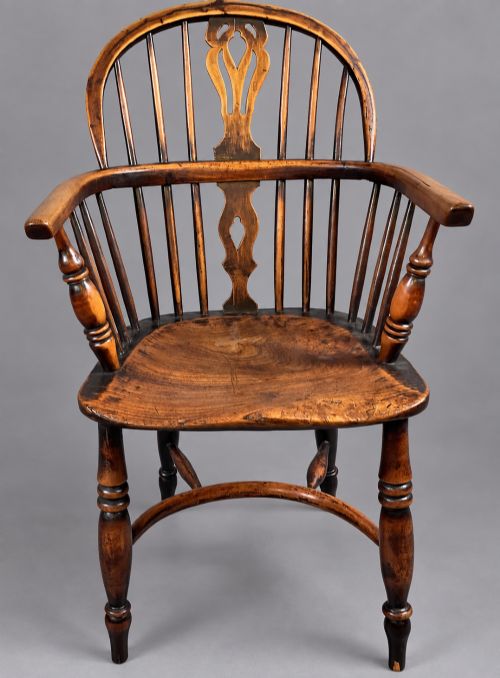
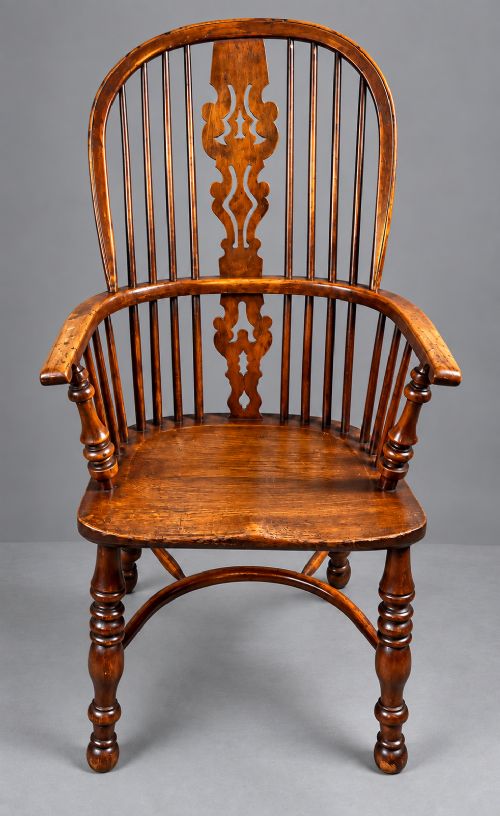
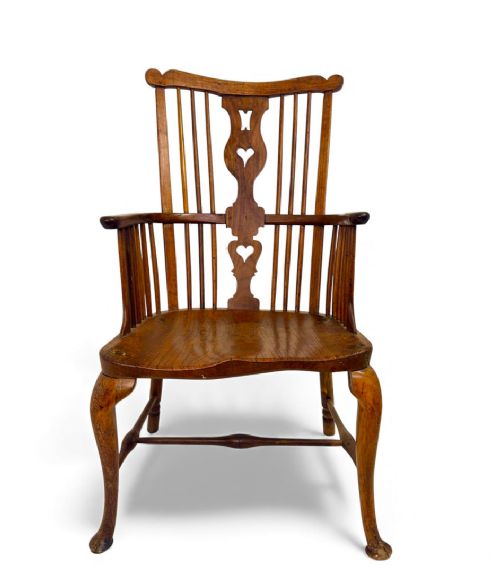
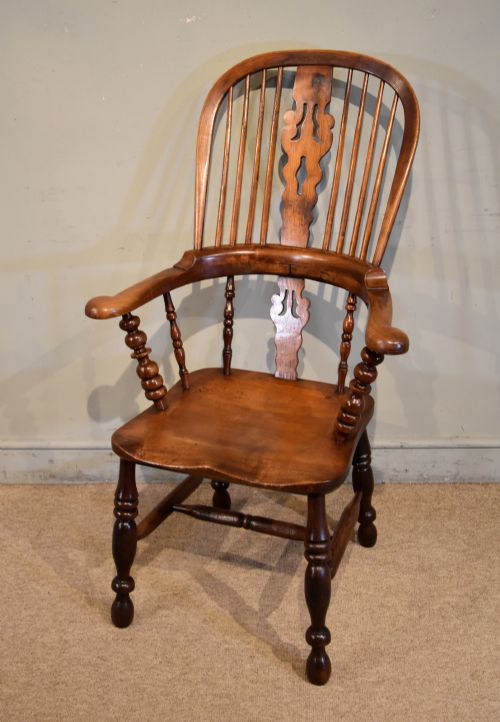
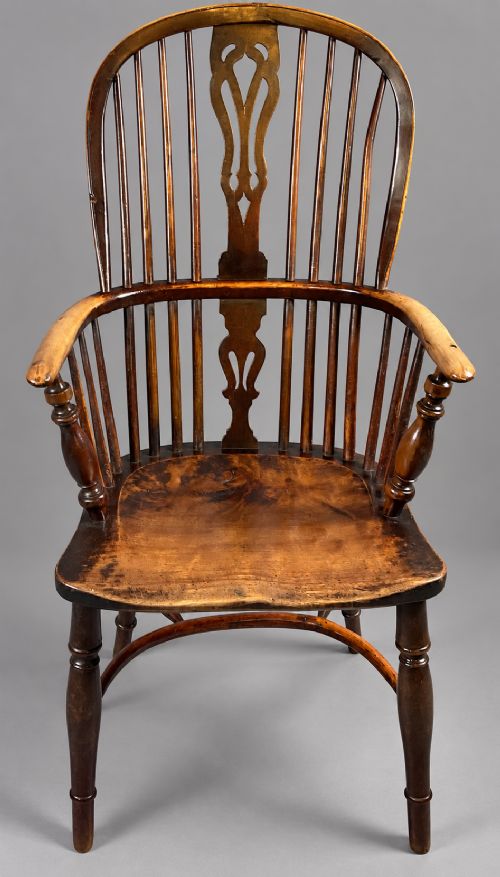
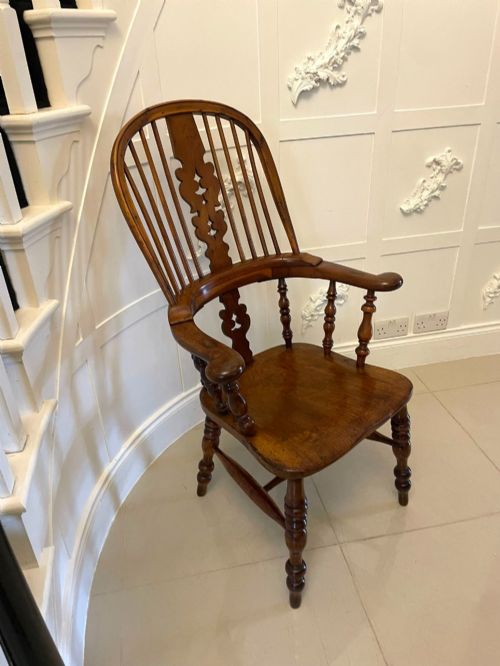
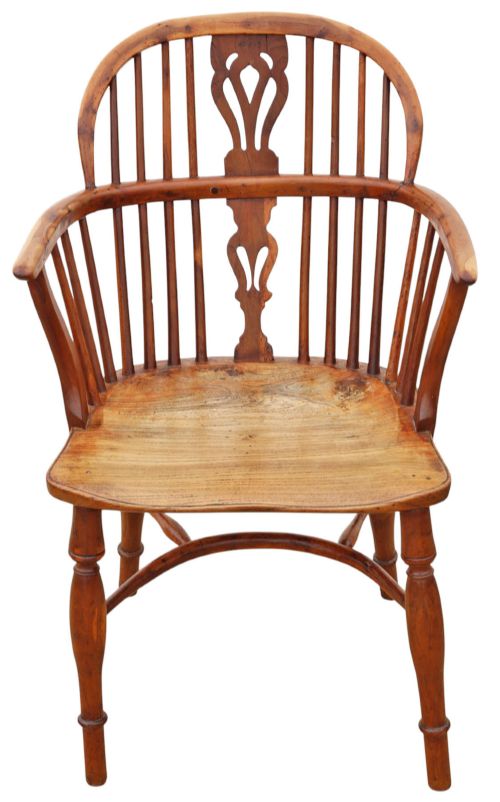
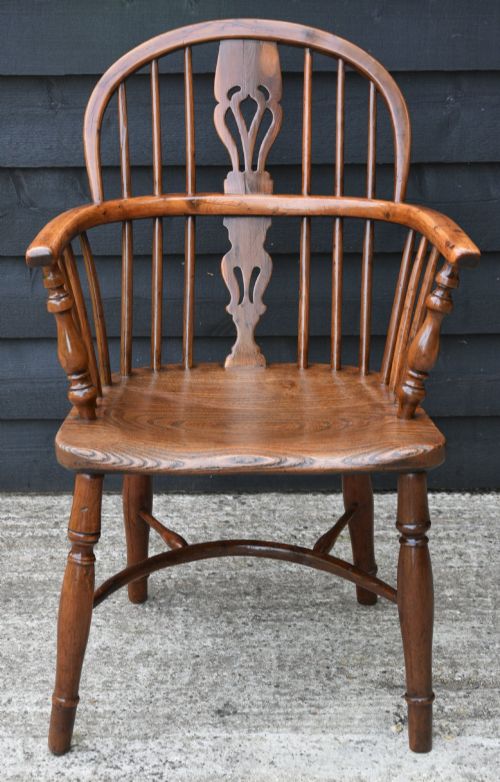
An English yew chair belongs to the lineage of regional vernacular seating, predominantly taking the form of Windsor armchairs with high backs, low backs, comb backs, and hoop backs. These pieces emerge from periods spanning the eighteenth and nineteenth centuries, including Georgian and Victorian eras.
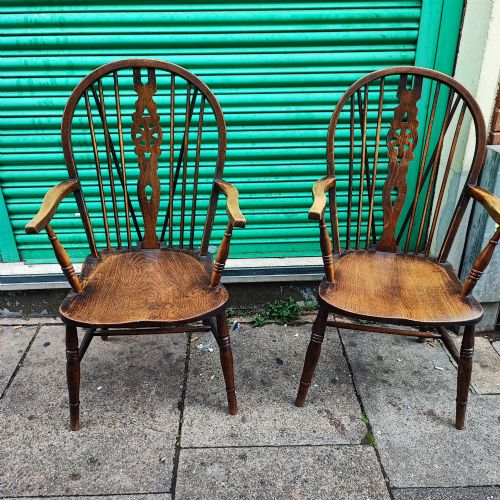
Buyers encounter regional expressions such as Thames Valley forms alongside broad arm varieties and matched sets. The majority of these survivors combine yew wood with elm seats, often displaying characteristic wheel-backs or splats.
Makers construct these armchairs for practical domestic and farmhouse use, resulting in sturdy elbow-chairs equipped with crinoline stretchers and cabriole legs. The resulting seating balances rustic utility with distinctive timber figure.
How they were made
Craftsmen construct these seats by combining multiple native timbers within a single frame, pairing yew wood backs and arms with solid elm seats. Additional components incorporate ash, beech, and oak for structural stretchers and spindles.
Makers shape the timber using traditional turning and steam-bending techniques to form curved hoops, comb backs, and slender spindles. Carpenters then saddle the elm seats to create ergonomic contours before wedging the legs and uprights directly into the plank.
English Yew Chair Retail Price Guide 2026
Typical asking prices for english yew chair among the pieces listed under this phrase on Sellingantiques today, from the lower quarter to the upper quarter. They describe what is for sale here now, not the wider market.
Materials span yew, elm, ash, beech, and oak, frequently paired within a single Windsor armchair construction.
What varies in quality
Quality rests in the visual richness of the yew grain and the harmonious integration of mixed woods within the frame. Superior examples display distinct burr figuring in the wood and well-proportioned Windsor hoops that retain their original structural integrity.
The distinction between standard village production and finer workshop output lies in the crispness of the turning on arm supports and stretchers. Maker identification, through stamps or known regional characteristics, further separates workshop pieces from anonymous vernacular work.
Gabbitass of Worksop·J Spencer·John Brand of Sleaford
The English Yew Chair Glossary
- Windsor chair
- A wooden chair constructed with a solid carved seat into which the legs and back spindles are separately inserted. This design creates a sturdy seating form typical of English country production.
- Yew wood
- A durable native timber prized for its dense growth rings, contrasting pale sapwood, and rich amber heartwood. It provides the decorative upper framework for many traditional armchairs.
- Crinoline stretcher
- A curved hoop of wood connecting the legs beneath a chair to provide additional structural bracing. It often takes a horseshoe or bowed form.
- Comb back
- A Windsor chair back design where upright spindles rise through a horizontal crest rail resembling the teeth of a comb. This style originates in the eighteenth century.
- Broad arm
- A Windsor armchair featuring an expanded flat wooden armrest designed for writing or comfort. These generous rests are typical of nineteenth-century Thames Valley seating.
English Yew Chair: Frequently Asked Questions
What is an English yew chair?
An English yew chair is a traditional wooden seat, usually formed as a Windsor armchair, built from native timber during the eighteenth or nineteenth century. These pieces combine a shaped elm seat with a yew wood upper frame.
Craftsmen produced them across rural workshops and regional centres for everyday domestic use, resulting in sturdy construction and distinct local styles.
How do I identify a Windsor chair?
A Windsor chair is characterised by its heavy solid wooden seat, which serves as the central anchor for the legs below and the back spindles above. This distinct method separates them from framed upholstery chairs.
Most examples feature turned components, bowed hoops, and native woods such as yew, elm, and ash.
Where were these chairs made?
These chairs originated in rural English workshops, with specific regional variations emerging from areas like the Thames Valley. Local cabinet makers and turners utilised readily available native timber from surrounding woodlands.
Production spanned small country shops as well as larger regional makers who stamped their work.
How should I live with an antique Windsor chair?
Living with these chairs involves placing them away from direct heat sources and sudden temperature shifts to protect the timber and joints. Regular gentle dusting preserves the natural lustre of the yew and elm surface.
Their robust construction makes them suitable for daily use around a dining table or as a standalone armchair in a study.