


English Walnut Sideboard
An English walnut sideboard brings warmth and grain to a dining room, offering deep storage built from centuries of timber tradition.
English Walnut Sideboard
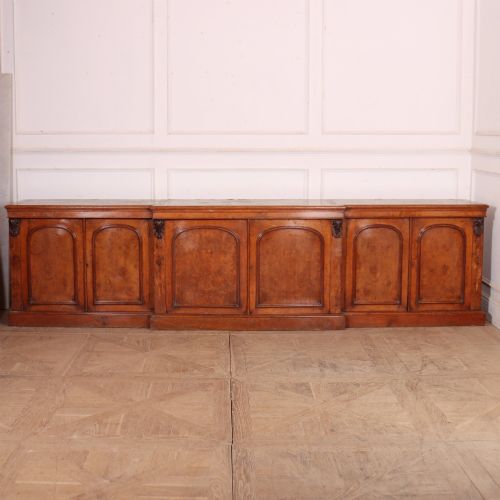
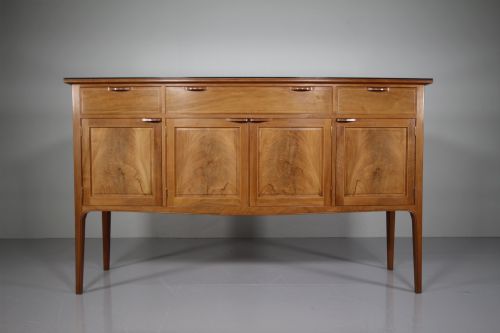
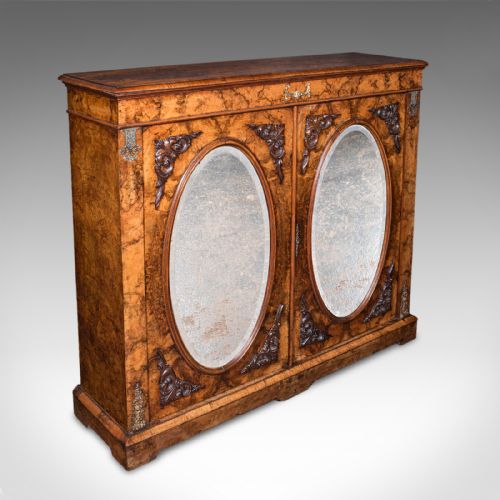
The pieces on this page span diverse forms, including credenzas, breakfront cabinets, cocktail cabinets, and traditional servers alongside console tables.
Victorian and Edwardian iterations sit alongside sleek Art Deco designs by makers such as Epstein, showing how the form evolved from formal dining rooms to modern entertaining.
Materials and Construction
Cabinetmakers utilised solid walnut and figured burr walnut veneers, laid over secondary woods to display striking grain patterns across large surfaces.
Decoration often involved intricate boxwood inlay, Tunbridgeware inlay, or marquetry, while structural highlights utilised brass, ormolu, and glass panels.
Marble tops also appear on mid-nineteenth-century examples, providing a durable and cool surface for serving food and drink.
One unexpected survivor in the record is a large billiard score cabinet, proving walnut found a home by the snooker table too.
Assessing Quality
Quality rests upon the selection of the timber veneers, where symmetrical burr walnut or figured grain patterns demonstrate the maker's eye.
The crispness of inlay work, the weight of brass or ormolu mounts, and the smoothness of drawer operation distinguish superior workshops from standard production.
Structural integrity through solid framing and well-fitted doors ensures that historical pieces maintain their utility alongside their decorative presence.
Edward Barnsley·Epstein·Thurston·Liberty
The English Walnut Sideboard Glossary
- Burr Walnut
- A specialised veneer taken from the wart-like growth on a walnut tree, producing a swirling, highly decorative grain pattern.
- Credenza
- A low cabinet, frequently featuring glass doors or curved ends, used originally for serving and displaying plate.
- Tunbridgeware
- A form of intricate mosaic woodwork using tiny blocks of naturally coloured wood to create geometric or pictorial scenes.
- Breakfront
- A cabinet design where the central section projects forward from the flanking flanking wings, adding architectural depth.
English Walnut Sideboard: Frequently Asked Questions
What is an English walnut sideboard used for?
These pieces serve primarily for dining room storage, holding cutlery, linen, and glassware behind timber or glass doors.
Many examples also function as serving surfaces or display cabinets for silver and ceramics.
How do I identify a Regency period piece?
Regency pieces often display classical architectural motifs, clean lines, and restrained brass inlays rather than heavy carving.
Proportions remain balanced, frequently incorporating brass grille doors or mirror fronts.
How do I care for walnut furniture?
Keep walnut furniture away from direct sunlight and strong heat sources to prevent the burr veneer from drying out or cracking.
Regular dusting with a soft cloth and occasional application of appropriate wax maintains the lustre of the timber.
What distinguishes Art Deco sideboards?
Art Deco pieces from the nineteen-thirties favour bold, rounded shapes like cloud forms and U-shapes alongside highly figured walnut veneers.
They frequently double as cocktail cabinets with fitted, mirrored interior compartments for entertaining.