


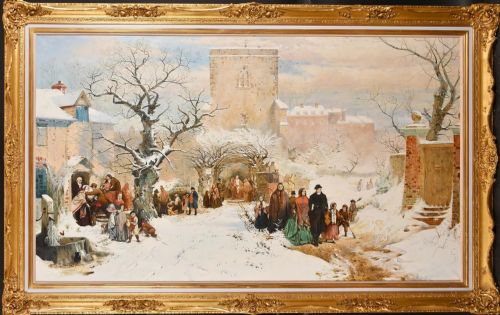
English Village Scene
When you search for an english village scene, you encounter depictions of rural community life preserved through paint, ink, and paper across the nineteenth and twentieth centuries.
English Village Scene
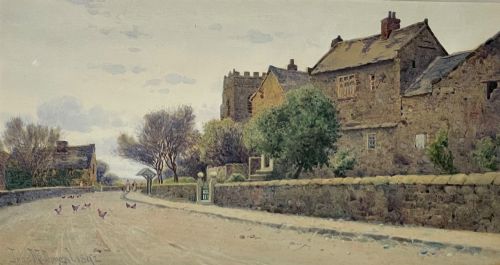
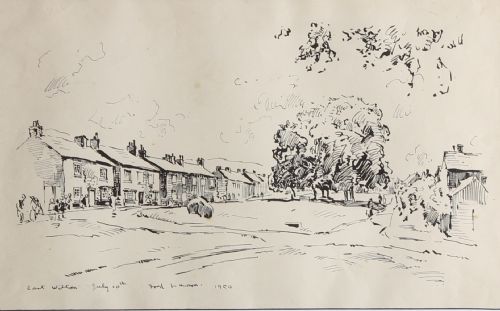
An english village scene captures rural settlements, parish streets, and country inns through the brush or pencil of artists recording local topography. These works document specific places from Yorkshire to Devon, preserving stone cottages, village greens, and coastal harbours as they appeared decades or centuries ago.
The material on this page spans framed oil paintings on canvas and delicate watercolours on paper. Most examples originate from the Victorian and Edwardian eras, extending into the mid-twentieth century through British impressionist and realist movements.
Buyers find both detailed topographical views of named locations and broader genre compositions depicting daily rural life, agricultural work, and seasonal weather. The common thread is a focused observation of English country living, rendered in media ranging from tight ink drawings to fluid washes.
How they were made
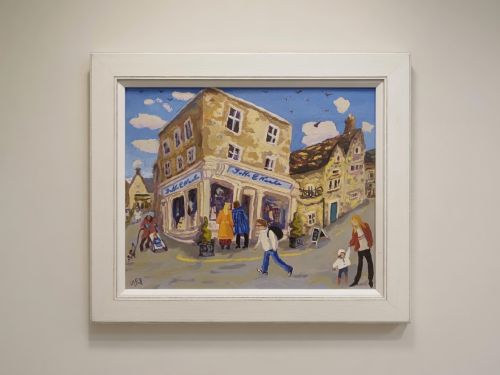
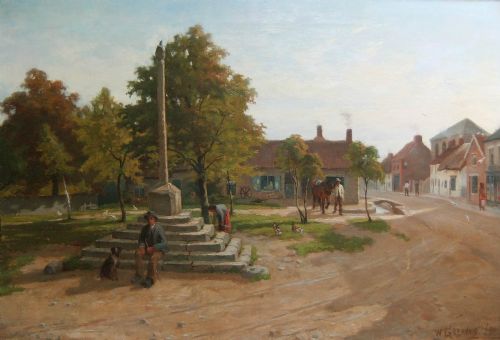
Oil painters built up compositions on canvas using pigment mixed with drying oils, sometimes applying heavy gesso preparation to wooden panels or linen supports to secure the ground before starting. Artists utilised brushes and palette knives to layer rich pigments, capturing atmospheric light across tavern walls, rolling hills, and village streets.
Watercolourists worked on paper sheets, applying transparent washes of pigment suspended in water to build luminous skies, stonework houses, and coastal harbours. Many creators supplemented these fluid washes with ink or pencil lines to define architectural details and figures within the landscape.
Framing played an integral role in presentation, with many works retained in period gilt frames that complement the tonal palette of the canvas or paper within. These surrounds often feature decorative mouldings typical of nineteenth and early twentieth-century workshop practices.
The archive includes topographical views from Sussex, Yorkshire, Devon, and Hampshire executed across several decades.
What varies in quality
The hierarchy among these works rests upon the confidence of the draughtsmanship and the artist's command of natural light and atmospheric depth. Superior examples demonstrate a secure grasp of perspective in village architecture and landscape recession, whereas lesser pieces rely on formulaic repetition of rural tropes.
Material preservation dictates distinction, separating vibrant, stable pigment layers from works compromised by heavy fading, foxing on paper, or past canvas punctures. The integrity of the original support and the sympathetic condition of the surface varnish or paper fibres govern the visual impact of the composition.
John McDougal·Fred Lawson·Lucy Pratt·William Greaves·Arthur Tucker·M. C. Hider·Charles Vickers·Louie Stanley Maurice Prince·John Smith Atherton·Robert Hollands Walker·Percy Brooke·David Woodlock·B W Leader·John Ritchie·Walter Henry Sweet·Herbert Royle·Henry Charles Bryant·Georgina Lara·Stanley Orchart·Joseph Thors·David Heward·Martin Lamotte·Stephanie Cooper·John Holland Snr·Alfred Leyman
The English Village Scene Glossary
- Watercolour
- A painting method where fine pigment is suspended in a water-soluble binder and applied to paper. This medium allows for transparent washes that capture light and atmospheric conditions quickly.
- Oil on Canvas
- A technique utilising pigments bound in drying oils applied to stretched woven fabric. This combination permits rich colour blending and textured impasto work.
- Gesso
- A paint mixture consisting of a binder mixed with chalk, gypsum, or pigment, used to prepare a surface for painting. It provides a smooth, stable ground for oil applications.
- Genre Scene
- An artwork depicting aspects of everyday life by portraying ordinary people engaged in common activities. These compositions often include figures gathered near village inns or working in fields.
- British Impressionism
- An artistic movement characterised by visible brushstrokes and an emphasis on accurate depiction of light in its changing qualities. Practitioners applied these principles to rural landscapes and coastal villages.
English Village Scene: Frequently Asked Questions
How do I identify the location in a painting?
Many works include inscriptions, artist signatures, or gallery labels on the reverse of the canvas or the mount beneath the watercolour. Comparing historical place names with local topographical records often confirms the exact street or village depicted.
Artists frequently recorded specific inns, churches, or bridges that survived into the twentieth century, providing firm geographical anchors for unlabelled rural views.
Are watercolours more fragile than oil paintings?
Works on paper require careful protection from direct sunlight and moisture to prevent fading and foxing over time. Glazing with appropriate conservation glass helps shield delicate watercolour pigments from ultraviolet degradation.
Oil paintings on canvas possess a sturdier physical structure, though they still benefit from stable indoor humidity and avoidance of extreme temperature fluctuations.
What distinguishes Victorian rural paintings from Edwardian ones?
Nineteenth-century depictions often favour narrative detail and dramatic lighting, capturing anecdotal elements like children at fairs or farming activity with tight brushwork. Edwardian and later twentieth-century works frequently embrace a looser application of paint and a lighter palette.
The shift reflects broader changes in British art towards impressionistic observation of light rather than purely descriptive topographical recording.
How should I frame and hang these watercolours?
Watercolour paintings need acid-free mounts to separate the paper surface from the glazing, preventing condensation damage. Hanging them away from direct sunlight preserves the fugitive pigments often found in nineteenth-century paper works.
Matching the frame to the period of the artwork ensures the visual weight of the moulding complements the balance of the composition.