


English Victorian Mantel Ornament
An English Victorian mantel ornament brings character to a room through ceramic animals, portrait figures and glass lustres.
English Victorian Mantel Ornament
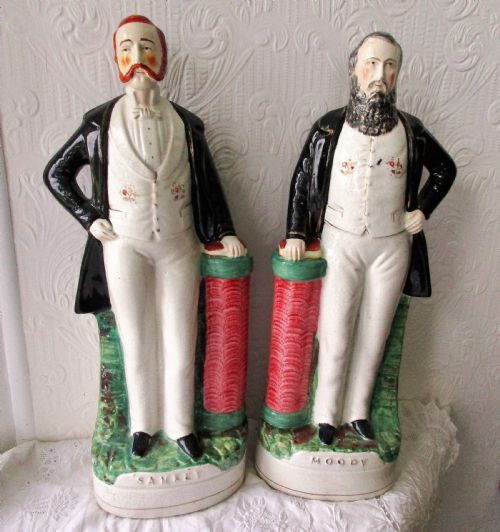
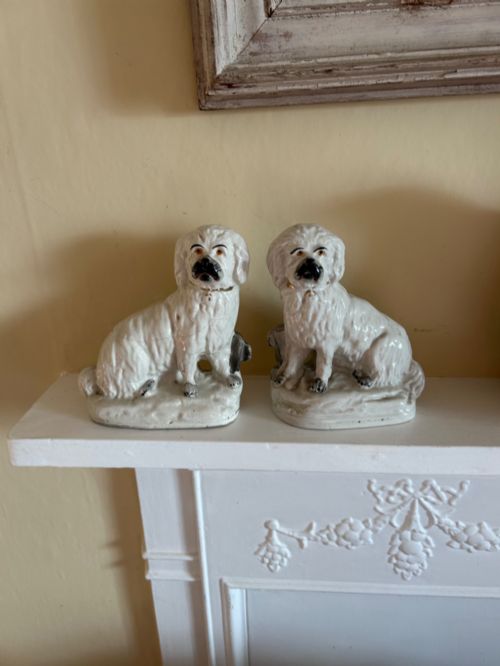
An English Victorian mantel ornament sits above the fireplace or upon a shelf, taking the form of earthenware dogs, lions, poodles and portrait figures. These objects define the shelf they inhabit with domestic charm.
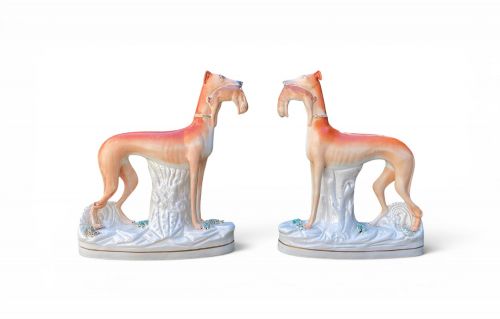
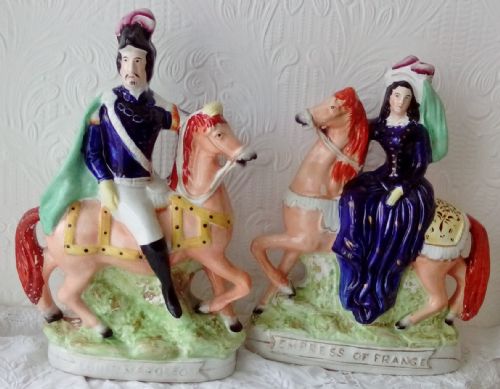
The version most commonly met on this page is the Staffordshire pottery figure, often modelled as pairs of spaniels, greyhounds or seated lions. Figures of historical persons, literary characters and flat back castles appear alongside them.
The materials span earthenware, glazed ceramic, lead glaze and ruby glass lustres. Makers shaped these substances into decorative figurines and fireplace ornaments intended for nineteenth-century parlours.
How they were made
Potters formed these figures from earthenware and ceramic, applying lead glaze and enamel paint to build the surface colour. Many pieces display white and gilt finishes applied over the fired body.
Moulds shaped the ceramic bodies, particularly for flat back figures and pairs of animals designed to face one another on the mantelpiece. Glass lustres were shaped by hand and hung with cut glass drops.
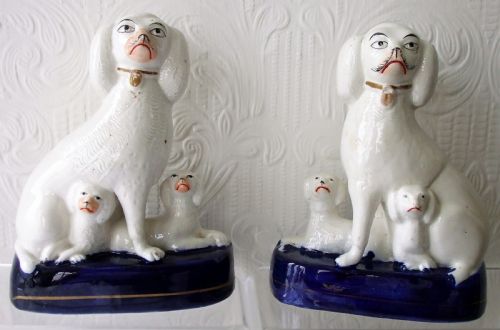
Poodles appear carrying puppies in their mouths, guarding the hearth with surprising maternal dedication.
What varies in quality
Quality rests upon the crispness of the modelling and the precision of the enamel painting upon the ceramic body. Softer facial details and blurred enamel indicate work executed with less care.
The depth of the glaze and the preservation of the gilt highlights distinguish finer examples from standard production pieces. Pairs that retain their matching counterpart and clear nineteenth-century character command greater attention.
Royal Worcester·Copeland
The English Victorian Mantel Ornament Glossary
- Flat back
- A figure modelled with a finished front and a plain, unadorned back designed to stand against a wall.
- Comforter spaniel
- A ceramic dog figure, usually paired, placed on nineteenth-century mantelpieces to guard the hearth.
- Ruby glass lustre
- A mantel ornament made from deep red glass, decorated with enamel and hung with glass prisms.
- Earthenware
- A porous pottery body fired at lower temperatures, serving as the base for nineteenth-century glazed figures.
English Victorian Mantel Ornament: Frequently Asked Questions
Where did these ornaments sit?
These ornaments stood upon the mantelpiece above the fireplace or on drawing-room shelves.
Pairs of dogs or figures were arranged symmetrically to frame the centre of the hearth.
Were these figures made in pairs?
Many animal figures, particularly greyhounds, lions and spaniels, were produced as matching pairs intended to face each other.
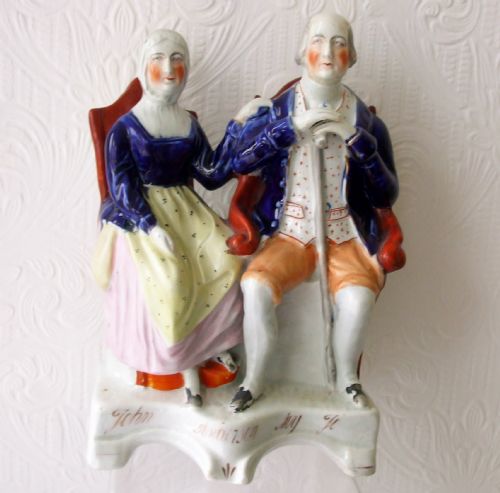
Single portrait figures and flat back castles were also common mantel displays.
What subjects do portrait figures show?
Portrait figures depict historical personages, religious figures, literary characters and prominent figures of the nineteenth century.
Examples include political leaders, evangelists and Scottish lairds.
How do you care for ceramic ornaments?
These glazed ceramic and earthenware pieces require gentle dusting with a soft brush to protect the enamel paint and gilt.
Harsh cleaning agents and excessive moisture should be avoided to preserve the lead glaze.