
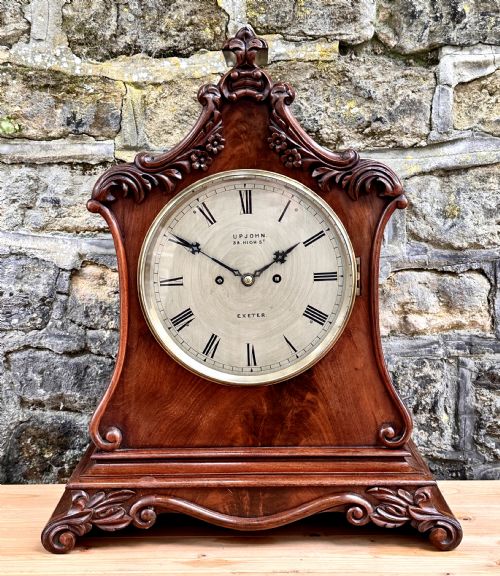
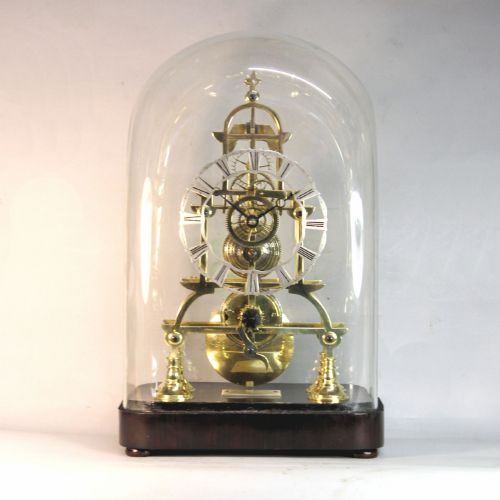

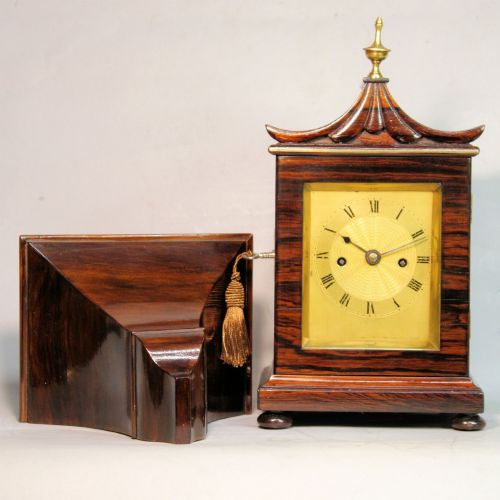

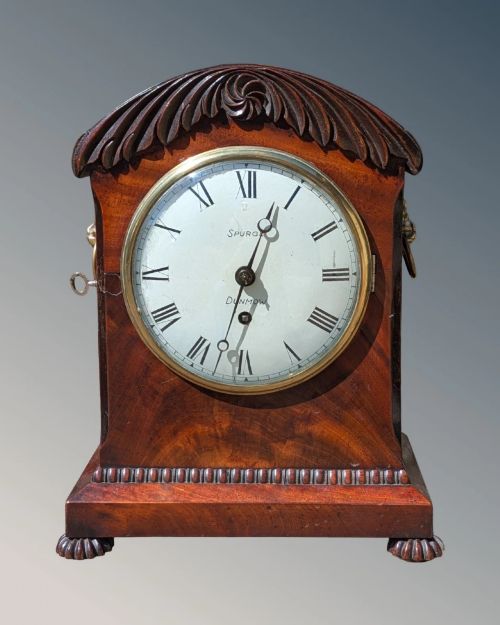


English Victorian Mantel Clock
An English Victorian mantel clock brings mechanical precision and rich timber or brass architecture to a room, driven by fusee movements built to keep time reliably.
English Victorian Mantel Clock
An English Victorian mantel clock is a domestic timekeeper designed to sit on a shelf, mantelpiece or bracket, spanning styles from straightforward mahogany table clocks to intricate brass skeleton clocks.
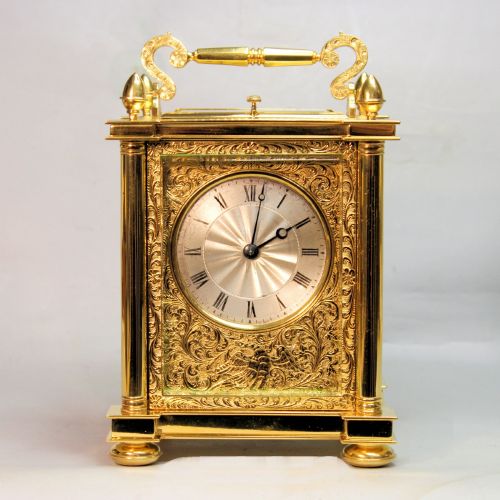
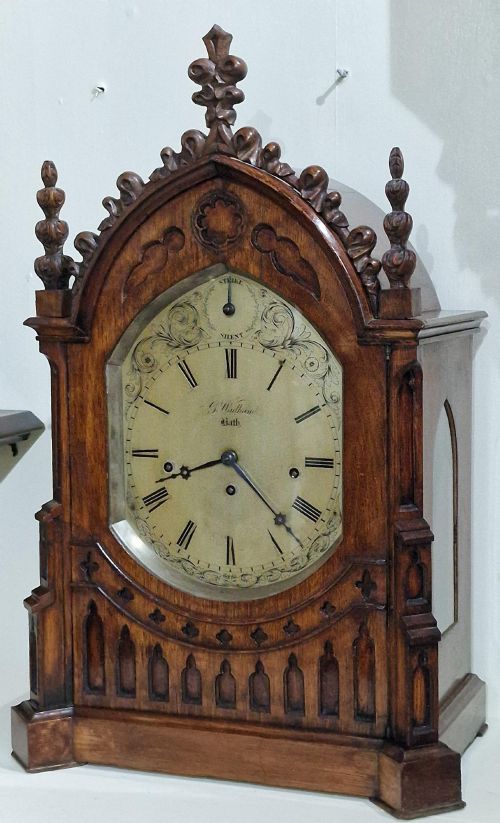
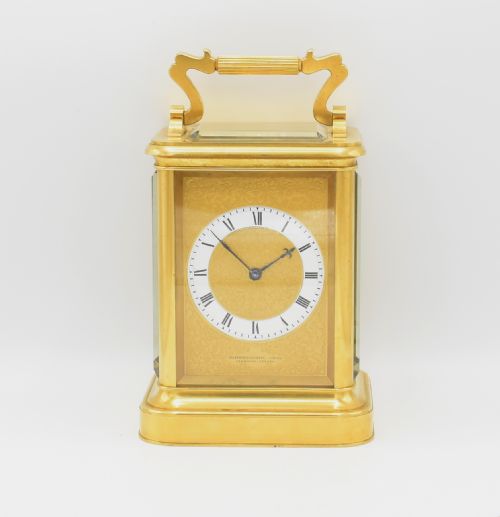
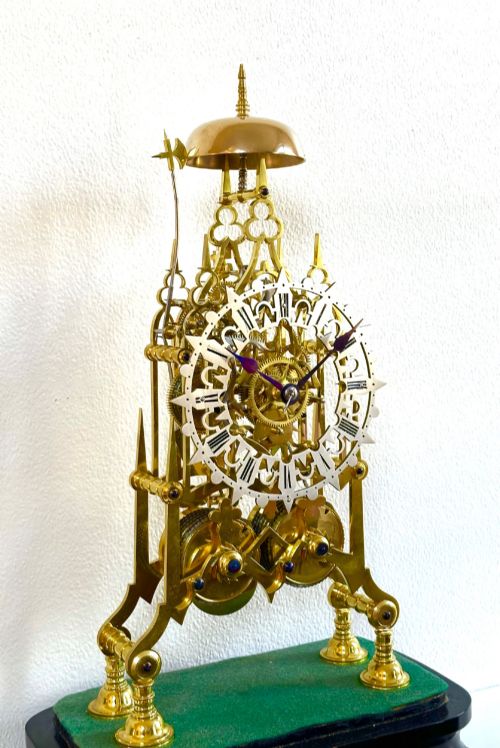
The pieces appearing on this page include mahogany and rosewood bracket clocks, polished brass carriage clocks, and glass-domed skeleton clocks dating across the nineteenth century.
Makers and retailers such as Dent, Payne, and local provincial watchmakers stamped their work on dials and movements, linking domestic interiors directly to established workshops.
Materials and Movement Construction
Casework relies heavily on dense timbers like mahogany and rosewood, frequently polished to a dark sheen, alongside cast brass, gilded bronze, and silvered metal dials.
Internal architecture centres on the fusee movement, a cone-shaped pulley system designed to equalise the declining power of the mainspring as it unwinds.
Many skeleton clocks and library timepieces employ delicate brass framework beneath glass domes, exposing the gear train and escapement to view.
Movements across these pieces span single, double, and triple fusee configurations alongside platform escapements.
Standards of Workmanship and Finish
Quality rests in the crispness of the movement engraving, the precision of the wheel work, and whether the fusee chain or gut line runs smoothly through its arc.
Timber cases show distinction through carefully matched mahogany veneers, inlaid brass details, and robust locking doors rather than superficial surface treatment.
Signatures by notable makers or retailers on the dial and backplate elevate an example above anonymous workshop production.
Cousens and Whiteside·George Wadham·Goldsmiths Alliance Ltd·Richard Winter·Pickford of London·Webster Cornhill London·Spurge Dunmow·Mappin and Webb·Thwaites of London·Dent·William Payne·J Batson and Son·Connell of London·Piggin Norwich·Phillips Brothers·Arnold and Frodsham·Geo Carter Hackney·J Kingerley Manchester·Payne and Co·Thomas Cole and James Cole·Hunt and Roskell·Joseph Jump·William Evans of Handsworth·Budgen Croydon·Clerke Royal Exchange London
The English Victorian Mantel Clock Glossary
- Fusee
- A conical pulley connected to the mainspring by a chain or cord, designed to maintain even tension on the gear train.
- Bracket clock
- A portable timekeeper originally designed to sit on a wall bracket or table, housed in a wooden case with a carrying handle.
- Skeleton clock
- A timepiece with an open brass frame that exposes the entire gear train and movement to direct view.
- Carriage clock
- A small, spring-driven timekeeper with a brass-and-glass case and a folding handle, made for travel.
English Victorian Mantel Clock: Frequently Asked Questions
How do I wind an English Victorian mantel clock?
Insert the appropriate winding key into the dial arbor and turn it gently clockwise until resistance indicates the mainspring is fully tensioned. Take care not to overwind the mechanism.
Keep the clock level on a stable surface so the pendulum or balance wheel beats evenly, ensuring accurate timekeeping throughout the week.
What is a fusee movement?
A fusee is a conical drum connected to the mainspring by a chain that moderates the varying pull of the spring as it winds down. This ensures constant force reaches the escapement.
Clocks with fusee movements generally maintain superior timekeeping compared to standard spring-driven alternatives.
Where should I place a bracket clock?
Position the clock away from direct sunlight, central heating vents, and damp exterior walls to protect the timber case and delicate internal steel components from humidity changes.
Ensure the piece rests on a firm shelf or mantel where vibrations from daily foot traffic will not disturb the pendulum beat.
Why do some clocks have glass domes?
Glass domes protect intricate skeleton clocks and delicate brass mechanisms from dust accumulation and accidental physical contact in domestic spaces.
Lift the dome carefully from the base using both hands when accessing the movement for winding or adjustment.