


19th Century Silver Clock
A 19th century silver clock brings precision engineering and refined metalwork into a room, offering both reliable timekeeping and period artistry.
19th Century Silver Clock
A 19th century silver clock encompasses timepieces featuring silvered metal dials, silver-plated cases, or solid silver elements combined with materials such as mahogany, rosewood, brass, and marble. These pieces range from carriage clocks and library clocks to skeleton clocks, mantel clocks, and longcase regulators.
The version most commonly encountered on this page is the mantel clock or library clock housed in a wood or brass case, often displaying a prominent silvered dial. French carriage clocks and English skeleton clocks also appear frequently within the selection.
Originating predominantly from English and French workshops, these timepieces reflect the diverse stylistic movements of the nineteenth century, including Victorian, Regency, French Empire, and Victorian Gothic designs.
How they were made
Clockmakers utilised brass movements fitted with fusee or platform escapements, mounting them within cases constructed from timber like mahogany, rosewood, and oak, or cast metals finished with silver plating or gilding.
Dials were commonly fashioned from silvered metal, etched with chapter rings and numerals, and protected by bevelled glass panels set into brass or wood frames.
Listings feature nineteenth-century timepieces incorporating mahogany, rosewood, marble, brass, and silvered metal across various forms.
What varies in quality
The calibre of the movement largely dictates the standard of a piece, with fine twin-fusee or repeating mechanisms representing superior technical achievement compared to standard timepieces. Signed works by established makers demonstrate higher standards of internal finishing and assembly.
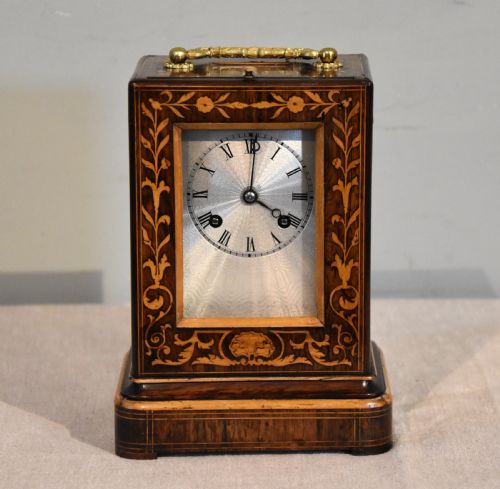
Case construction and material selection also distinguish the range, from simple wooden housings to intricately inlaid rosewood, gilt bronze, and tortoiseshell combinations accompanied by finely engraved silvered dials.
Richard Winter of Chieveley·Dent·Litherland Davies of Liverpool·Des Granges of London·Phillips Brothers·Ganthony of London·Paul Garnier·William Chisholm of Aberdeen·Le Roy et Fils·Lenzkirch·Pearson and Price·Pearce and Sons·John Massey·Allen Colyer
The 19th Century Silver Clock Glossary
- Fusee
- A conical pulley used in spring-driven clocks to equalise the driving force as the mainspring unwinds. This mechanism helps maintain consistent timekeeping throughout the power reserve.
- Carriage clock
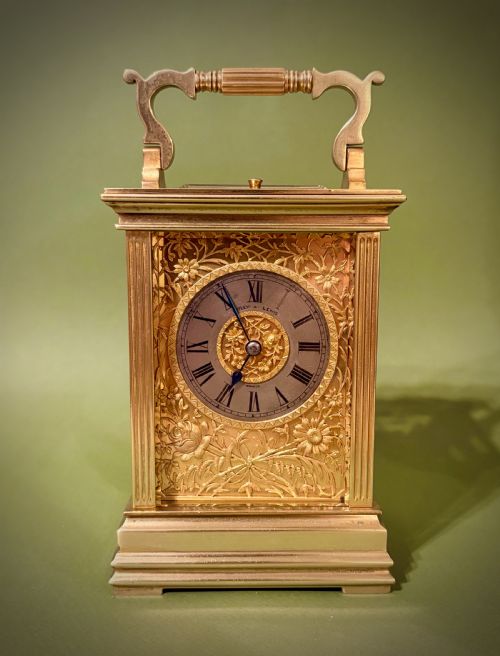
- A small, portable spring-driven timepiece designed for travelling during the nineteenth century. They usually feature a glass-panelled brass case and a folding handle on top.
- Skeleton clock
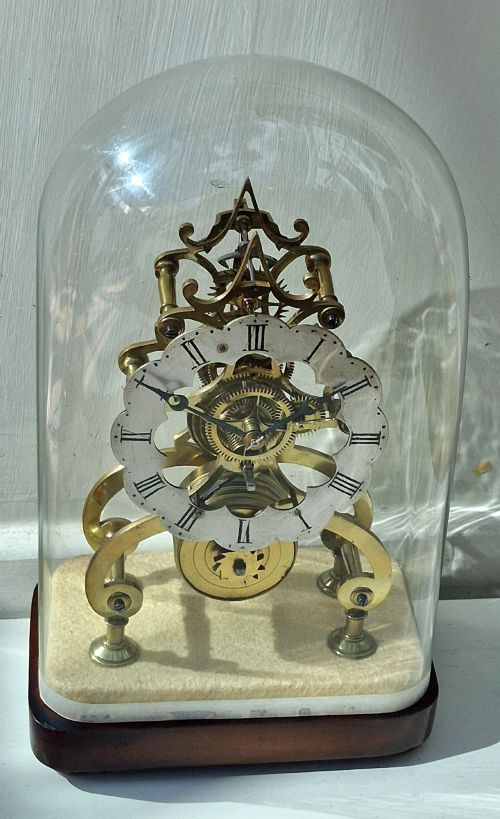
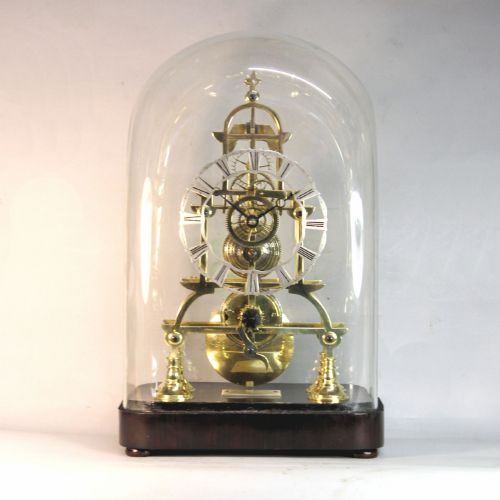
- A timepiece designed with an open framework that exposes the gear train and movement. This style allows the observer to view the mechanical operation of the clock from multiple angles.
- Portico clock
- A mantel clock styled after classical architecture with supporting pillars or columns framing the dial. Mahogany and ebonised wood frequently form the structure of these architectural pieces.
- Platform escapement
- A self-contained escapement and balance wheel assembly used in portable clocks like carriage and library timepieces. It removes the need for a traditional pendulum.
19th Century Silver Clock: Frequently Asked Questions
Where should I place a library clock?
A library clock suits a desk, side table, or mantelpiece where its detailed dial and case can be viewed closely. These smaller timepieces work best in quiet rooms where the ticking of the mechanical movement remains audible.
Keep the clock away from direct sunlight, heat sources, and damp environments to protect the wood case and silvered metal components over time.
What is the difference between a carriage clock and a mantel clock?
A carriage clock is a portable timepiece housed in a brass and glass case with a carrying handle on top. They were originally built for travellers in the nineteenth century and rely on a platform escapement.
A mantel clock is larger and designed to remain stationary on a fireplace mantel or shelf. They often feature wooden or marble cases and may utilise either pendulums or platform escapements.
How do I identify a Regency period clock?
A Regency period clock typically dates from the early nineteenth century and reflects classical architectural influences. Cases often utilise rich timbers like mahogany or rosewood, sometimes accented with brass inlay.
Dials frequently feature clean Roman numerals on silvered metal plates, paired with delicate hands and understated proportions.