


English Victorian Doorstop
These heavy english victorian doorstop examples keep fireside draughts at bay while bringing substantial sculptural weight to a hallway floor.
English Victorian Doorstop
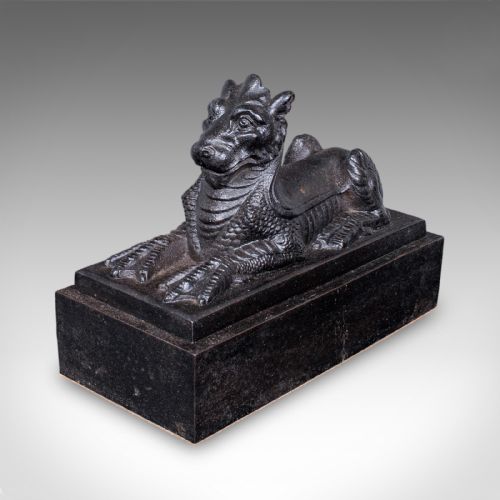
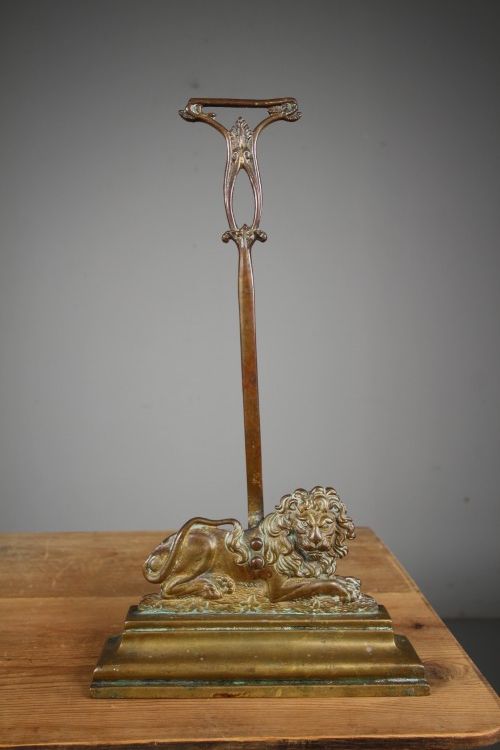
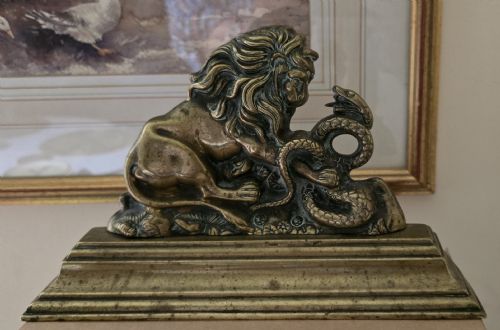
When searching for an english victorian doorstop, collectors encounter heavy utilitarian items designed to hold interior doors open against sudden draughts. The selection ranges widely from figurative brass animals and heraldic lions to cast iron farm figures and architectural knights.
Most examples hail from the nineteenth century, spanning mid-Victorian production alongside pieces reflecting earlier Georgian and Late Regency tastes. These sturdy hearth companions double as decorative ornaments for the hallway or study.
Moulded glass dumps also appear among the forms, serving dual purposes as heavy paperweights or impromptu floor stops near the hearth. Animal subjects dominate the surviving evidence, featuring dogs, lions, horses and foxes cast in enduring metals.
Judging quality
The choice of material heavily dictates the tactile presence, with solid cast brass and heavy bronze assemblies offering superior weight compared to lighter hollow constructions. Original painted surfaces or patination that has matured naturally over decades elevate the visual character of the piece.
Listings demonstrate a strong preference for animal subjects, with lions, dogs, and horses dominating the Victorian cast iron and brass evidence.
William Tonks·William Tonks and Sons
The English Victorian Doorstop Glossary
- Door porter
- A traditional alternative term for a heavy doorstop featuring an upright handle for carrying between rooms. These items were essential accessories in large country houses.
- Sulphide
- A small ceramic plaque or motif encased within solid glass during the manufacturing process. These inclusions often depict floral arrangements like the English rose or Scottish thistle.
- Glass dump
- A heavy, solid block of recycled bottle glass used primarily as a paperweight or doorstop. They often contain internal air bubbles or decorative sulphide figures.
- Cast iron
- A sturdy iron-carbon alloy poured into moulds to create heavy, rigid objects. It forms the backbone of many utilitarian nineteenth-century hearth items.
- Gilt bronze
- Bronze treated with a fine layer of gold or gold-coloured wash to impart a rich metallic sheen. This finish enhances decorative detail on high-status interior ornaments.
English Victorian Doorstop: Frequently Asked Questions
How heavy should a doorstop be?
These pieces generally weigh several kilograms to ensure they can hold solid wooden doors securely against strong draughts.
The substantial mass comes from solid cast brass, iron, or thick glass construction designed specifically for heavy domestic use.
Were these used in every room?
They were typically utilised in principal reception rooms, hallways, and libraries where large doors needed to remain open.
Servants moved them between rooms as needed during daily household routines, which explains the inclusion of integrated carrying handles.
How do I clean brass doorstops?
Dust them gently with a soft dry cloth to preserve any accumulated historical patina on the metal surface.
Avoid harsh chemical polishes that strip away the aged character accumulated over the nineteenth century.
Are glass dumps strong enough?
Bottle-glass dumps are extremely thick and heavy, making them surprisingly durable floor stops for lighter interior doors.
Their solid glass composition also allowed them to function as substantial desk paperweights.