





English Stoneware Vessel
An english stoneware vessel brings dense, vitrified weight and salt-glazed texture to a room, offering durability and historical character that collectors prize.
English Stoneware Vessel
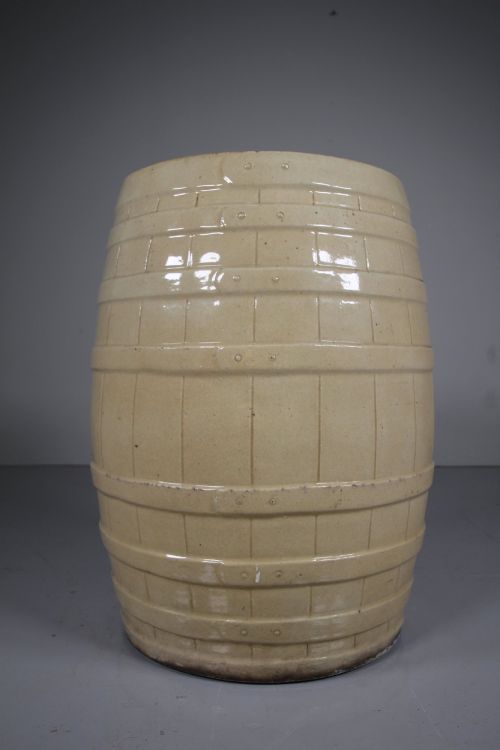
When searching for an english stoneware vessel, buyers encounter heavy utilitarian crocks, salt-glazed jugs, and decorative vases spanning the nineteenth century into the Edwardian era. These pieces range from plain dairy ware and tavern jugs to highly decorated exhibition items and art pottery.
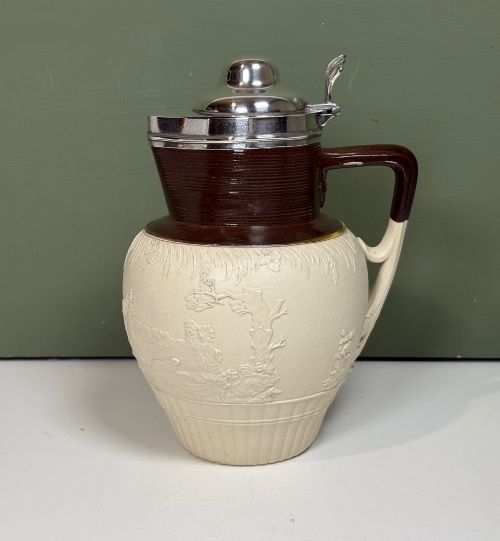
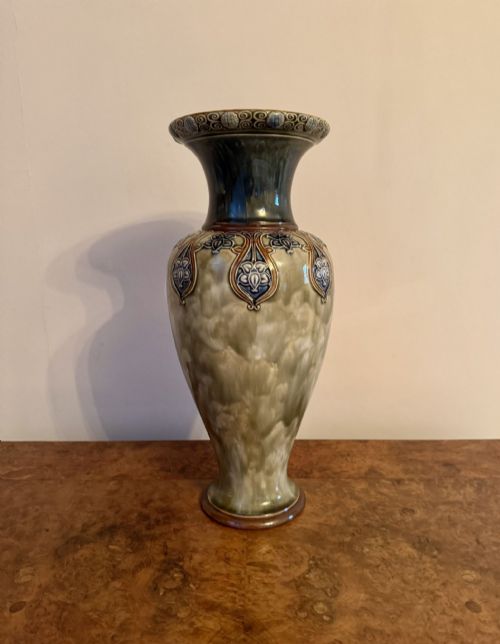
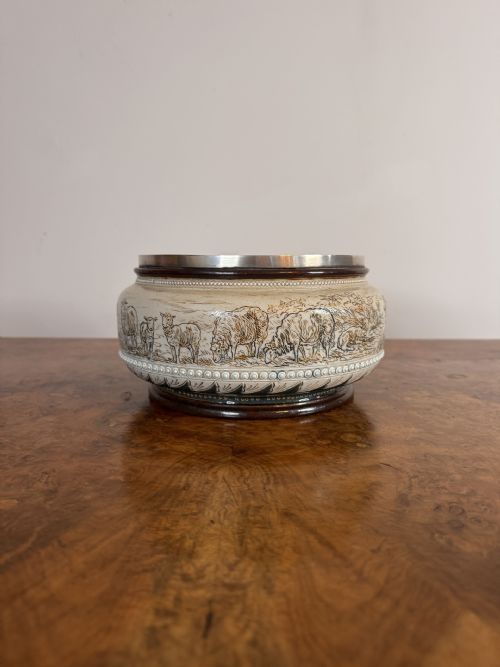
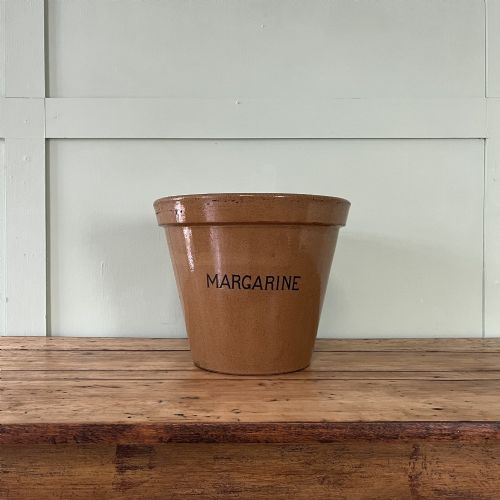
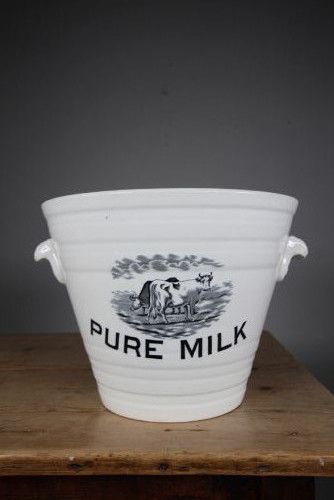
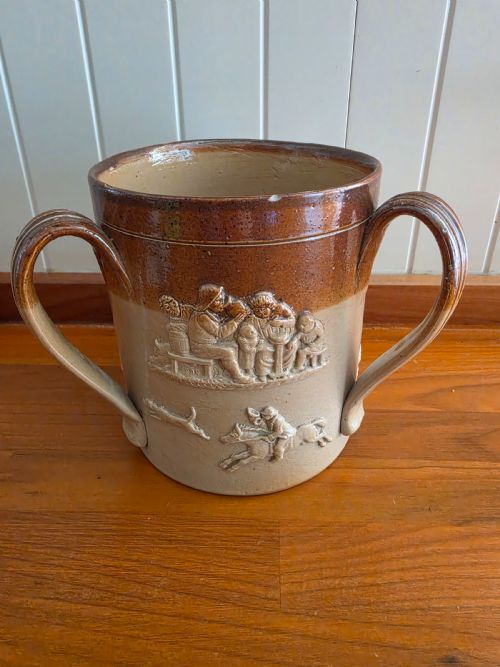
The selections on this page lean heavily toward Victorian and Edwardian examples, notably featuring pieces from Doulton Lambeth alongside country pottery, dairy pails, and relief-moulded pitchers.
Materials and production methods
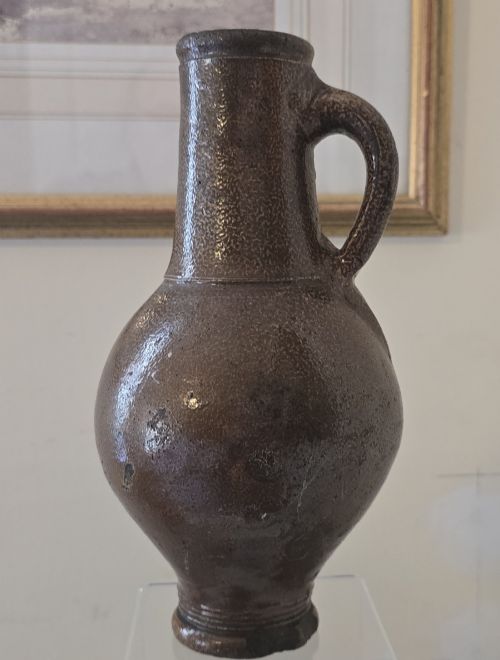
Potters shaped dense clay bodies that were fired at high temperatures until vitrified, ensuring the material became completely non-porous and durable. Many examples utilise salt glaze, achieved by throwing salt into the kiln during the high-temperature burn to produce a pitted, orange-peel texture.
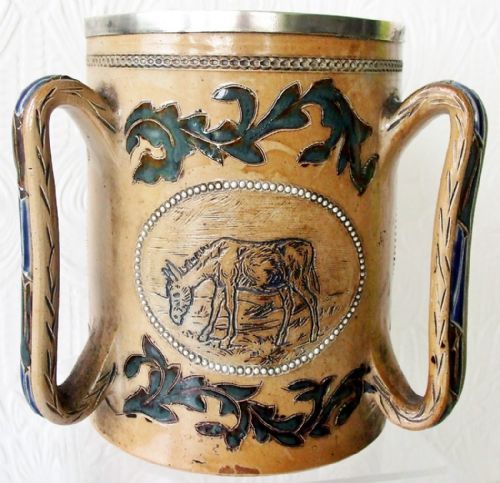
Makers added decorative elements through sprigged relief moulding, slipware trails, or hand-painted details. Silver mounts and sterling silver rims were occasionally added by silversmiths to elevate utilitarian jugs and tygs into presentation pieces.
English Stoneware Vessel Retail Price Guide 2026
Typical asking prices for english stoneware vessel among the pieces listed under this phrase on Sellingantiques today, from the lower quarter to the upper quarter. They describe what is for sale here now, not the wider market.
Listings feature nineteen-century and Edwardian eras, spanning utilitarian dairy ware to exhibition-quality Doulton Lambeth art pottery.
Judging the quality of an english stoneware vessel
Quality rests upon the crispness of the moulded relief work, the evenness of the salt glaze, and the precision of hand-painted or incised decoration. Pieces bearing the signatures of notable artists demonstrate superior studio execution compared to standard commercial output.
The integration of precious metal mounts and the overall balance of form separate standard utilitarian vessels from exceptional exhibition pieces produced by leading potteries.
Doulton Lambeth·Charles Meigh·Royal Doulton·William Adams And Sons
The English Stoneware Vessel Glossary
- Salt glaze
- A glassy, textured finish created by introducing common salt into the kiln at the height of the firing. This chemical reaction leaves a characteristic orange-peel surface on the stoneware.
- Tyg
- A drinking vessel with three or more handles, designed to be passed around a company. Early examples frequently appear in slipware and stoneware.
- Jardiniere
- An ornamental pot or stand for holding flowers or plants. These large vessels were often placed in orangeries and patios during the Victorian period.
- Jasperware
- A type of fine stoneware developed in the eighteenth century, noted for its matte surface and contrasting raised white sprigged reliefs against a coloured background.
- Sprigged
- A decorative technique where separately moulded clay reliefs are applied to the damp body of a vessel before firing.
English Stoneware Vessel: Frequently Asked Questions
What is an english stoneware vessel used for today?
These pieces serve primarily as decorative items, mantel vases, or display focal points in traditional and country interiors. Their robust build also suits practical uses such as holding dried stems or table arrangements.
Larger forms like jardiniere planters and dairy pails find new purpose as plant containers or umbrella stands in hallways and patios.
How do salt glazed pieces differ from standard glazed pottery?
Salt glazing occurs inside the kiln when vaporised salt reacts with the silica in the clay body, fusing a permanent glassy skin directly to the vessel. This creates a distinct, slightly pebbled texture rather than a smooth liquid glaze applied by brush.
The resulting surface is exceptionally tough, weather-resistant, and impervious to liquids without requiring an internal lining.
How can I tell a Victorian piece from an Edwardian one?
Victorian examples often display heavier ornamentation, rich blue jasperware contrasts, or elaborate relief moulding reflecting mid-to-late nineteenth-century tastes. Arts and Crafts influences emerging toward the end of the century introduced simpler, more organic forms.
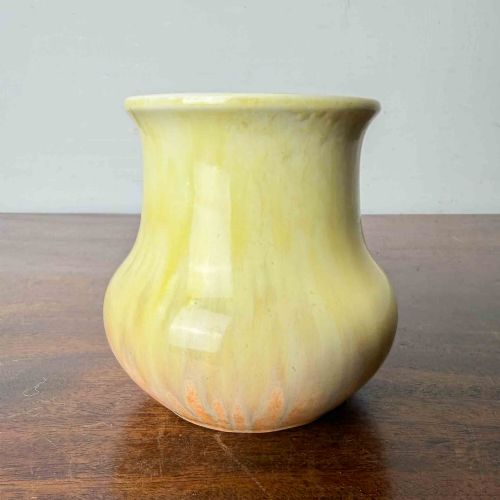
Edwardian pieces tend to feature cleaner lines, lighter floral motifs, and early drip glazes that point toward twentieth-century studio pottery styles.
Are these vessels waterproof?
Because stoneware is fired at extremely high temperatures until vitrified, the clay body itself holds water without seepage even where glaze is absent. Salt-glazed and fully glazed iterations are entirely safe for holding cut flowers and fresh water.
Utilitarian dairy ware and unglazed storage crocks remain equally dense, though buyers should check individual pieces for historic hairline cracks.