


English Sterling Photo Frame
An english sterling photo frame brings desk or mantelpiece history to life through solid metal and glass.
English Sterling Photo Frame
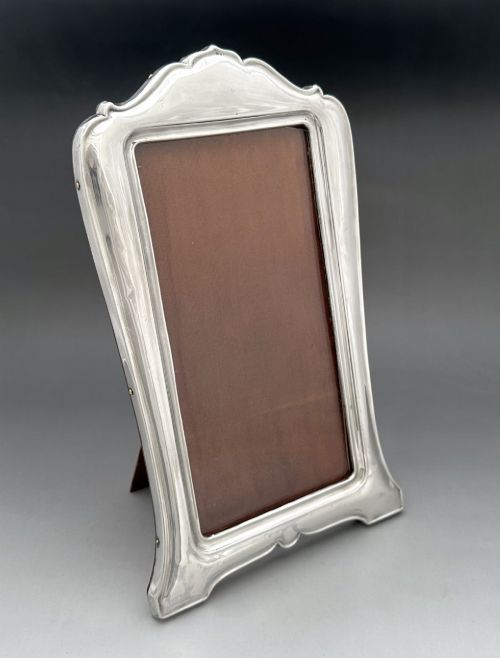
An english sterling photo frame is a desk or mantel accessory designed to hold personal portraits behind glass, typically backed by wood, fabric or velvet. These objects range from compact circular and heart shapes to large rectangular formats capable of vertical or horizontal display.
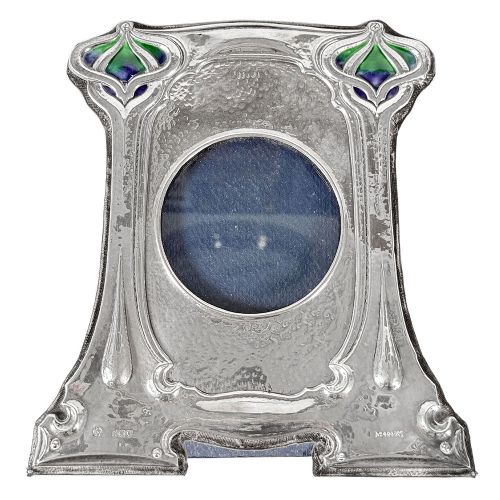
The pieces appearing most frequently on this page date from the Edwardian era through the George V period, crossing into Art Deco and mid-century British designs. They include plain polished surfaces, engine-turned geometric patterns, and decorative motifs reflecting Arts and Crafts or Art Nouveau aesthetics.
How they were made
Silversmiths constructed these frames by shaping sterling silver sheets over wooden cores or mounting silver fronts onto sturdy oak or fabric-backed supports. Structural elements frequently incorporated hinged struts for standing and integrated clips or bezels to secure the glass pane.
Decoration relied on mechanical engine-turning for repeating linear patterns, hand-engraving for botanical or Celtic knot details, and applied vitreous enamel for colour. Makers also utilised piercing techniques to create openwork borders in floral or abstract styles.
Among desk accessories, novelty frames shaped like miniature furniture or tennis racquets brought whimsical charm to early twentieth-century writing tables.
What varies in quality
Subtlety of gauge and weight distinguishes standard production from more substantial examples, with heavier silver providing greater structural rigidity to the overall frame. The crispness of engine-turned patterns or the depth of hand-engraved motifs also indicates the level of workshop skill.
The integrity of original backing materials, such as polished oak and fitted velvet or silk linings, influences overall preservation. Additionally, specialised forms like novelty miniature furniture or frames incorporating hand-painted enamel elements represent higher manufacturing complexity.
William Hutton and Sons·Walker and Hall
The English Sterling Photo Frame Glossary
- Sterling silver
- A silver alloy containing 92.5 percent pure silver and 7.5 percent other metals, usually copper, chosen for durability in decorative objects.
- Engine-turned
- A decorative technique involving precise geometric patterns mechanically engraved into the metal surface by a lathe.
- Pierced
- Metalwork punctured and cut away to form openwork designs, often seen in borders and crests.
- Two-way
- A frame construction allowing the portrait to be oriented vertically or horizontally through an adjustable back strut or easel mechanism.
- Enamel
- Vitreous glass paste fused to the silver surface under high heat to introduce permanent colour and design.
English Sterling Photo Frame: Frequently Asked Questions
How do I date an english sterling photo frame?
Dating relies heavily on the hallmarks stamped into the silver, which indicate the assay office, city, and year of manufacture.
Stylistic cues such as Art Nouveau whiplash curves or Art Deco geometric lines also help place the object within specific decades like the Edwardian period or the nineteen-twenties.
How should I clean silver frames safely?
Gentle dusting with a soft microfibre cloth prevents dust accumulation in engraved crevices and engine-turned grooves.
Liquid silver polishes should be used sparingly to avoid damaging vulnerable enamel work or staining surrounding fabric backs.
Can these frames sit on a desk?
Built-in hinged struts allow these objects to stand securely on flat surfaces like tables, desks, and mantelpieces.
Many examples feature two-way versatility, accommodating both portrait and landscape photographs.