


English Sterling Box
An english sterling box holds small personal treasures, dry leaf, or scented herbs in solid metal crafted across the Georgian, Victorian, and later periods.
English Sterling Box
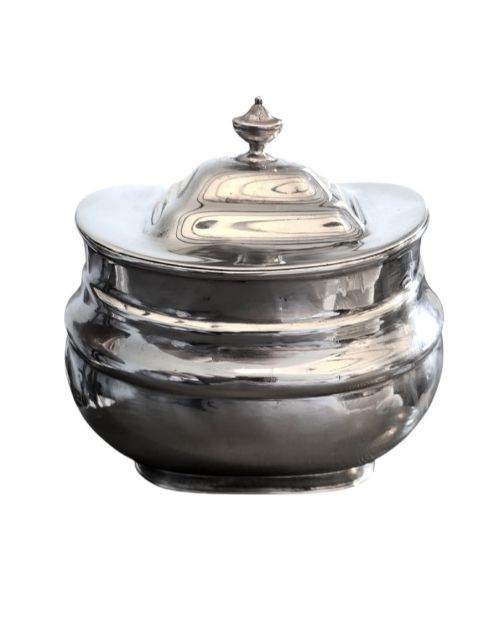
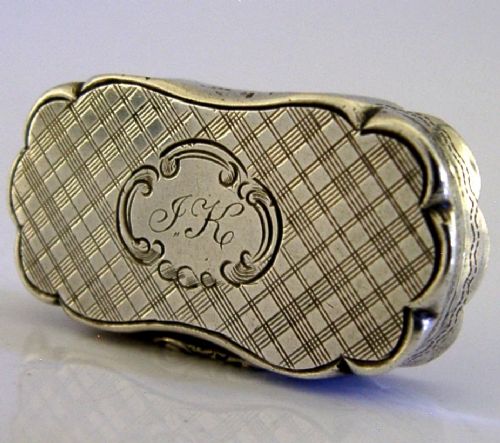
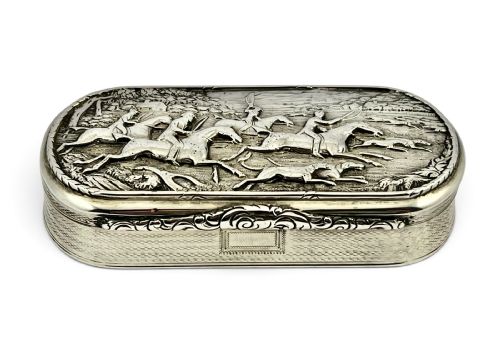
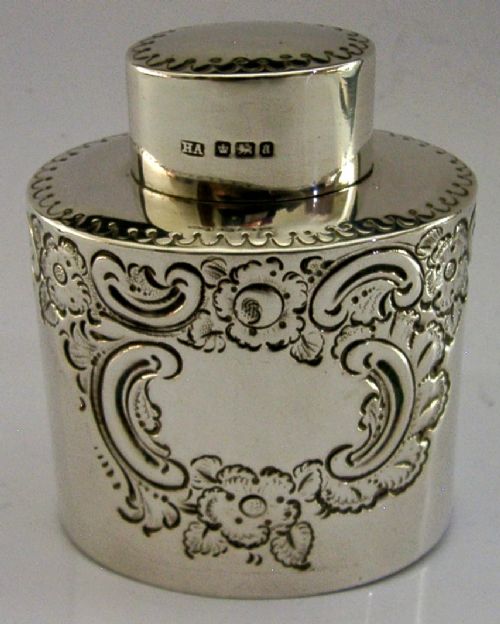
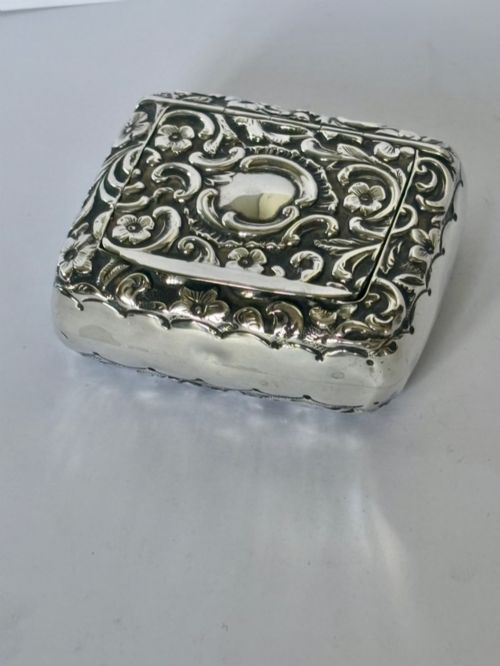
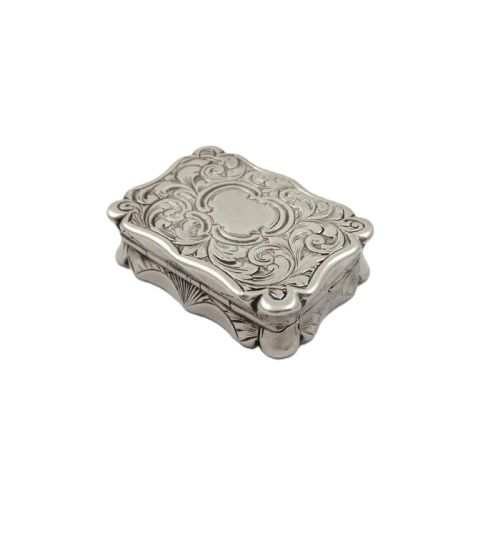
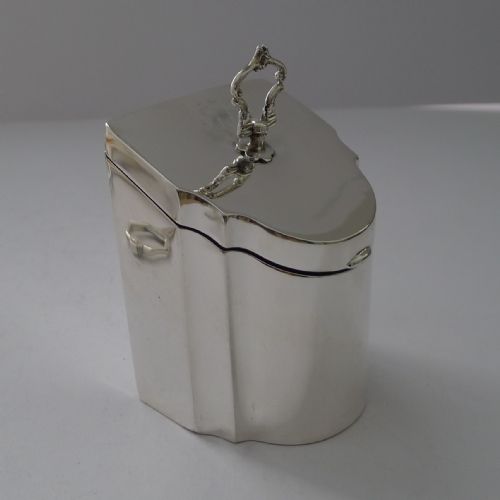
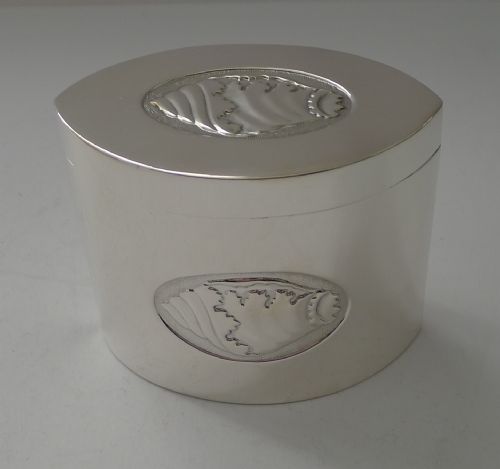
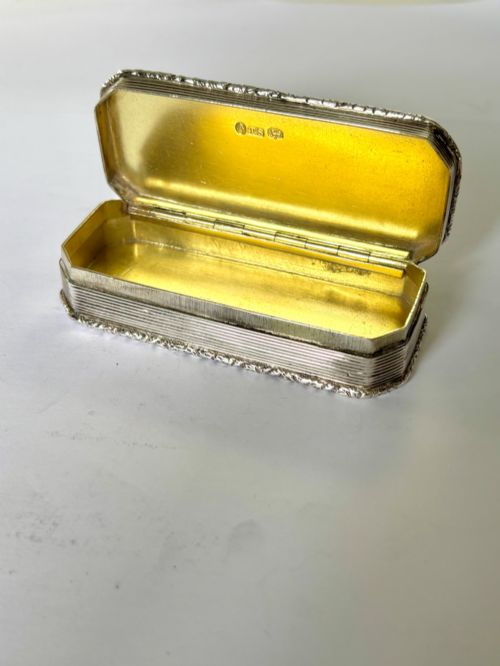
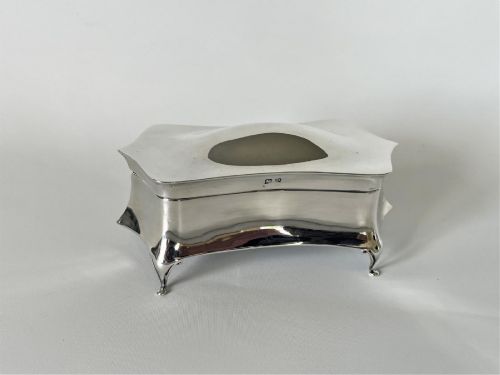
When you search for an english sterling box, you meet a variety of small containers designed for specific daily uses from past centuries. The selection on this page centres on snuff boxes, vinaigrettes, tea caddies, and trinket or jewellery boxes originating from Georgian, Victorian, Edwardian, and later workshops.
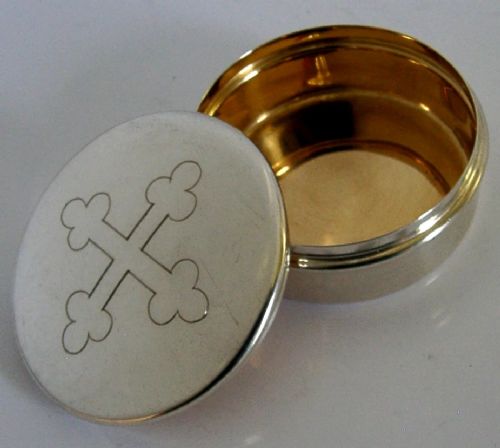
Vinaigrettes and table snuff boxes appear frequently, alongside tea caddies in knife-box and traditional canister forms. Smaller receptacles like pill boxes, pyx wafer boxes, and pot pourri containers also emerge from silversmiths operating in London, Birmingham, Sheffield, and Chester.
Materials and Techniques
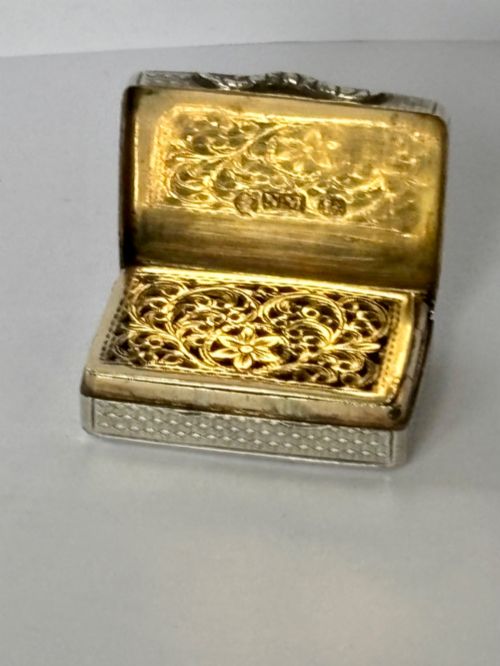
Makers shaped these items from solid sterling silver, frequently applying silver gilt interiors to protect the metal from corrosive contents such as vinegar-soaked sponges inside vinaigrettes. Piercing, embossing, and hand painting provide surface ornamentation, while interior compartments often utilise velvet, silk, satin, or glass linings.
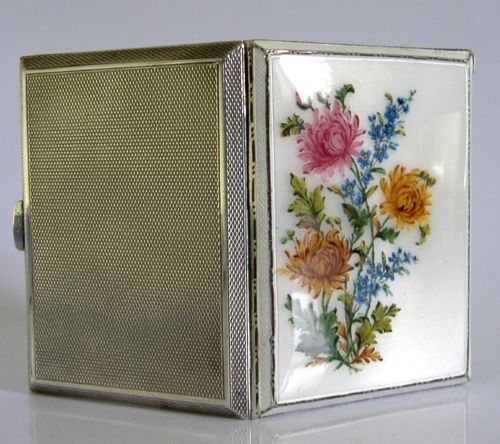
Certain examples combine sterling silver with organic materials like tortoiseshell or agate panels, or incorporate enamel details and fitted leatherette cases. Silversmiths employed casting, hammering, and detailed engraving to produce hinges, clasps, and lids that fit securely onto the main body.
English Sterling Box Retail Price Guide 2026
Typical asking prices for english sterling box among the pieces listed under this phrase on Sellingantiques today, from the lower quarter to the upper quarter. They describe what is for sale here now, not the wider market.
Listings span the Georgian, Victorian, Edwardian, and mid-century periods, incorporating materials such as velvet, silk, tortoiseshell, and glass alongside sterling silver.
Markers of Distinction
The distinction between standard items and exceptional pieces rests upon the crispness of the silversmith's chased or embossed ornamentation and the smooth operation of hinges and latches. Heavy gauge sterling silver and the presence of original interior fittings, such as sponges in vinaigrettes or fitted velvet trays in jewellery boxes, elevate a piece.
Workmanship by documented master smiths adds notable weight to an object's execution, particularly when complex gilding, multi-coloured enamel, or matched tortoiseshell panels remain undamaged. The legibility of the hallmarks stamped into the metal confirms the date, town, and maker's mark with precision.
Nathaniel Mills·Henry Matthews·Thomas Shaw·Paul Storr·Walker and Hall·William Comyns·Robert Pringle·Hilliard and Thomason·Ernest Druiff and Co·Mappin and Webb
The English Sterling Box Glossary
- Vinaigrette
- A small hinged box containing a perforated grille, originally holding a sponge soaked in aromatic vinegar or smelling salts. These portable containers were carried during the Georgian and Victorian eras.
- Tea Caddy
- A jar or box made to store dry tea leaves securely before infusion. Many surviving examples feature locking lids to protect expensive imported leaves.
- Silver Gilt
- Sterling silver that has been coated with a thin layer of gold through a chemical or electrochemical process. This treatment prevents the silver from tarnishing when exposed to acidic contents.
- Vesta Case
- A pocket-sized box designed to hold matches, usually featuring a striated striking surface on the base. They became common during the Victorian and Edwardian periods for smokers.
English Sterling Box: Frequently Asked Questions
What is an english sterling box used for?
These boxes served many practical purposes in historic households, from holding loose snuff and tea leaves to containing pins, cufflinks, or restorative smelling salts. Their primary function was the secure and portable storage of small, valuable, or aromatic items.
Today, buyers utilise them to organise modern trinkets on a dressing table or display them as examples of historic silversmithing. Their compact dimensions make them suitable for tabletop display or placement within a cabinet.
How do I date an english sterling box?
Dating relies upon the hallmarks stamped directly into the sterling silver body. These marks typically include a standard mark for silver purity, a town mark indicating the assay office, a date letter, and a maker's mark.
By consulting published assay office records, you can match the specific letter stamp to the exact year the item was tested and passed for sale. Stylistic clues, such as Victorian embossing or Edwardian proportions, provide a secondary guide.
Are these boxes made of solid silver?
The listings on this page consist of solid sterling silver rather than plated alternatives. Sterling silver denotes an alloy containing a high standard of pure silver combined with small amounts of other metals for structural strength.
Assay Office marks stamped onto the pieces guarantee this silver standard, providing formal verification of the metal's composition. This solid construction ensures the boxes withstand daily handling and polish over centuries.