



English Silver Trophy
An english silver trophy brings competitive spirit and traditional craftsmanship to any room, taking many forms from sporting cups to presentation bowls.
English Silver Trophy
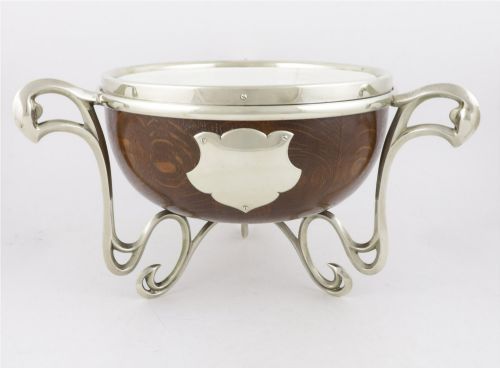
When you search for an english silver trophy, you encounter a specialised form of antique silverware designed to mark sporting victories, civic presentations, and competitive achievements. These objects range from heavy sterling silver hunting cups and lawn bowls trophies to decorative presentation bowls mounted on oak bases.
The pieces on this page span several distinct eras, from mid eighteenth century Georgian examples through Victorian and Edwardian iterations up to twentieth century Art Deco sporting pieces. You are most likely to meet solid sterling silver trophy cups and silver plated oak presentation bowls, alongside rarer items like chess and tennis figurines.
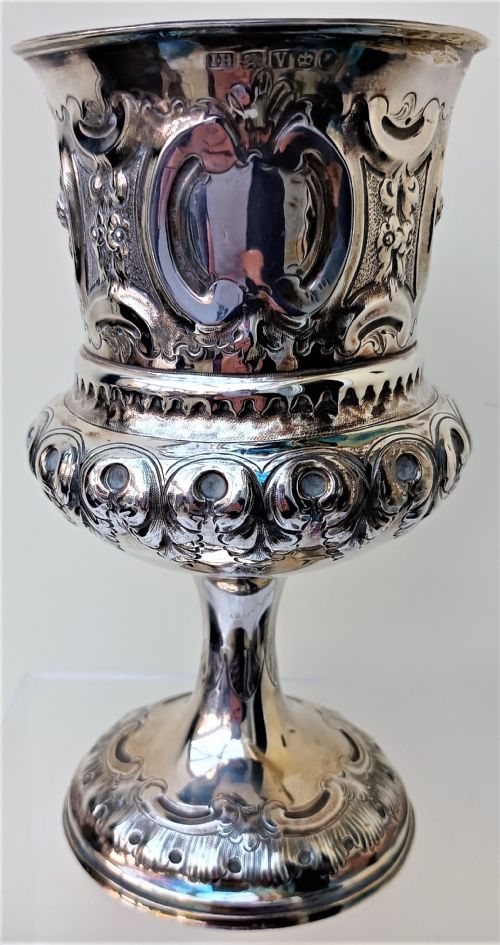
Originating primarily from English silversmithing centres such as London, Birmingham, and Sheffield, these trophies often bear hallmarks that record their exact assay office and year of manufacture. Their forms reflect the specific athletic or social pursuits they commemorated, making them tangible records of past competitions.
Materials and construction
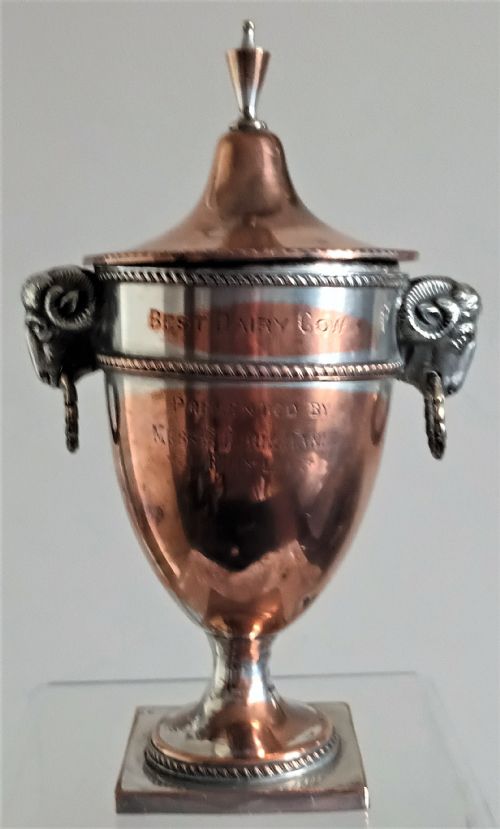
Makers shaped these pieces using solid sterling silver, Old Sheffield plate, and silver plate over copper, often combining metalwork with contrasting materials like turned oak, ceramic, and leather. Silversmiths employed techniques such as casting, spinning, and hand chasing to build complex forms including chalices, urns, and covered cups.
Gilt highlights and applied mounts frequently enrich the surface of Georgian and Victorian presentation pieces, while twentieth century Art Deco items showcase geometric handles and clean lines. Many twentieth century sporting awards incorporate solid cast figures, such as knights for chess and statuettes for tennis, soldered directly to the main body.
English Silver Trophy Retail Price Guide 2026
Typical asking prices for english silver trophy among the pieces listed under this phrase on Sellingantiques today, from the lower quarter to the upper quarter. They describe what is for sale here now, not the wider market.
Listings include items spanning the eighteenth, nineteenth, and twentieth centuries, incorporating materials such as ceramic, oak, copper, and sterling silver.
Assessing quality
Superior quality in these items rests on the weight of the metal, the crispness of the chasing, and the integrity of the structural joints. Heavy gauge sterling silver yields a substantial feel in the hand, whereas lower tier pieces rely on thin plating over base metals that wears down over decades of polishing.
The distinction between ordinary production and high grade work also appears in the quality of the engraving and the harmony of associated materials. Pieces featuring integrated oak pedestals or fitted ceramic inserts show superior craftsmanship when the joinery remains tight and the secondary materials complement the central metal vessel.
Richard Gurney·William Eaton·Henry Hobson and Sons
The English Silver Trophy Glossary
- Hallmark
- A series of official marks stamped on precious metals in Britain to indicate the standard of silver, the assay office, and the year of manufacture.
- Old Sheffield Plate
- An early form of composite metal made by fusing a thin sheet of silver to a thicker copper base, common in eighteenth century pieces.
- Chasing
- A metalsmithing technique where the artisan pushes metal from the front using hammers and punches to create raised decorative reliefs.
- Sterling Silver
- An alloy consisting of ninety two point five percent silver and seven point five percent other metals, typically copper, set by British legal standard.
- Presentation Bowl
- A large open vessel given to mark an achievement, frequently mounted on a turned wooden plinth with silver shields for names.
English Silver Trophy: Frequently Asked Questions
What were english silver trophies used for?
These objects served primarily as prizes for athletic competitions, equestrian events, and civic achievements, ranging from golf and tennis tournaments to local hunting clubs and bowling leagues.
Over time, many found their way into domestic settings as decorative bowls, ice buckets, biscuit barrels, and table centrepieces.
How can I date an english silver trophy?
You can date most pieces precisely by examining the hallmarks stamped into the metal, which include specific letters for the year of assay and symbols for the office of origin.
Stylistic indicators, such as Georgian Rococo scrollwork or Art Deco geometric lines, also provide a reliable general period if hallmarks are worn.
How should I display an english silver trophy?
These pieces suit placement on sideboards, mantelpieces, or dedicated display cabinets where their reflective surfaces catch natural light.
Ensure wooden bases are kept away from direct heat sources to prevent the timber from drying out or splitting.
What is the difference between silver plate and sterling silver?
Sterling silver contains a legally regulated high proportion of pure silver throughout the entire object, making it solid precious metal right through to the core.
Silver plate consists of a thin layer of silver bonded to a base metal such as copper or nickel, which can reveal the underlying metal if worn heavily.