
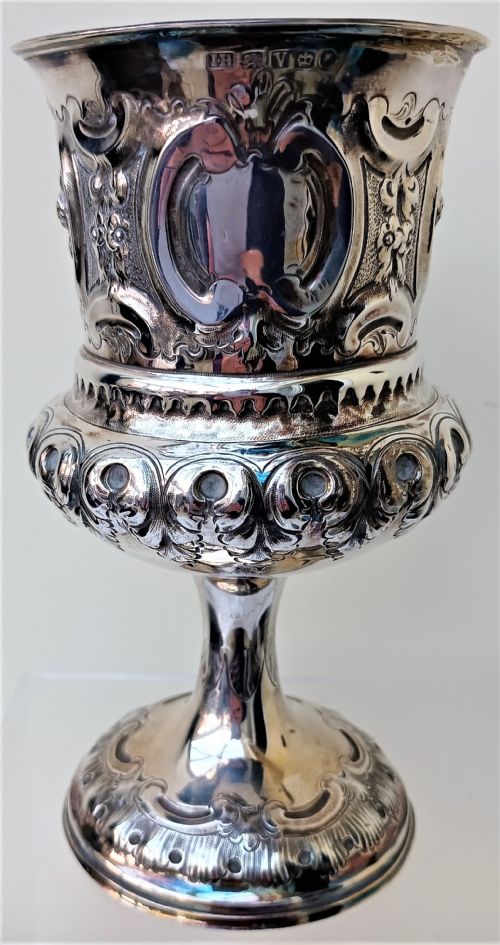

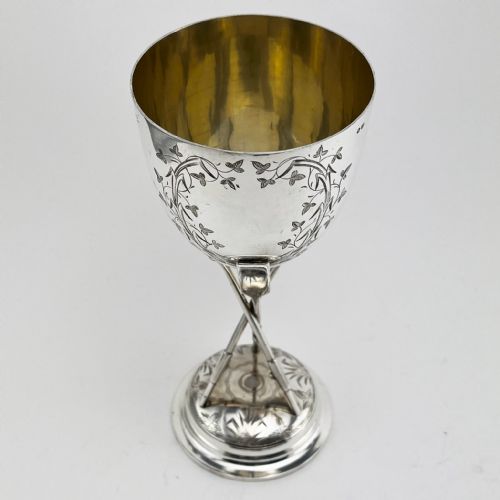


Silver Presentation Chalice
A silver presentation chalice stands as a historic mark of achievement, crafted in sterling silver or silver plate to reward victors on the field.
Silver Presentation Chalice
A silver presentation chalice takes the form of a trophy cup, loving cup, or goblet designed to commemorate athletic victories, sporting achievements, and civic milestones. These vessels emerge across the nineteenth and early twentieth centuries, spanning Victorian, Edwardian, and Art Deco periods.
The pieces on this page originate primarily from English workshops in Sheffield, London, and Birmingham, alongside Chinese Export, Indian Kutch, and German examples. Formats range from modest inscribed goblets to large covered presentation cups resting on ebonised wood bases.
How they were made
Makers shaped sterling silver, solid silver, and silver plate into deep bowls using traditional smithing methods, often applying silver gilt to the interior surfaces. Old Sheffield Plate and standard plate techniques provide the foundation for larger loving cups.
Surface decoration relies heavily on hand engraving, repoussé work, and chased motifs depicting koi carp, sporting scenes, or foliate scrolls. Handles and covers receive cast elements soldered securely to the main body of the vessel.
Listings feature Victorian, Edwardian, and Art Deco examples produced in sterling silver, silver plate, copper, and Sheffield plate.
What varies in quality
The standard of a silver presentation chalice rests on the crispness of the hand engraving and the structural weight of the metal used in the body and handles. Pieces with deep, detailed chasing - such as marine life or complex heraldry - demand higher craftsmanship than plain vessels.
Provenance and maker attribution elevate certain works, particularly signed items from established silversmiths or distinct regional export houses. The presence of matching components, such as covers and fitted ebonised wood bases, completes the integrity of the piece.
James Deakin and Sons·Henry Tatton and Son·Zee Wo·Joseph Rodgers and Sons
The Silver Presentation Chalice Glossary
- Sterling silver
- A silver alloy containing 92.5 percent pure silver by mass, with the remainder composed of copper or other metals. This standard underpins the majority of quality British presentation pieces.
- Sheffield Plate
- An early method of fusing a thin sheet of silver to a thicker copper base before rolling and forming. It is commonly identified by the subtle show of copper beneath worn silver edges.
- Repoussé
- A metalworking technique where the artisan hammers the metal from the reverse side to form a raised design in relief. Chasing is subsequently used to refine the details from the front.
- Loving cup
- A large drinking vessel equipped with two or three handles, traditionally passed between guests at banquets and ceremonial gatherings. Many were later repurposed as sporting trophies.
- Silver gilt
- Sterling silver that has been coated with a thin layer of gold applied through electrochemical or fire gilding methods. This treatment protects the interior from acidic contents.
Silver Presentation Chalice: Frequently Asked Questions
How do I clean a silver chalice?
Use a soft microfiber cloth and a mild, non-abrasive silver polish to remove tarnish gently from the exterior surfaces.
Avoid scrubbing engraved areas aggressively to preserve the crisp details left by the original silversmith.
Are these cups safe for drinking?
Many historical vessels contain gilding on the interior to prevent acidic beverages from reacting directly with the underlying silver.
Examine the inner bowl for secure gilt layers and check for any historical solder repairs before use.
What is the difference between a chalice and a goblet?
A chalice traditionally carries ecclesiastical associations with a deeper bowl and heavier node on the stem, though the terms often overlap.
Goblets generally feature simpler drinking vessel profiles utilised for secular toasts and sporting presentations.
How can I date an unmarked piece?
Examine the overall manufacturing style, handle attachments, and any engraved dedication scripts which often record specific sporting events.
Compare the form against documented Victorian, Edwardian, and Art Deco design patterns found in regional records.