



English Silver Lighting
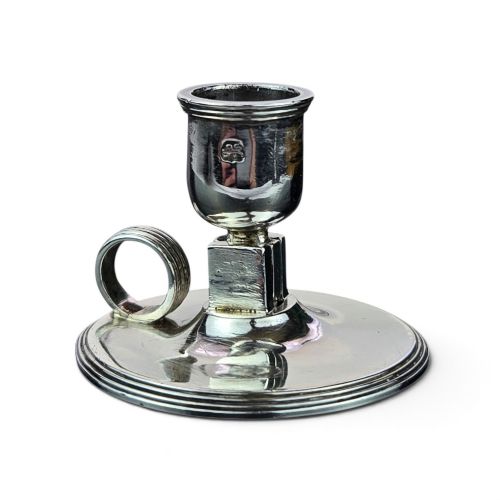
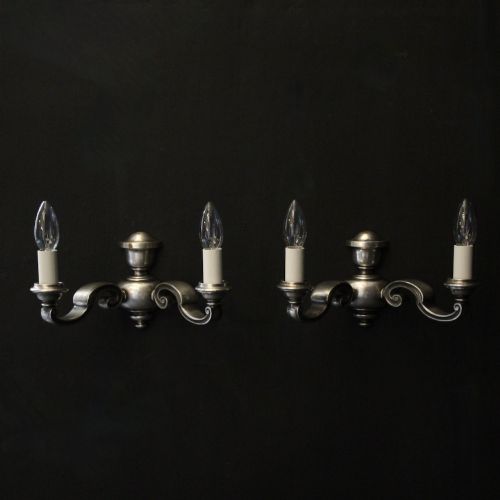
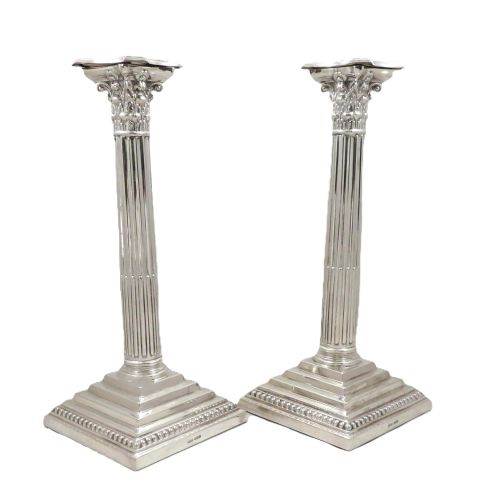
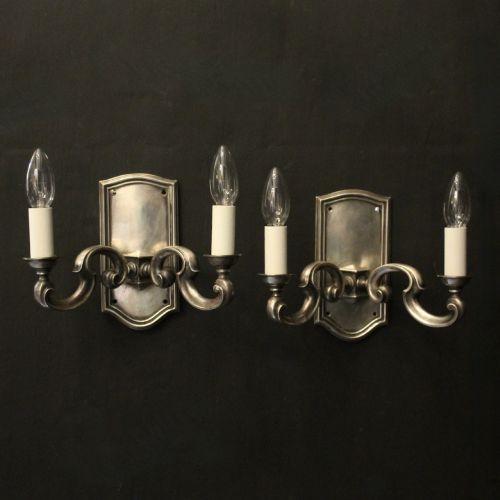
English silver lighting brings together candlesticks, wall lights, and chandeliers crafted from silver plate, sterling silver, and brass across multiple periods.

English Silver Lighting
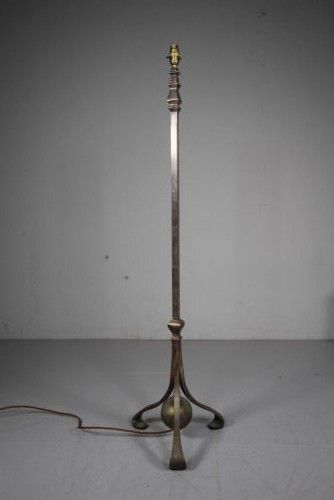
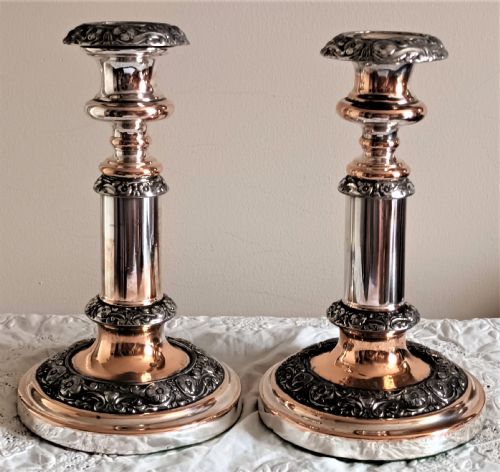
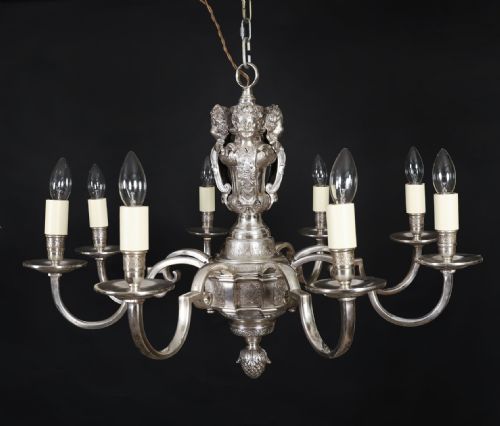
English silver lighting spans a diverse array of forms, ranging from towering floor lamps and intricate multi-arm chandeliers down to diminutive tapersticks and mantelpiece candlesticks. Buyers searching for english silver lighting will encounter pieces that bridge several centuries, including formal Georgian examples alongside robust Victorian and Edwardian interpretations.
Stylistic influences in this category stretch from neoclassical revival and grand regency motifs to organic art nouveau curves and utilitarian art deco forms. The assortment reflects changes in domestic illumination from open flame and candle wax through to wired electric chandeliers and wall sconces.
Materials and construction methods
Makers utilised a foundation of sterling silver, old Sheffield plate, or silver plate applied over base metals such as brass, copper, and paktong. Structural rigidity in taller pieces like floor lamps and multi-light chandeliers often involved cast components joined with threaded fittings.
Cut glass and crystal components were integrated into pendant lights and dish lights to refract and amplify the illumination from candles or early electric bulbs. Surface enrichment included silver gilding, hand-seamed casting, and applied decorative mounts following Georgian and Victorian design repertoires.
English Silver Lighting Retail Price Guide 2026
Typical asking prices for english silver lighting among the pieces listed under this phrase on Sellingantiques today, from the lower quarter to the upper quarter. They describe what is for sale here now, not the wider market.
A solitary cocktail shaker stands among the candlesticks, proving that English silver lighting occasionally prefers shaking to shining.
Distinctions in craftsmanship and execution
Quality rests upon the crispness of cast detail in classical columns or organic art nouveau tendrils, where sharper relief denotes superior tooling. The integrity of the silver surface, whether heavy sterling or durable old Sheffield plate, dictates longevity.
Proportion and weight distinguish utilitarian production from masterwork execution, particularly in telescopic mechanisms or multi-arm chandeliers that require balanced engineering to remain plumb.
David Green·Elkington and Company·Hukin and Heath·Barker Ellis
The English Silver Lighting Glossary
- Sterling silver
- A silver alloy containing 92.5 percent pure silver by mass, standard for high-grade domestic objects.
- Old Sheffield plate
- A composite material formed by fusing a thin sheet of silver to a thicker copper base, common in eighteenth and nineteenth-century wares.
- Paktong
- A copper-nickel-zinc alloy resembling silver, utilised in eighteenth-century casting for its bright metallic lustre.
- Britannia standard
- A British silver alloy standard introduced by Act of Parliament in 1697, containing 95.84 percent silver.
- Candelabra
- A branched candlestick holding multiple candles, often designed as a centrepiece for formal dining tables.
English Silver Lighting: Frequently Asked Questions
How do I date an antique silver candlestick?
Dating relies on assay office hallmarks stamped into the metal, which indicate the exact year of production for sterling items. Stylistic markers such as Corinthian columns, neoclassical urns, or art nouveau curves provide further chronological context.
Unmarked pieces or silver-plated examples require analysis of construction techniques, base materials, and manufacturing patents. Comparing the weight distribution and assembly methods helps narrow down the period of manufacture.
What is the difference between sterling and silver plate?
Sterling silver consists of solid precious metal throughout, marked by statutory hallmarks indicating purity. Silver plate involves a thin layer of silver bonded to a base metal substructure like copper or brass.
plated items often reveal the underlying metal where wear occurs over centuries of handling. Solid sterling pieces maintain their metallic composition intact beneath surface patina.
Can antique wall lights be wired for electricity?
Many wall lights, sconces, and chandeliers from the nineteenth and twentieth centuries adapt readily to modern electrical standards. Professional rewiring ensures internal components meet current safety requirements without altering the exterior metalwork.
Careful installation preserves the historical appearance of wall-mounted fixtures while providing functional illumination for contemporary interiors. Consulting a specialist electrician prevents damage to delicate silver plating or crystal drops.
How should silver lighting be cleaned?
Maintenance requires gentle dusting with a soft cloth to remove particulate matter without abrading delicate plated surfaces. Chemical polishes should be used sparingly to avoid stripping thin silver layers from plated items.
For pieces incorporating crystal or cut glass, mild soapy water applied to the glass components prevents residue buildup. Protective gloves prevent oils from human skin from accelerating tarnishing on exposed silver.