


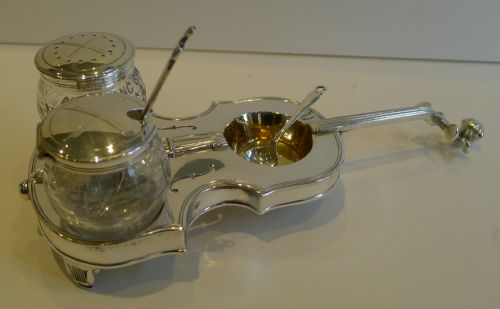

English Silver Condiment Pot
An English silver condiment pot sits on the dining table as a small piece of functional metalwork that holds salt, mustard, or pepper.
English Silver Condiment Pot
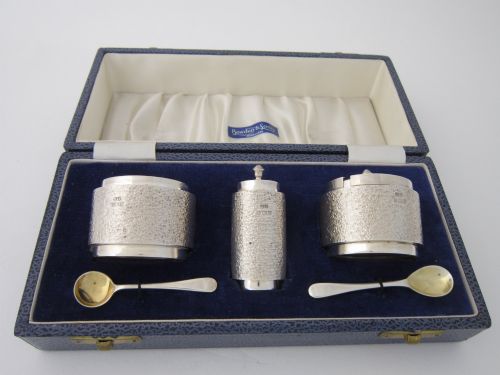
When you search for an english silver condiment pot, you are looking at small vessels designed for table service, including mustard pots, salt cellars, and pepper pots. These items appear either as single vessels or gathered together within cruet sets and condiment sets.
The pieces on this page span several eras, moving from Georgian and Victorian examples through Edwardian designs to mid-century modern and nineteen-sixties pieces. You are most likely to meet silver plated or sterling silver mustard pots and cruet stands from the late nineteenth and early twentieth centuries.
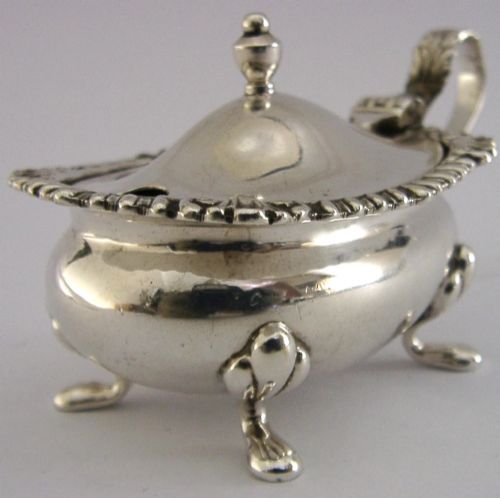
Forms vary from drum mustard pots and sauce dishes to novelty pieces shaped like violins or butlers' trays. Many incorporate contrasting materials, pairing the metal frame with glass or ceramic components.
Materials and construction
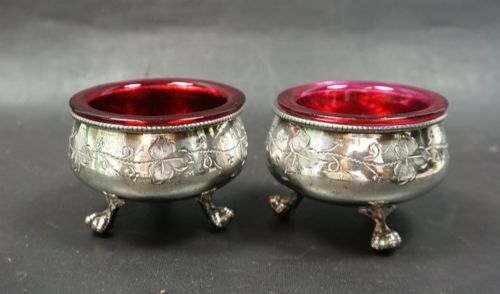
Makers formed these pots using sterling silver or silver plate over a base metal, frequently combining the metalwork with clear, cut, or cranberry glass liners. Some vessels feature internal velvet or silk linings, particularly within cased sets designed for presentation.
Techniques range from plain sheet silver construction to pierced metalwork that reveals the coloured glass insert beneath. Handles, lids, and hinges are soldered to the body, while novelty items employ detailed casting to mimic objects like musical instruments.
The listings on this page span the Georgian, Victorian, Edwardian, and mid-century eras, incorporating materials from sterling silver and silver plate to cranberry glass.
Evaluating the standard of workmanship
The weight of the metal and the crispness of the piercing or chasing separate basic production items from finer workshop output. Substantial gauges of sterling silver impart a reassuring heft that lighter silver plate lacks.
The fit between the glass liner and the metal mount reveals much about the original maker's precision. Original glass inserts that sit flush without wobble indicate a higher grade of manufacture than later replacement liners.
Charles Fox II·Bricks and Sons·Wilmot Manufacturing Co·William Hutton and Sons
The English Silver Condiment Pot Glossary
- Cruet set
- A collection of matching condiment bottles, pots, and shakers held within a single stand or frame. These sets typically served mustard, pepper, oil, and vinegar at the dining table.
- Drum mustard pot
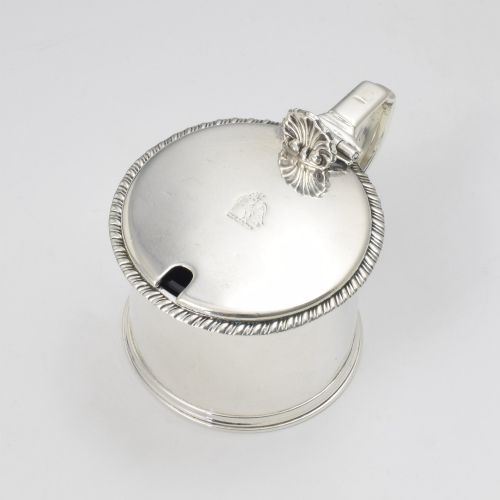
- A cylindrical mustard pot with a flat hinged lid and a vertical handle, popular during the Georgian and Victorian periods. They often contain a blue glass liner to protect the silver from mustard corrosion.
- Hallmark
- A series of stamped marks on precious metal indicating the standard of purity, the assay office, the maker, and the year of manufacture. English silver relies on these stamps to establish provenance.
- Pierced work
- A decorative technique where metal is cut through to create openwork patterns such as lattices or scrolls. This method lightens the appearance of the piece and showcases any glass liner placed inside.
- Silver plate
- A thin layer of silver fused or electroplated onto a base metal such as copper or Britannia metal. This process offered a more affordable alternative to solid sterling silver.
English Silver Condiment Pot: Frequently Asked Questions
What is an English silver condiment pot used for?
These vessels hold individual table seasonings such as dry mustard, prepared mustard, salt, or pepper during meals. They sit on the dining table alongside plates and cutlery for easy access by guests.
Individual pots often include a small spoon for serving mustard or salt onto the side of a plate. Shakers distribute pepper directly over food through pierced holes in the lid.
How do I clean an English silver condiment pot?
Maintenance requires mild soapy water and a soft cloth to remove everyday dust and residue from handling. Avoid harsh abrasive dips that strip away the dark patina accumulated over decades.
For pieces with glass liners, remove the glass before polishing the metal to prevent chemical damage to the silver or the glass surface. Dry both components thoroughly before reassembling.
How can I tell the age of a silver condiment pot?
Dating relies primarily on the stamped hallmarks found on sterling silver items, which record the specific year letter and assay office city. Georgian and Victorian pieces carry distinct stamp formats that differ from twentieth-century marks.
Stylistic cues also help indicate the period of manufacture when hallmarks are absent or worn. Edwardian pieces often display delicate neoclassical revival motifs, while mid-century examples favour clean, unadorned surfaces.
Are glass liners original to the pots?
Original glass liners fit the interior dimensions precisely and match the era's manufacturing methods, such as hand-blown cranberry glass or heavy cut glass. Replacements often fit loosely or show modern machine-moulded seams.
Acid action from mustard frequently damaged early glass and silver, meaning many surviving pots received replacement liners during their working life. Examining the rim and base helps determine if the glass shares the age of the metal mount.