



English Seventeenth Century Chest
An english seventeenth century chest brings centuries of domestic history into a room, surviving in solid oak and walnut forms.
English Seventeenth Century Chest
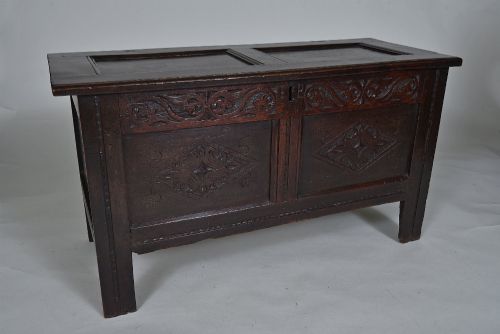
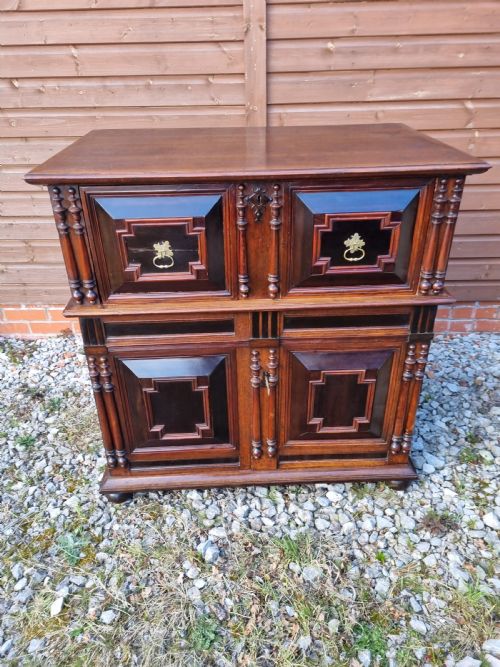
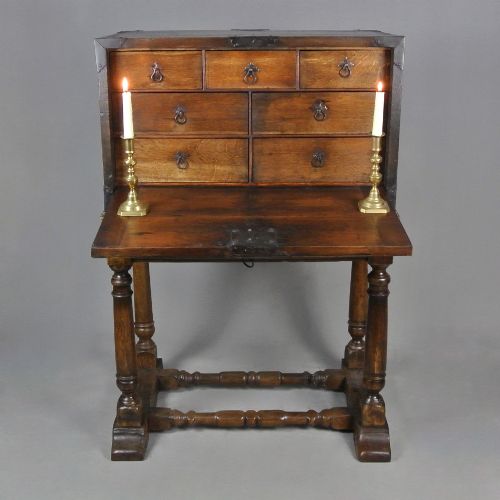
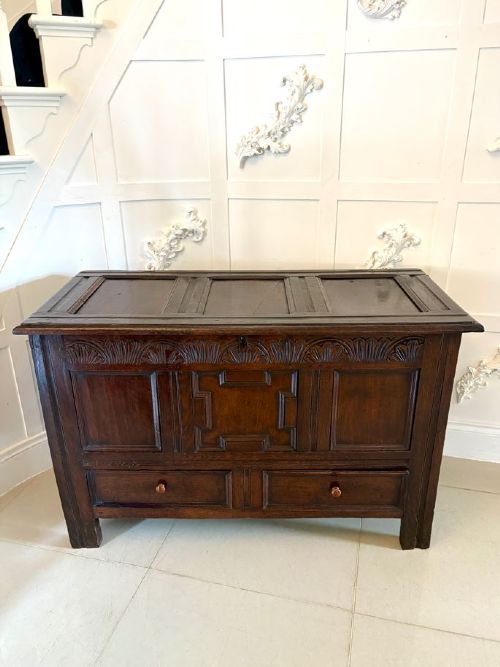
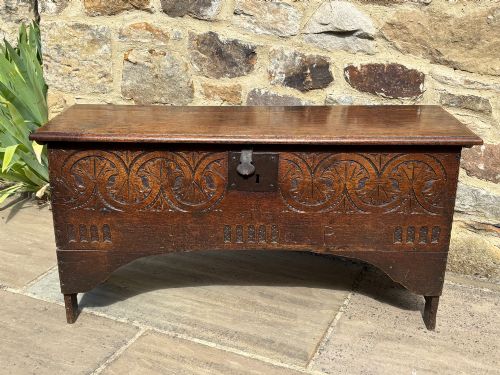
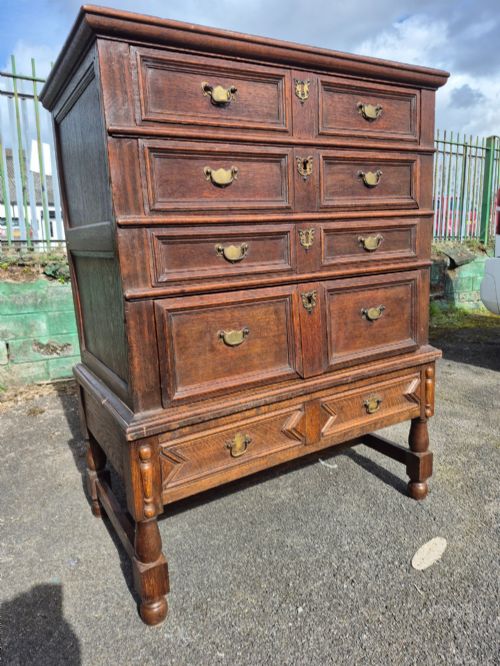
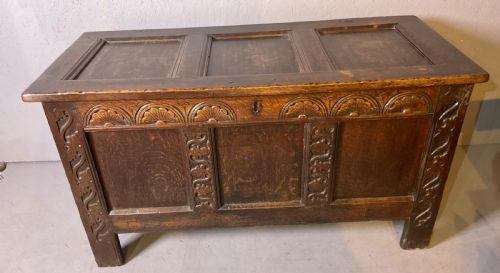
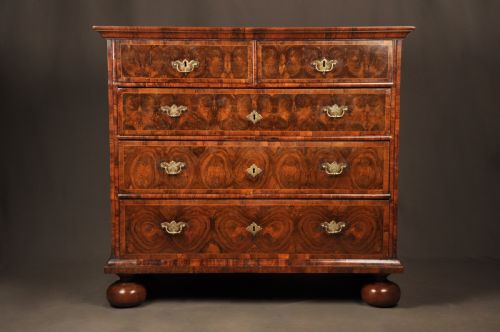
An english seventeenth century chest spans several distinct utilitarian forms designed for storage and security in early homes. The selection comprises sturdy coffers, blanket boxes, mule chests fitted with lower drawers, and multi-drawer chests reflecting the transition from simple boarded construction to sophisticated case furniture.
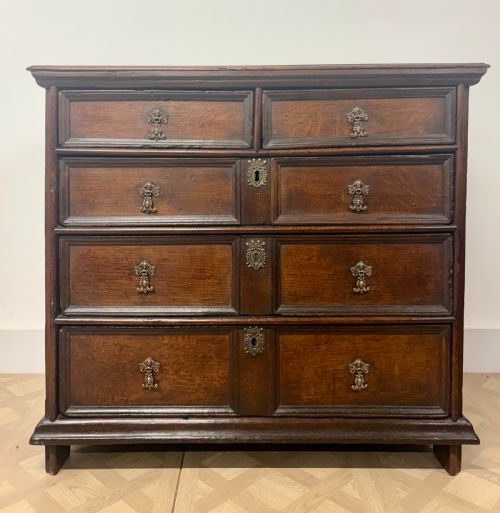
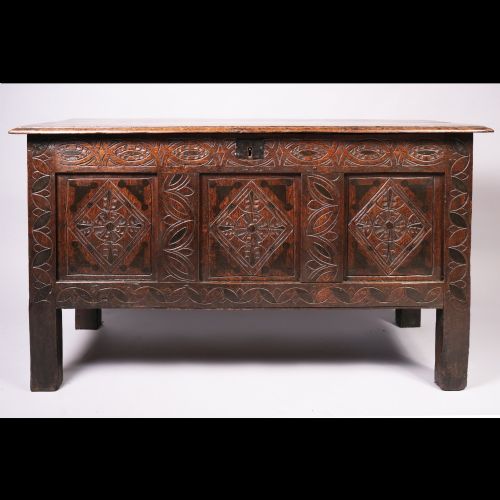
Jacobean and Charles II examples dominate the available styles, often showing regional variations such as Dorset coffers alongside architectural arcading and geometric drawer mouldings. Pieces range from plain six-plank storage boxes to ambitious two-part chests and elevated chests on stands dating towards the end of the seventeen hundred period.
Materials and Technique
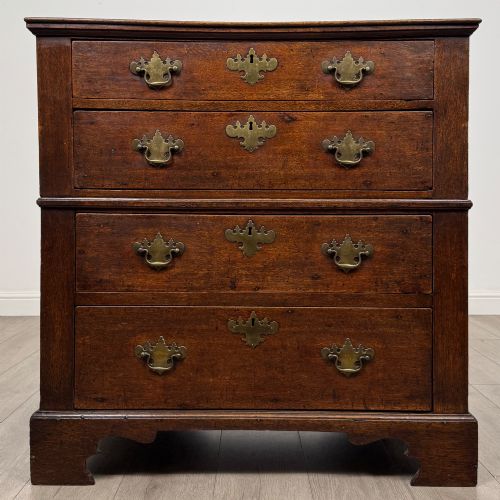
Carpenters relied primarily on English oak, constructing carcasses with frame and panel techniques that accommodated the natural seasonal movement of timber. Joinery depended on pegged mortise and tenon joints, while iron strap hinges, brass drop handles, and wrought iron locks provided necessary structural reinforcement and security.
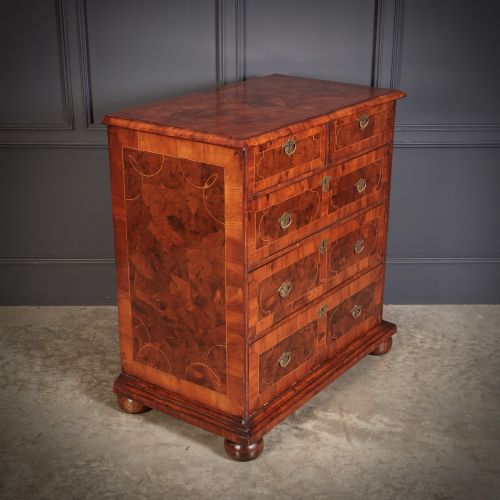
Decorative surfaces display specialised techniques including shallow carved panels, applied geometric mouldings in ebony and walnut, and elaborate oyster veneering arranged in circular or geometric patterns across drawer fronts.
English Seventeenth Century Chest Retail Price Guide 2026
Typical asking prices for english seventeenth century chest among the pieces listed under this phrase on Sellingantiques today, from the lower quarter to the upper quarter. They describe what is for sale here now, not the wider market.
Listings feature walnut, oak, and sycamore alongside iron and brass hardware across seventeenth century periods.
Assessing Quality
Quality rests upon the integrity of the original construction, the crispness of the hand-carved panels, and the survival of secondary timbers such as sycamore or walnut without extensive modern timber replacement. Superior examples retain their original board tops, robust bases, and authentic period hardware rather than reconstituted elements from later centuries.
The sophistication of the surface decoration dictates distinction within the tier, separating plain utilitarian storage boxes from high-status geometric chests of drawers and oyster-veneered pieces that required advanced cabinet-making skills.
The English Seventeenth Century Chest Glossary
- Coffer
- A heavy wooden storage chest with a hinged lid, traditionally used for securing valuables and textiles before the widespread use of wardrobes.
- Mule chest
- A storage chest equipped with one or more drawers built into the base beneath the main compartment.
- Oyster veneering
- Slices cut transversely from small branches to create circular patterns of wood grain resembling oyster shells.
- Arcading
- A decorative frieze or panel carved to resemble a succession of arches supported by columns.
- Geometric moulding
- Applied strips of wood arranged in repeating geometric patterns, typical of late seventeenth century drawer fronts.
English Seventeenth Century Chest: Frequently Asked Questions
What is an english seventeenth century chest used for?
These pieces served primarily for storing household valuables, linens, and documents in early domestic settings.
Modern interiors utilise them as functional coffee tables, hallway storage benches, or statement display surfaces.
How do I identify a Jacobean chest?
Jacobean examples typically display heavy oak construction with linear carved panels, stiles, and rails.
They often incorporate architectural motifs such as arcading and rely on pegged joinery rather than metal nails.
What is the difference between a coffer and a chest of drawers?
A coffer is a top-opening storage box, whereas a chest of drawers provides horizontal sliding drawers accessed from the front.
Mule chests bridge this distinction by combining a top-loading compartment with base drawers.
Are these chests made entirely of solid oak?
While solid oak forms the structural carcass of most examples, secondary woods like walnut, sycamore, and ebony appear in decorative veneers and inlay work.
Internal partitions and drawer linings often utilise softer native timber boards.