


English Salt Glazed Stoneware
English salt glazed stoneware pieces are sturdy pottery vessels defined by their distinctive pitted surfaces, spanning from eighteenth-century chargers to Victorian jugs.
English Salt Glazed Stoneware
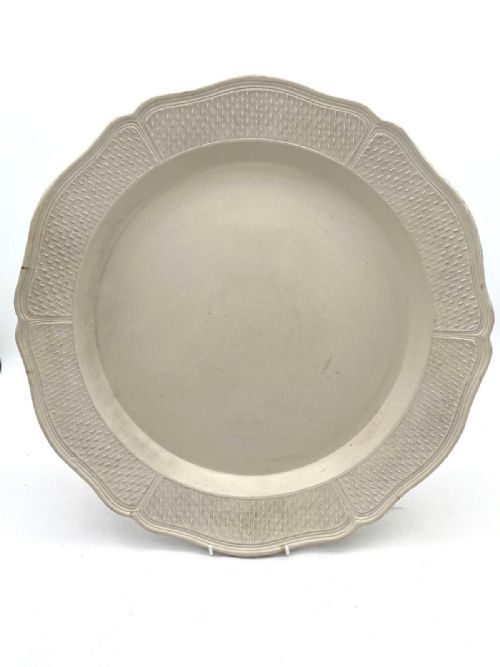
English salt glazed stoneware primarily comprises utilitarian and decorative vessels made across the eighteenth and nineteenth centuries, with Victorian jugs appearing most frequently in current selections. Buyers encounter various forms including large chargers, multi-handled tygs, puzzle jugs, and beverage pitchers produced by English potteries.
The objects reflect distinct stylistic shifts from plain Georgian earthenware traditions through to elaborate Victorian decorative arts and Arts and Crafts designs. Pieces range from simple tavern jars and ale pitchers to exhibition-quality harvest jugs mounted in sterling silver or silver plate.
Materials and technique
Potters shaped dense clay bodies by hand or on the wheel before shovelling common salt directly into the kiln fires at high temperatures. The vaporised salt reacted with the silica in the clay to produce a hard, glossy surface texture resembling orange peel.
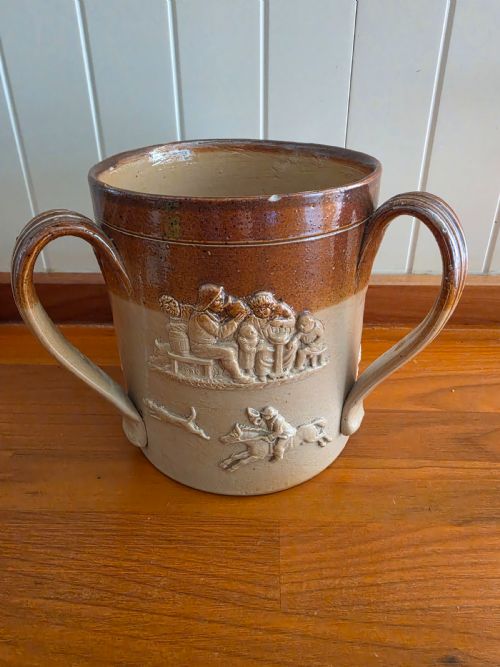
Many finer nineteenth-century examples incorporate applied cream-coloured sprigged reliefs and are fitted with hallmarked sterling silver rims or silver-plated lids. Some vessels also utilise contrasting glazes or intricate incised Art Nouveau patterns alongside traditional salt glazing.
Listings span the eighteenth and nineteenth centuries, incorporating materials such as ceramic, stoneware, sterling silver, and silver plate.
Judging quality
Quality rests upon the crispness of the moulded sprigged decoration and the uniformity of the orange-peel salt texture across the clay body. Superior vessels display sharp relief work and balanced proportions rather than muddy details or slumped walls.
Provenance and added metal mounts elevate certain pieces, particularly when items feature documented maker attribution, precious metal rims, or complete matching tea sets. The skill required to throw large chargers or complex puzzle jugs also distinguishes standard tavern ware from exhibition pieces.
Doulton Lambeth·Emma Shute·C And A Painter
The English Salt Glazed Stoneware Glossary
- Salt glaze
- A vitreous coating formed on pottery by throwing common salt into the kiln during the high-temperature firing stage. This chemical reaction creates a durable, slightly pitted surface.
- Sprigged
- Moulded clay reliefs applied to the unfired surface of a vessel before glazing and firing. These decorative motifs typically depict hunting scenes, floral patterns, or heraldic emblems.
- Tyg
- A drinking vessel with three or more handles designed for communal passing around a table. They appear frequently in traditional English country pottery.
- Puzzle jug
- A vessel featuring a pierced neck and deceptive channels that make drinking from the main spout impossible without spilling unless the user knows the secret. These items demonstrate the potter's technical skill.
- Charger
- A large ornamental or serving plate intended primarily for display on a wall or dresser rather than everyday dining.
English Salt Glazed Stoneware: Frequently Asked Questions
What is salt glazed stoneware?
Salt glazed stoneware is durable pottery fired at extremely high temperatures where salt is introduced to create a distinctive textured finish.
The resulting glaze resists moisture and acids, making the ceramic suitable for storing liquids, ale, and food.
How old are these jugs?
The pieces available range from eighteenth-century chargers down to late Victorian tea sets and puzzle jugs.
Most items date from the nineteenth century, reflecting the peak production period of English potteries like Doulton Lambeth.
Were these pots used daily?
Many vessels served practical roles in taverns and households as ale pitchers, water jugs, and soup jars.
Other examples, such as exhibition pieces or silver-mounted beakers, were intended for display or special domestic occasions.
Why do some have silver?
Silversmiths added sterling silver rims or plated lids to reinforce vulnerable brims and enhance the value of finer jugs.
This practice was common on better-quality Victorian presentation pieces and harvest jugs.