



Antique Liquor Jug
An antique liquor jug holds spirits with quiet authority, bringing craftsmanship from the Victorian and Edwardian eras straight to the sideboard.
Antique Liquor Jug
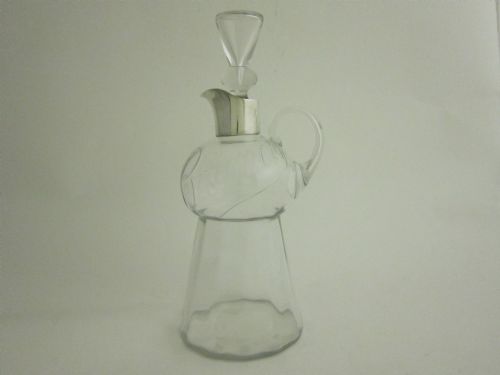
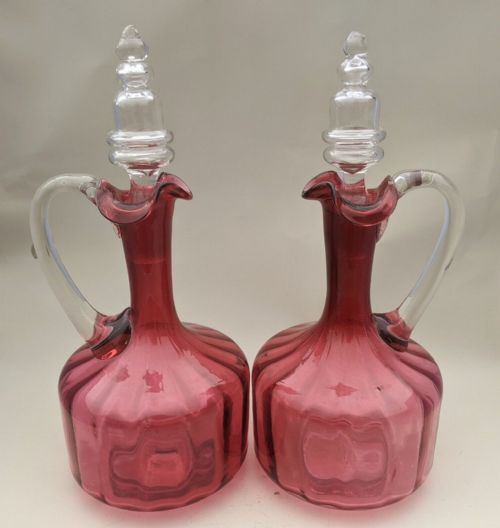
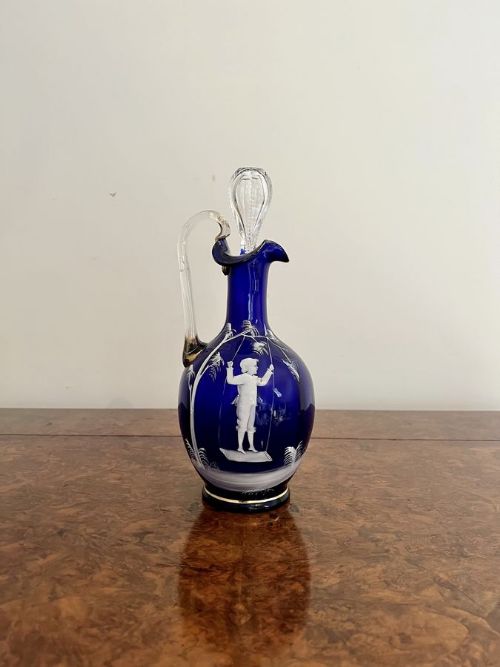
When you search for an antique liquor jug, you encounter vessels designed to serve spirits like whisky, brandy, port, and claret at the table. The selections on this page span the Victorian, Edwardian, and George V periods, covering forms from simple whisky noggins to decorative ewers and cranberry glass decanters.
The most common formats you meet here are silver-mounted glass decanters and small whisky noggins fitted with their own silver labels and tots. Stoneware jugs also appear alongside blown glass, representing the standard drinking and serving vessels of the nineteenth and early twentieth centuries.
Origins vary across British manufacture alongside German spirit ewers and Irish silver mountings. Each object reflects the social dining habits of the late 1800s and early 1900s, where proper spirit service demanded specific glassware and precious metal mounts.
Materials and methods
Makers formed these vessels using clear, cut, lead crystal, and coloured glass such as cranberry and blue glass, often combining hand-blown techniques with intricate wheel cutting. Stoneware provides a heavier, opaque alternative seen in utilitarian spirit containers.
Sterling silver mounts, collars, and hinged lids were applied by silversmiths to secure the necks and mouths of the glass bodies. Matching silver labels or tags frequently accompanied these mounts to identify the specific spirit held within.
Judging quality in these vessels
Quality rests in the weight and clarity of the glass, the depth and precision of the cut patterns, and the substance of the sterling silver mounts. Superior pieces display crisp hallmarks, heavy lead crystal bodies, and tightly fitted silver hardware without looseness.
Artistic execution distinguishes standard utilitarian containers from decorative pieces, particularly where hand-blown coloured glass or complex scroll designs are integrated into the body. The presence of matching silver labels and original stoppers elevates the integrity of the ensemble.
Hukin and Heath·Elkington
The Antique Liquor Jug Glossary
- Whisky Noggin
- A small vessel used for serving a single measure of whisky, typically supplied with a silver mount and a matching silver label. These small jugs are sometimes paired with a tiny handled glass tot.
- Claret Jug
- A tall pouring vessel specifically shaped for serving red wine, usually featuring a glass body embellished with a decorative silver handle, collar, and hinged spout.
- Cranberry Glass
- A rich red glass coloured with gold chloride during production, popular for decorative decanters and glassware during the Victorian and Edwardian eras.
- Ewer
- A pitcher with a large spout and a decorative handle, used historically for holding and pouring liquids at the table.
- Lead Crystal
- Glass manufactured with a high lead content to increase weight, refractive brilliance, and clarity, allowing for deep, sharp wheel-cut decorations.
Antique Liquor Jug: Frequently Asked Questions
How do I date an antique jug?
Dating relies primarily on the hallmarks stamped onto the sterling silver mounts, which indicate the exact year and assay office of manufacture.
Style, glass colour, and cutting techniques also provide reliable indicators, pointing towards the Victorian or Edwardian periods.
Are these jugs safe for serving drinks?
Most of these vessels were designed to hold and serve alcohol and remain entirely suitable for decanting spirits today.
Gentle hand washing protects the antique glass and preserves the sterling silver mounts from harsh modern detergents.
What is the difference between a decanter and a noggin?
Decanters are larger vessels meant to hold a full bottle of wine or spirits for communal sharing across a dining table.
Noggins are miniature jugs intended for solitary use, holding a fraction of the volume with an attached handle and spout.