





English Revival Sideboard
An English revival sideboard brings heavy architectural presence and solid timber grain into a room, offering both generous storage and distinct historical character.
English Revival Sideboard
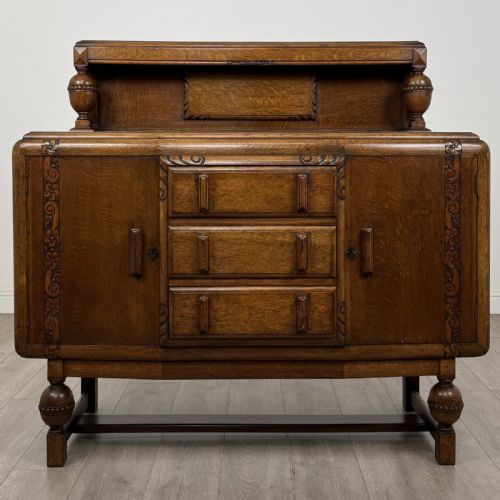
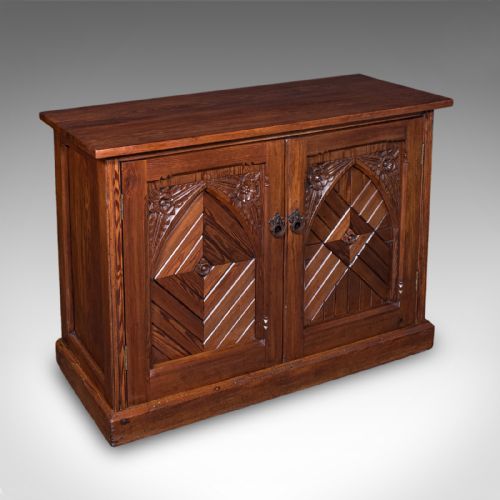
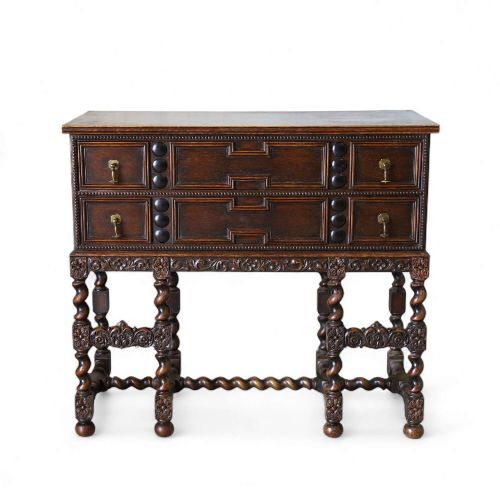
An English revival sideboard represents a deliberate return to earlier historical aesthetics, drawing heavily upon Tudor, Jacobean, Carolean, and Gothic vocabularies. These pieces combine substantial utility with the decorative carved motifs of centuries past.
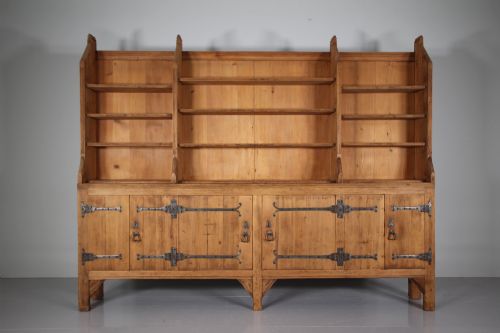
The versions most commonly found here date from the nineteenth and early twentieth centuries, spanning periods from Victorian revivals through to the nineteen-thirties. They take various forms, including dresser bases, carved cupboards, and breakfront side cabinets.
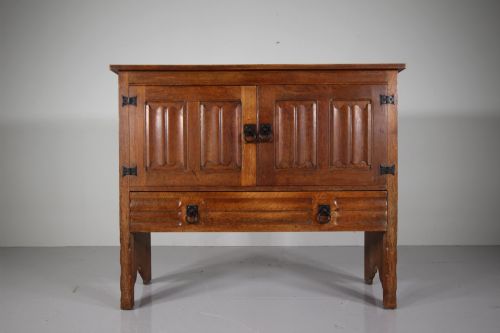
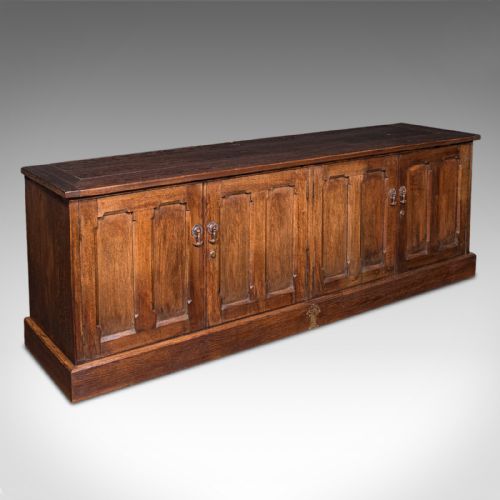
Makers of these sideboards looked back to earlier eras for inspiration, resulting in substantial oak construction embellished with linenfold panels, barley-twist supports, and deep mouldings. They serve as both functional dining room storage and focal points of period design.
Materials and construction methods
Solid oak serves as the primary timber for these pieces, chosen for its durability and its ability to take deep, sculptural carving. Craftsmen also employed exotic woods like satinwood and coromandel for specific revival styles, such as Sheraton and nineteenth-century aesthetic interpretations.
Joinery techniques rely heavily on traditional framing and panel construction to accommodate the natural movement of large timber surfaces. Carved elements, from linenfold patterns to barley-twist legs, are executed directly into the solid wood or applied with precision.
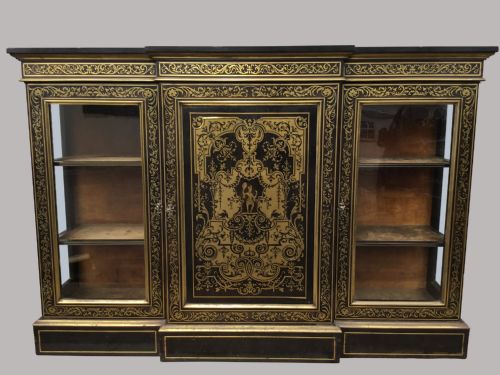
Metal hardware, including brass hinges, drop handles, and iron fittings, completes the construction, often patinated to match the historical period being invoked. Occasional detailing incorporates glass doors, inlaid marquetry, and Boulle work.
English Revival Sideboard Retail Price Guide 2026
Typical asking prices for english revival sideboard among the pieces listed under this phrase on Sellingantiques today, from the lower quarter to the upper quarter. They describe what is for sale here now, not the wider market.
Listings feature multiple timber species including oak, satinwood, coromandel, ebony, and pine alongside brass and iron hardware.
Assessing quality in revival pieces
The depth and crispness of the timber carving set superior examples apart from standard production pieces. Finer sideboards display hand-chiseled detail with sharp relief, whereas lesser items rely on shallow machine routing or simpler applied mouldings.
The selection of timber grain and the integrity of the cabinet construction dictate the overall stature of the piece. Heavier, well-seasoned oak and carefully matched veneers demonstrate a higher level of workshop competence and material cost.
Proportion and architectural balance define the most successful revivals, where hardware, supports, and decorative motifs cohere naturally. Pieces that clumsily crowd too many historical styles onto a single frame lack the authority of well-resolved designs.
Lamb of Manchester
The English Revival Sideboard Glossary
- Linenfold
- A style of wood carving representing folded fabric or parchment, frequently seen on Tudor and Jacobean revival panels. This technique creates a textured surface that catches the light across cupboard doors.
- Barley-twist
- A turned furniture leg or support resembling a twisted rope, popular in Carolean and seventeenth-century revivals. It adds vertical energy and dynamic shadow to heavy oak case pieces.
- Dresser base
- A low sideboard or cabinet featuring surface display space above drawers and cupboards, originating from country houses. These pieces provide substantial base storage without the upper plate racks.
- Marquetry
- The art of applying decorative pieces of veneer to a structure to form intricate designs or pictures. This technique appears on finer Sheraton revival satinwood cabinets.
- Breakfront
- A piece of furniture whose central section projects forward from the flanking wings. This architectural arrangement creates depth and visual rhythm in larger side cabinets and bookcases.
English Revival Sideboard: Frequently Asked Questions
What periods do these sideboards come from?
The pieces available span from the late nineteenth century through the nineteen-thirties, capturing various waves of historical revival. Victorian craftsmen frequently reinterpreted earlier Tudor and Gothic forms.
Later examples extend into the interwar years, maintaining traditional carving techniques while adapting to changing domestic interiors.
How do I care for antique oak?
Solid oak furniture benefits from occasional treatment with quality beeswax to nourish the timber and protect the grain. Avoid placing these heavy pieces in direct sunlight or near heat sources to prevent timber splitting.
Regular dusting with a soft, dry cloth preserves the patina built up over decades of use.
Where were these pieces used?
These sideboards and dresser bases traditionally served in dining rooms and large halls for storing linens, cutlery, and serving dishes. Their sturdy surfaces also provided space for displaying silver and ceramics.
Today, they function equally well in modern living spaces as media consoles or statement storage cabinets.
How can I tell the styles apart?
Gothic revival pieces feature pointed arches and heavy tracery, whereas Jacobean and Carolean items showcase geometric panels and turned supports. Sheraton revival pieces are lighter, often utilising satinwood and delicate inlay.
Examining the primary timber and the specific carving motifs clarifies which historical era the maker sought to emulate.