




English Revival Cabinet
An English revival cabinet brings centuries of historic design into domestic spaces through confident architectural forms.
English Revival Cabinet
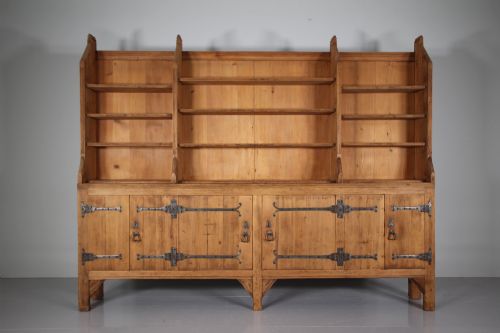
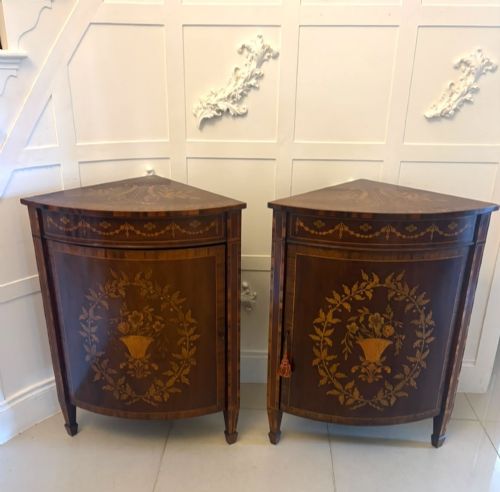
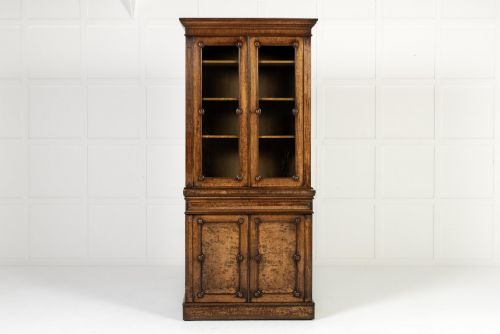
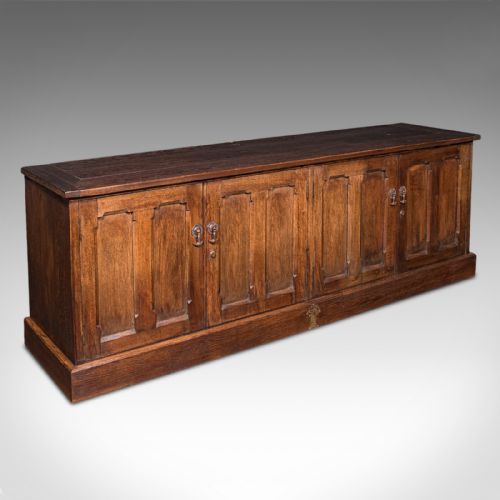
An English revival cabinet draws upon historical periods such as the Jacobean, Tudor, Gothic, and Georgian eras, reinterpreted by cabinet makers during the nineteenth and early twentieth centuries. These pieces appear in forms ranging from substantial oak bookcases and dresser bases to intimate corner cabinets and display units.
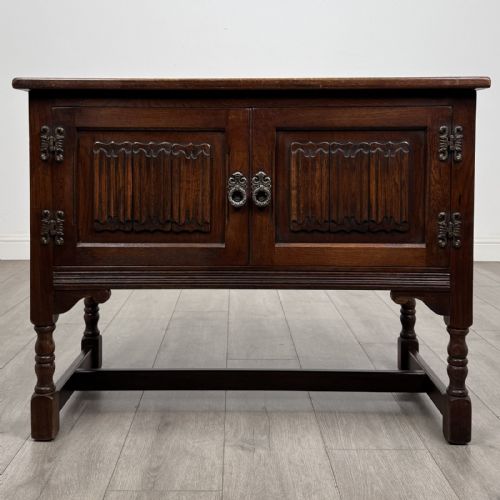
The most common examples encountered on this page date from the Victorian and Edwardian periods, reflecting a sustained domestic appetite for historicizing furniture. Makers combined earlier vernacular motifs, such as linenfold panels and carved strapwork, with the functional storage requirements of contemporary homes.
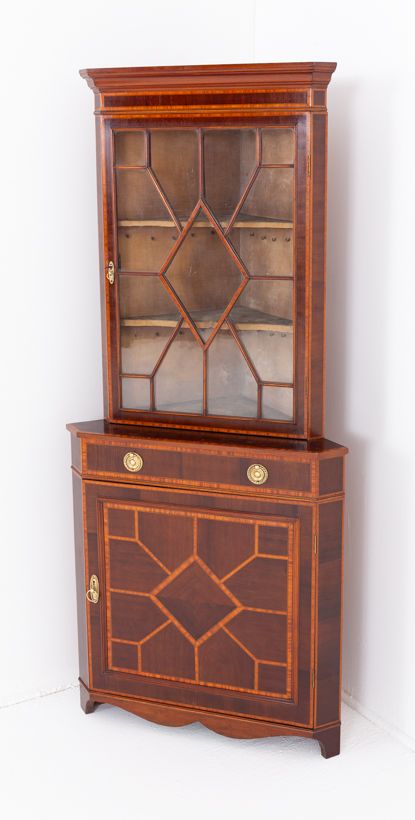
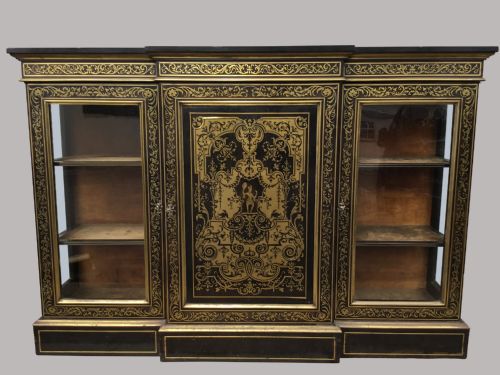
Buyers select these items to anchor a room with traditional gravitas while gaining practical shelving or enclosed storage. The structural variety spans corner cupboards designed to utilise awkward angles to expansive breakfront bookcases meant for grand reception rooms.
Assessing quality
The distinction between standard commercial output and superior workshop production rests upon the crispness of the timber carving and the selection of figured veneers. Workshops known for high-end cabinet work employed master carvers whose hand-chiselled details possess depth and individuality, unlike the more uniform pressing found on mass-produced alternatives.
Structural integrity and timber seasoning govern longevity, with better items showing minimal warping and tight, flush joints across large panelled doors and breakfront cornices. The integration of secondary timbers inside drawers and behind backboards further separates utilitarian items from bespoke commissions.
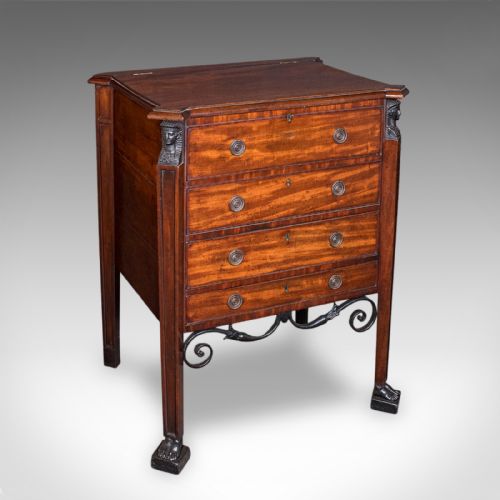
One exceptional nineteenth-century piece combines domestic storage with the solemn duty of holding a homeowner's gun collection.
Edwards and Roberts·James Winter and Sons·Lamb of Manchester·Town and Emanuel
The English Revival Cabinet Glossary
- Breakfront
- A cabinet design where the central section projects forward from the flanking wings. This architectural layout creates visual depth in large bookcases and side cabinets.
- Marquetry
- The art of applying fitted pieces of veneer to a structure to form decorative patterns or pictures. Craftsmen used contrasting timbers such as satinwood and mahogany to achieve tonal variety.
- Linenfold
- A style of wood carving representing folded linen, frequently used on the panels of Tudor and Jacobean revival cupboards. It provides a textured, rhythmic surface to flat wooden areas.
- Cornice
- The decorative moulding crowning the top of a cabinet or bookcase. Revival pieces often feature specific architectural cornices, including crenelated or dentil designs.
- Corner cabinet
- A piece specifically constructed to fit into the internal corner of a room. These items maximise floor space while offering display or enclosed storage.
English Revival Cabinet: Frequently Asked Questions
What defines an English revival cabinet?
An English revival cabinet is a piece of furniture made during the nineteenth or early twentieth centuries that deliberately copies or adapts historical styles from earlier centuries. These designs look back to periods like the Elizabethan, Jacobean, or Georgian eras for their decorative vocabulary.
Craftsmen used traditional motifs such as linenfold panels, carved strapwork, or classical pediments while building furniture suited to Victorian and Edwardian homes. This approach allowed owners to enjoy the prestige of antique aesthetics with the sturdiness of more recent construction.
How do I date a revival cabinet?
Dating these cabinets requires examining the secondary woods used inside, the style of the hardware, and the construction methods employed in hidden areas. Drawer linings made of oak or mahogany rather than deal, alongside hand-cut dovetailing, usually point toward the nineteenth century.
The specific revival style offers another clue, as Gothic and Jacobean revivals gained momentum during the mid-Victorian decades, while Sheraton and Georgian revivals frequently date closer to nineteen hundred. Maker marks, where present, provide the most direct confirmation of an active workshop period.
Where were these cabinets placed originally?
Depending on their form, these cabinets served various rooms across country houses, town residences, and suburban villas. Large breakfront bookcases and dresser bases anchored formal reception rooms, libraries, and dining spaces.
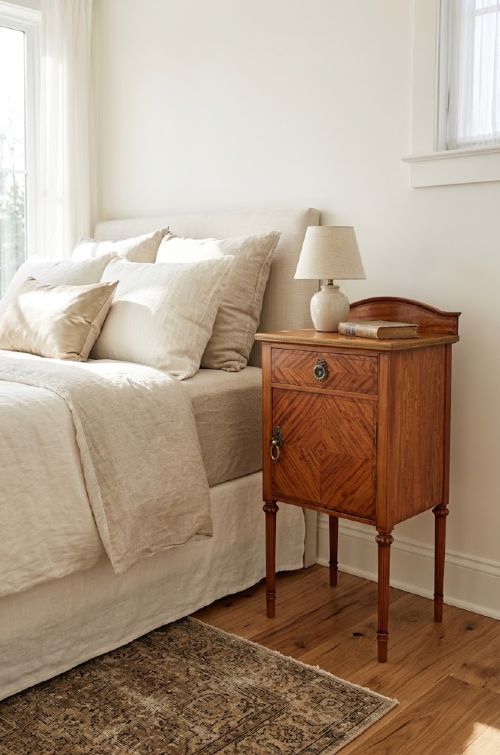
Smaller corner cabinets, wall-hanging cupboards, and bedside tables were designed to utilise compact spaces in hallways, bedrooms, or parlours. Their placement depended entirely on whether the owner intended to display porcelain and books or store household goods away from view.
How should I care for timber revival furniture?
Maintaining these pieces involves protecting the wood and polished finishes from extreme environmental shifts in humidity and temperature. Placing cabinets away from direct sunlight prevents the fading of delicate veneers like satinwood or coromandel.
Applying a traditional beeswax polish occasionally helps nourish dry timber and maintain the lustre of the surface without building up synthetic residues. Regular dusting with a soft, dry cloth prevents particulate matter from settling into carved details.