




English Regulator Clock
An english regulator clock is a precision timekeeper designed for absolute accuracy, housed in timber cabinets with silvered metal dials.
English Regulator Clock
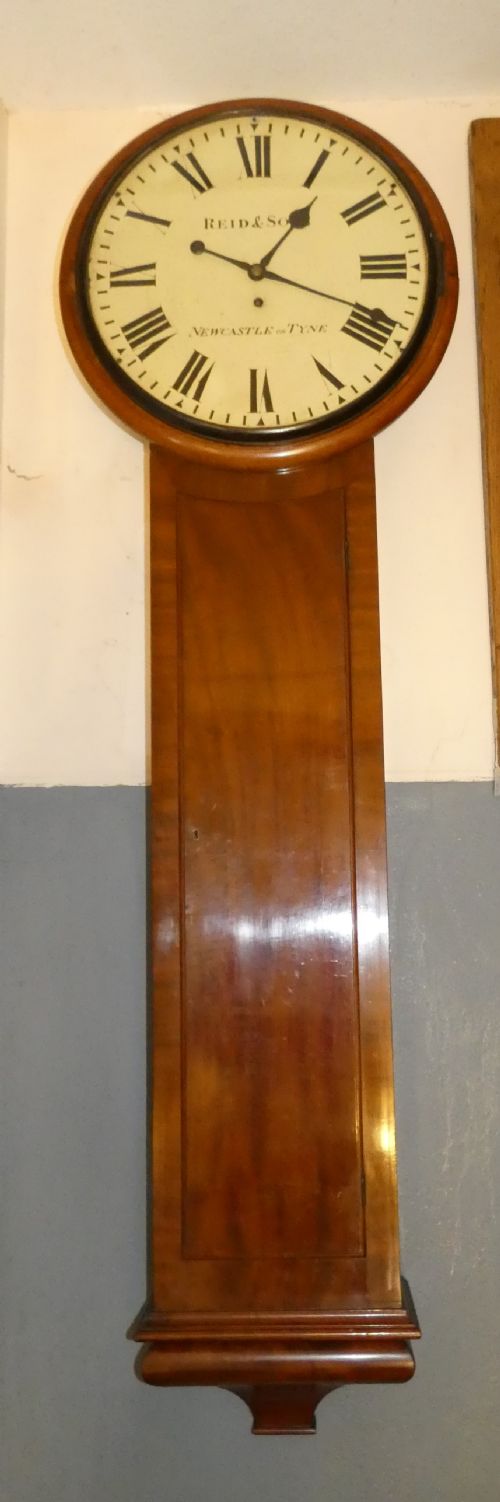
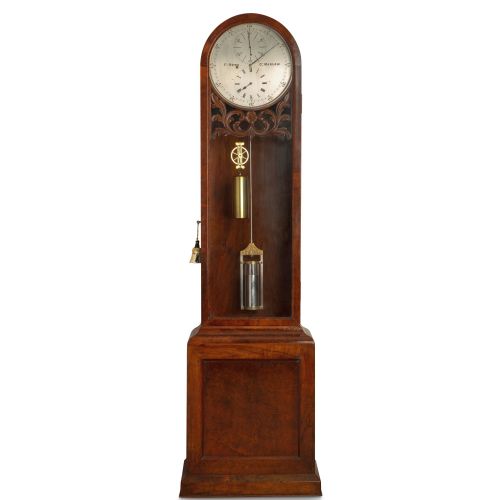
An english regulator clock is a precision timekeeper built for exactness, predominantly found in tall floor-standing longcase formats or architectural wall-mounted cases. These pieces date across the eighteenth and nineteenth centuries, spanning Georgian, Regency, and Victorian periods.
The versions most commonly met on this page include longcase clocks and wall clocks constructed from dense timber. Makers signed dials or movements, creating functional scientific instruments for observatories, offices, and large halls.
How they were made
Cabinetmakers built the tall or wall-hanging cases using mahogany, flame mahogany, or rosewood veneers over firmer woods, sometimes incorporating glass panels to display the pendulum and weights. Dials were typically formed from silvered metal with engraved chapter rings.
Internal movements relied on brass wheel trains and brass plates, driven by suspended weights or double fusee mechanisms. Some variations included mother-of-pearl accents or silk suspension threads for the pendulum.
Some provincial makers proudly signed their brass dials with the name of their village, ensuring local timekeeping was forever tied to places like Great Marlow.
What varies in quality
The refinement of the brass movement and the precision of the gear cutting dictate the mechanical grade of the timekeeper. Superior examples feature heavily framed movements designed specifically for low friction and high chronological accuracy.
Cabinet work separates standard production from exceptional pieces through the choice of timber figures, such as matched flame mahogany, and the crispness of brass dial engraving by named makers.
John Walker·John Taylor·Chater And Son·Pearce And Sons·Hampston Prince And Cattles·Frederick Rowe·Richard Rowell
The English Regulator Clock Glossary
- Regulator
- A precision pendulum clock used as a standard for setting other timepieces. These mechanisms were calibrated for extreme accuracy.
- Fusee
- A conical pulley used with a cord or chain to maintain equal force on the clock movement as the mainspring unwinds. This mechanism improves timekeeping consistency.
- Silvered metal
- A brass dial plate treated with a silver solution to create a matte white finish. Graduations and maker signatures are then engraved and blackened into the surface.
- Drop dial
- A wall clock design featuring a circular dial head above a short, glazed trunk. This form protects the pendulum bob while maintaining a compact footprint.
English Regulator Clock: Frequently Asked Questions
Where were english regulator clocks used?
These precision timekeepers were primarily placed in locations requiring exact time measurement, such as astronomical observatories, railway stations, and merchant offices. Their high accuracy made them the master clock against which pocket watches and domestic clocks were set.
Domestic installations also occurred in the hallways and libraries of substantial townhouses and country estates, where owners appreciated both scientific utility and formal furniture presence.
How do I wind a regulator clock?
Winding requires using a matching key inserted into the winding holes on the dial face to raise the internal weights or tension the spring. Care must be taken not to overwind the mechanism, stopping as soon as resistance is felt.
Pendulum clocks must be set in beat after winding or moving to ensure the escapement ticks evenly. Consulting the specific gear train layout prevents damage to the brass wheels.
Can I hang a wall regulator on any wall?
Wall-mounted examples require secure attachment to solid masonry or direct timber studs using heavy-duty fixings. The substantial weight of the timber case and brass movement demands stable support to maintain vertical alignment.
If the case tilts even slightly, the pendulum swing becomes uneven, causing the clock to stop or lose time. Plumb lines help ensure the cabinet hangs straight against the surface.
What is the difference between a longcase and a wall regulator?
Longcase versions house the pendulum and descending weights inside a tall wooden trunk resting on the floor. This format allows for longer pendulums, which inherently swing with greater chronological stability.
Wall regulators shorten the cabinet to mount directly at eye level, suspending shorter pendulums or utilising compact double fusee movements. Both share the same precision dial layouts and silvered metal chapters.