


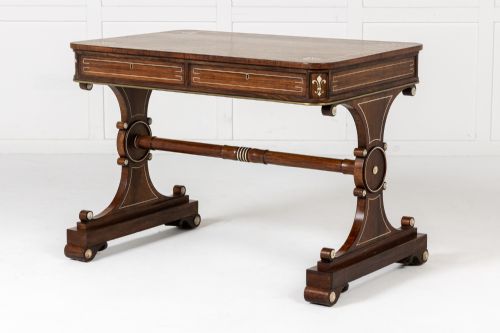


English Regency Writing Table
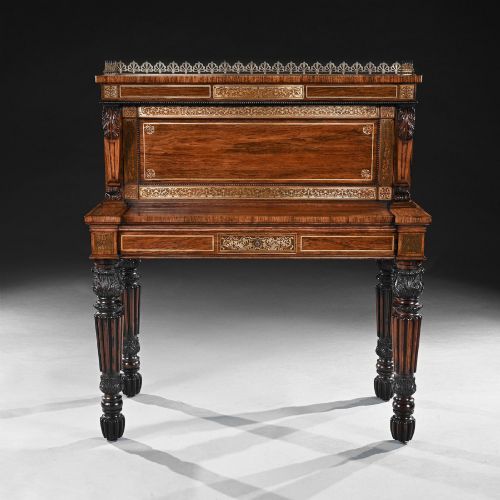
When you search for an english regency writing table, you encounter freestanding library desks and rosewood tables crafted during the early nineteenth century.
English Regency Writing Table
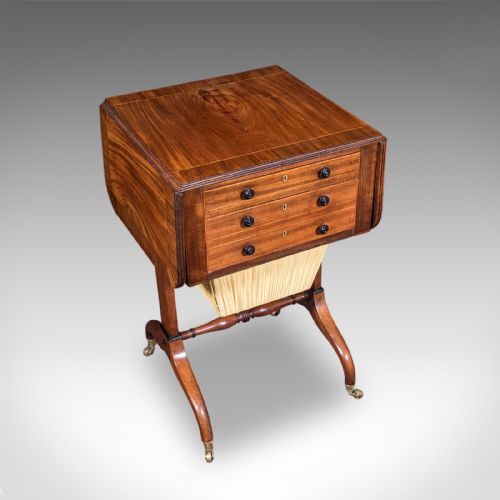
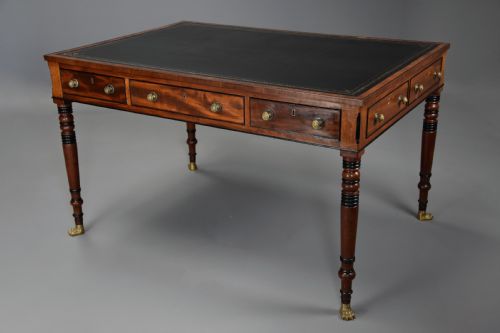
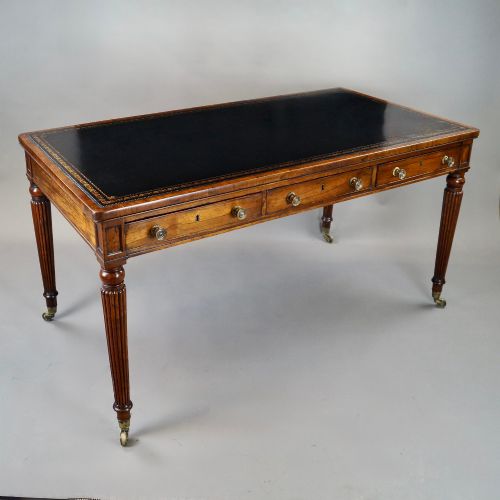
An english regency writing table is a freestanding piece of antique furniture designed for study, correspondence, and library use, typically originating from the Regency period or the wider nineteenth century. These forms encompass library tables, pedestal desks, sofa tables, and smaller chamber tables intended for domestic settings.
The versions most frequently met on this page combine classic mahogany, rosewood, or pollard oak timbers with formal proportions characteristic of Georgian and Regency design. Many examples feature brass inlay, leather inserts, and multiple drawers configured for practical utility.
Materials and construction
Cabinet makers utilised dense native and imported timbers, predominantly relying on solid mahogany, figured rosewood, pollard oak, and occasionally painted wood. These woods provide both structural integrity and deep natural grain patterns that define the aesthetic of the period.
Some clever nineteenth century desks incorporate hidden compartments and rising architect's risers to keep secret correspondence safely out of sight.
Variations in quality
Quality in these pieces is dictated by the selection of timber, the crispness of brass or marquetry detailing, and the integrity of the original finish. Superior examples display carefully matched grain veneers and balanced proportions that reflect workshop execution of the highest order.
Attribution to prominent workshops such as Gillows or makers like John McLean elevates a piece through documented construction standards and refined joinery. Lesser examples demonstrate simpler secondary timbers and more modest decorative restraint.
Gillows Oxford Street Workshop·John MaClean·Gillows of Lancaster·John Gregory London
The English Regency Writing Table Glossary
- Regency
- A stylistic period spanning the early nineteenth century defined by classical restraint and neoclassical influence. It draws upon Roman, Greek, and Egyptian motifs.
- Library table
- A large freestanding desk finished on all sides so it could sit in the centre of a room. These pieces usually contain multiple drawers.
- Sofa table
- A rectangular occasional table featuring drop leaves on either end, originally designed to stand in front of a sofa. They often incorporate double pedestal supports.
- Brass inlay
- A decorative technique where thin strips of brass are fitted flush into channels carved into the timber surface. It creates geometric or floral patterns.
- Pollard oak
- Oak timber taken from trees that have been pollarded, producing a heavily knotted and textured grain. Cabinet makers prized this wood for decorative veneering.
English Regency Writing Table: Frequently Asked Questions
Where did they place these tables?
Makers designed these freestanding pieces to sit centrally within libraries, studies, and drawing rooms rather than pushed directly against walls. Their finished backs and polished timber allowed them to be viewed from any angle in the room.
They served as functional surfaces for correspondence, reading, and administrative tasks while anchoring the interior arrangement of grand homes.
How do I spot Gillows work?
Makers like Gillows often stamped their furniture directly onto drawer linings, table edges, or structural rails using distinct maker marks. You also identify their output through exceptional timber selection, sturdy joinery, and characteristic brass inlay.
Workshop traditions dictated a high standard of functional design that prioritized both structural longevity and refined classical proportions.
Are pedestal desks different from tables?
Pedestal desks feature banks of drawers supporting the main writing surface on both sides, creating a substantial and stationary workstation. Writing tables and library tables generally rely on four legs or end supports with less enclosed storage underneath.
Both forms belong to the same overarching period but served slightly different functions within the nineteenth century home or library.
Can I use one as a modern desk?
These tables provide sturdy writing surfaces and practical drawer space that easily accommodates contemporary laptop use and daily paperwork. Their historical height and proportions generally align well with standard seating arrangements.
Careful placement away from direct heat sources helps protect antique timber and original leather writing inserts from drying out over time.