



English Regency Shelves
English regency shelves are refined timber pieces designed for display and storage, bringing architectural precision and rich mahogany or rosewood grain to domestic interiors.
English Regency Shelves
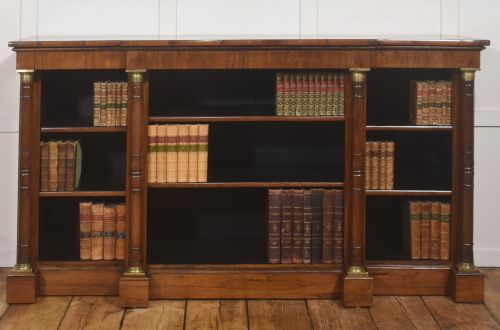
English regency shelves encompass tiered bookcases, open dwarf bookcases, multi-tiered whatnots and side cabinets dating from the nineteenth century, including Georgian and William IV iterations. These pieces serve functional domestic storage while maintaining a decorative presence through stepped tiers and open display formats.
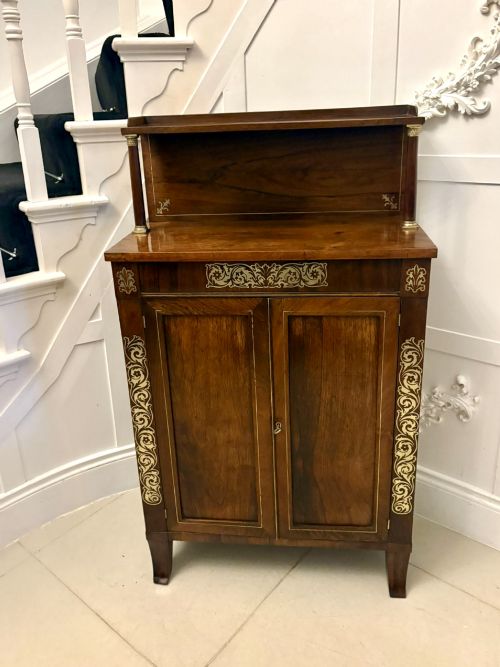
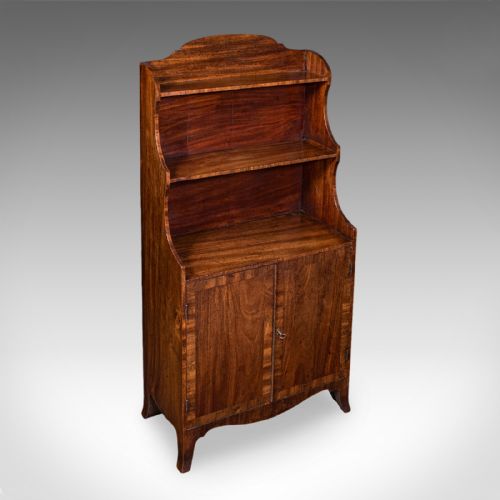
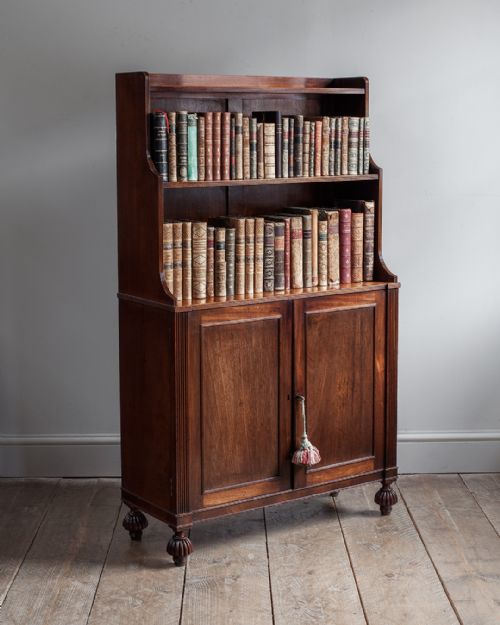
The waterfall bookcase forms a distinct sub-category within this selection, featuring graduated shelves that recede from bottom to top. Alongside these, whatnots and etageres provide tiered platforms supported by slender uprights, whilst chiffoniers combine lower cupboards with upper shelving.
Makers and designers of the period utilise dense timbers to construct robust yet elegant storage units that suit both formal libraries and intimate drawing rooms. The surviving examples demonstrate how Regency craftsmen adapted traditional forms like the Canterbury and the dwarf bookcase to create lighter, more versatile furniture.
Materials and Construction Techniques
Cabinet makers construct these shelves primarily using solid mahogany, rosewood and oak, frequently employing book-matched veneers to accentuate the natural grain patterns. Inlays of boxwood and accents of ebonised wood provide linear contrast against the darker foundational timbers.
Joinery techniques rely on pegged mortise and tenon joints for structural stability, particularly in multi-tiered whatnots and heavy library bookcases. Waterfall bookcases require precise angle cutting to support the graduated diminishing shelves without compromising weight distribution.
English Regency Shelves Retail Price Guide 2026
Typical asking prices for english regency shelves among the pieces listed under this phrase on Sellingantiques today, from the lower quarter to the upper quarter. They describe what is for sale here now, not the wider market.
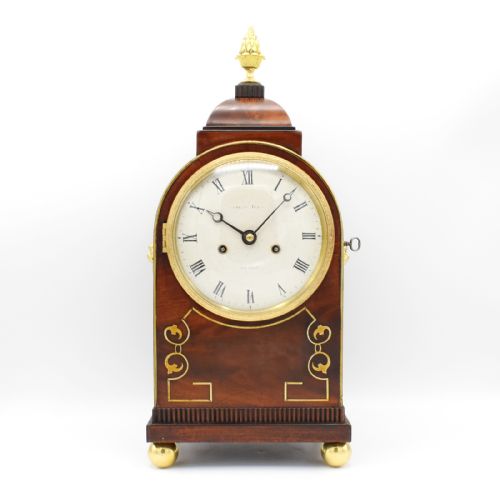
Listings incorporate nineteenth-century shelf forms alongside coordinating bracket clocks driven by single and twin fusee movements.
Distinctions in Quality
The calibre of a piece rests upon the selection of timber figures, where richly figured rosewood or flame mahogany elevates the visual weight of the furniture. Finer examples display meticulous attention to secondary timbers and the crispness of applied mouldings rather than reliance on heavy ornamentation.
Proportion and structural integrity define the upper tier of these items, ensuring that slender uprights on whatnots or graduated tiers on waterfall bookcases remain balanced and rigid. Superior execution involves seamless integration of brass hardware, delicate boxwood stringing and original surface patination.
Charles Pratt London·Seller of Reading·John Bull of Bedford·Barrett London·J Kingerley Manchester·McCabe London·Desbois and Wheeler·DeLa Salle And Christie·Bently and Beck London·John McLean·Town and Emanuel
The English Regency Shelves Glossary
- Waterfall bookcase
- A standing bookcase with graduated shelves diminishing in depth from bottom to top. This form emerged during the Regency period to hold smaller volumes and display items.
- Chiffonier
- A low cabinet combining enclosed lower storage with upper shelving or a superstructure. Regency versions frequently incorporate brass gallery rails and silk-backed grille doors.
- Etagere
- A piece of furniture consisting of a series of open shelves for displaying small objects. The form shares similarities with the whatnot but often emphasises decorative display.
- Fusee
- A conical pulley used in clockwork mechanisms to equalise the power of the mainspring as it unwinds. This mechanical element appears in bracket and mantel clocks associated with the furniture.
- Grained finish
- A painted surface treatment designed to imitate the appearance of expensive natural hardwoods. This technique allowed cabinet makers to achieve decorative effects on humbler timbers.
English Regency Shelves: Frequently Asked Questions
What distinguishes a whatnot from a bookcase?
A whatnot is an open tiered stand primarily designed for displaying ornaments and small objects on multiple levels. It relies on slender vertical supports rather than solid vertical sides.
Bookcases feature enclosed or semi-enclosed vertical partitions specifically proportioned for holding volumes of varying sizes. The evidence shows both forms spanning the Georgian and Regency periods.
How do I identify a waterfall bookcase?
A waterfall bookcase is instantly recognizable by its stepped shelves that decrease in depth from the base to the top. This silhouette creates a descending profile resembling a cascade.
Craftsmen during the nineteenth century used this design to lighten the visual mass of taller pieces in domestic spaces.
Where were chiffoniers placed in period homes?
Chiffoniers typically stood against dining room or parlour walls to provide a surface for serving and enclosed storage for silver or linens. The upper shelves also accommodated decorative ceramics and books.
These pieces bridge the function of a sideboard and a small cabinet, often featuring two doors below the main surface.
How can I tell a Regency piece from a Victorian one?
Regency pieces often display restrained classical lines, delicate stringing, and select rosewood or mahogany veneers influenced by archaeological discoveries. Proportions tend to remain lighter and more architectural.
Victorian interpretations frequently introduce heavier carving, darker ebonisation, and denser ornamentation while retaining earlier structural forms.