
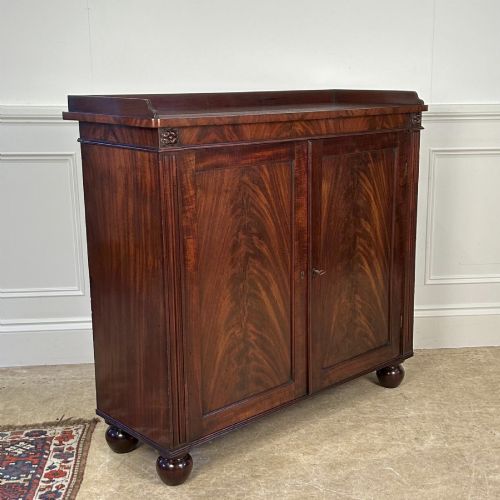


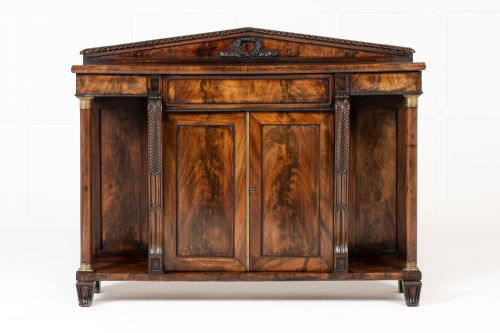


English Regency Mahogany Credenza
An English regency mahogany credenza brings sculptural presence and rich timber grain to a room, offering practical storage disguised as elegance.
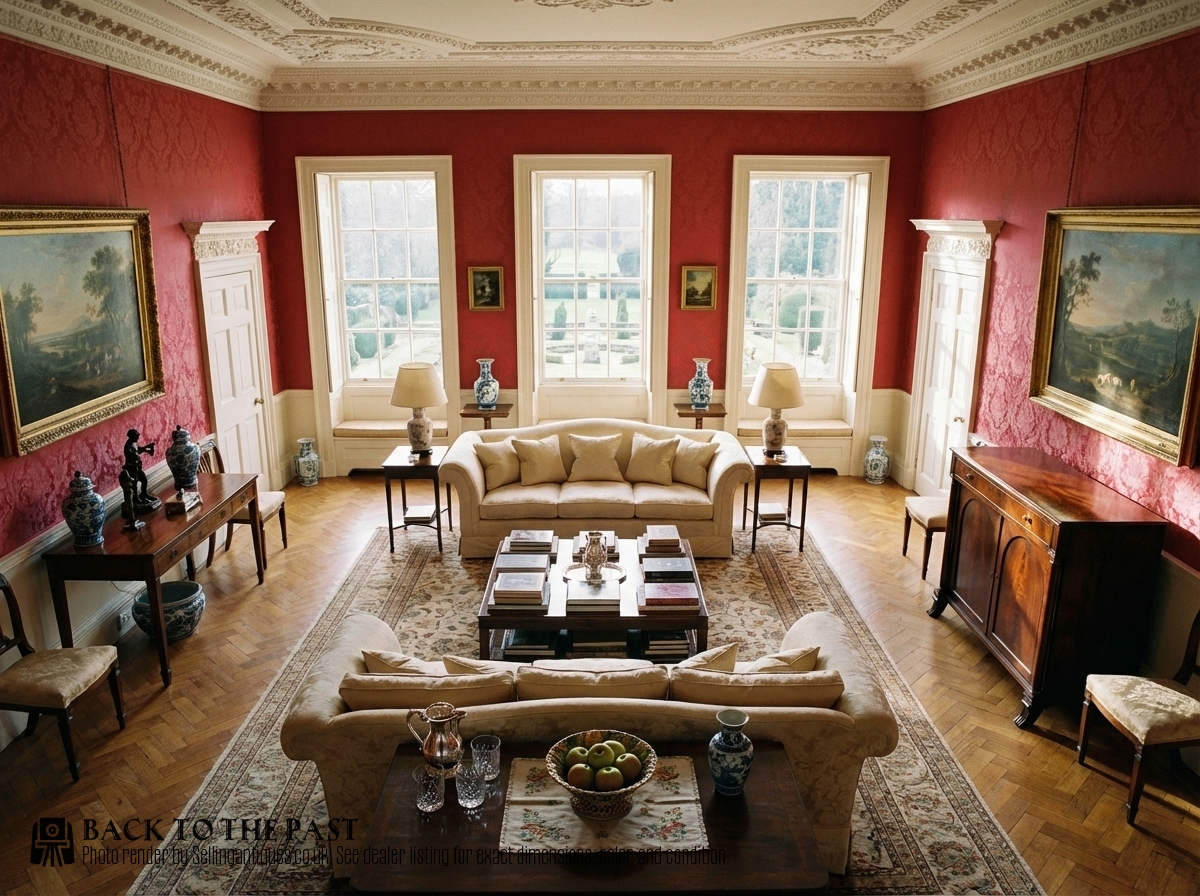
English Regency Mahogany Credenza
Buyers seeking an English regency mahogany credenza encounter a distinct class of low-profile storage furniture spanning the nineteenth century, including sideboards, side cabinets, and chiffoniers. These pieces emerge predominantly from the Regency, George IV, and William IV periods, often featuring bow fronts or pedestal designs suited to formal dining and reception rooms.
The items listed here encompass robust sideboards with ebony inlay alongside neat-sized chiffoniers and dwarf secretaire cabinets. While the search term specifies a credenza, the historical equivalents found in these listings are sideboard and cabinet forms that fulfill the exact same architectural and domestic functions.
Makers such as Gillows and craftsmen associated with London workshops like S. Jamar represent the upper tier of production found in this inventory. Pieces range from unpretentious nineteenth-century side cabinets to elaborate flame mahogany examples fitted with glass doors and brass details.
Materials and Construction
Makers utilised solid mahogany and striking flame mahogany veneer applied to carcases, creating rich figure patterns across broad drawer fronts and cabinet doors. Timbers were selected for depth of colour, then polished to a high finish that accentuates the natural grain.
Contrasting details are achieved through the precise insertion of ebony, boxwood, and brass inlay. Structural hardware, including glazed panels, fabric linings, and mirrored backs, further defines the construction of these refined side cabinets and chiffoniers.
Materials documented across the inventory include flame mahogany veneer, solid mahogany, ebony, boxwood, and brass.
Assessing Craftsmanship and Proportion
Quality in an English regency mahogany credenza is visible in the selection of timber veneers and the precision of decorative inlay such as ebony and boxwood. Superior examples display balanced proportions, neat sizing, and integrated architectural elements rather than heavy, unbalanced mass.
Attribution to known workshops like Gillows or documented makers elevates a piece through superior cabinet-making techniques and refined hardware. The execution of curved bow fronts and the careful matching of flame mahogany figures separate standard production from exceptional works.
Gillows·S Jamar
The English Regency Mahogany Credenza Glossary
- Flame mahogany
- A veneer cut from the fork of the mahogany tree where the branch meets the trunk, producing a distinctive, fiery pattern. It is prized for its dramatic visual movement.
- Chiffonier
- A small sideboard or low cabinet equipped with shelves and enclosed by doors, popular during the Regency and William IV eras. It typically includes fabric panels or glass in the doors.
- Secretaire
- A cabinet or desk incorporating a pull-out writing drawer with a fitted interior of small drawers and pigeonholes. This combines writing functionality with enclosed lower storage.
- Bow front
- A convex, curved front section characteristic of case furniture from the Georgian and Regency periods. This shape softens the corners of dining room sideboards and cabinets.
- Inlay
- A decorative technique where contrasting materials such as ebony or boxwood are inserted into recesses cut into the wood surface. It creates geometric or linear borders.
English Regency Mahogany Credenza: Frequently Asked Questions
What is a chiffonier?
A chiffonier is a compact nineteenth-century cabinet designed for storage, often featuring glazed or fabric-backed doors below a shelved superstructure. These pieces served practical functions in dining rooms and parlours.
They evolved from standard sideboards to offer more enclosed, smaller-scale storage without dominating the room's floor plan.
How do I style a mahogany cabinet?
Position the cabinet against a principal wall in a dining room, hallway, or living space where its timber grain can catch natural light. Balance the heavy wood tones with simple ceramics or lamps placed on top.
Keep surrounding decor complementary to the dark nineteenth-century timber to allow the flame mahogany veneer and brass details to stand out.
How do I date a Regency piece?
Examine the secondary timbers used inside the drawers, the style of the brass hardware, and the presence of hand-cut dovetails. Regency pieces often incorporate classical architectural motifs like brass inlay and reeded legs.
Compare the construction methods and wood choice against documented examples from the early nineteenth century to narrow down the decade of manufacture.
What is flame mahogany?
Flame mahogany is a highly figured veneer harvested from the junction where branches meet the main trunk of the tree. This wood exhibits swirling, flame-like patterns that catch the light.
Cabinet makers reserved these choice veneers for the most prominent surfaces, such as drawer fronts and cabinet doors.