



English Provincial Armchair
An english provincial armchair brings honest vernacular craftsmanship and tactile country timber straight into a modern interior.
English Provincial Armchair
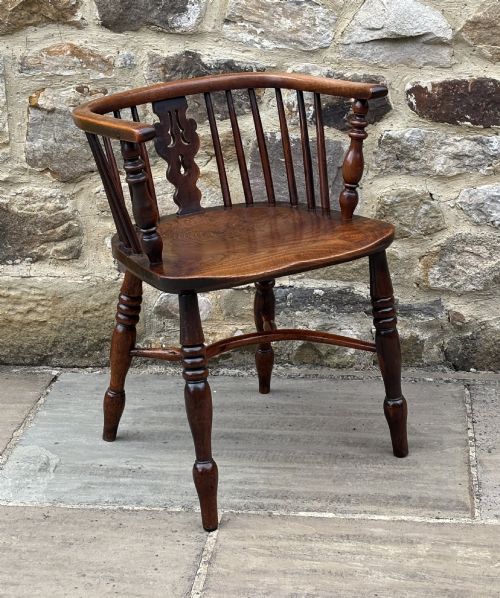
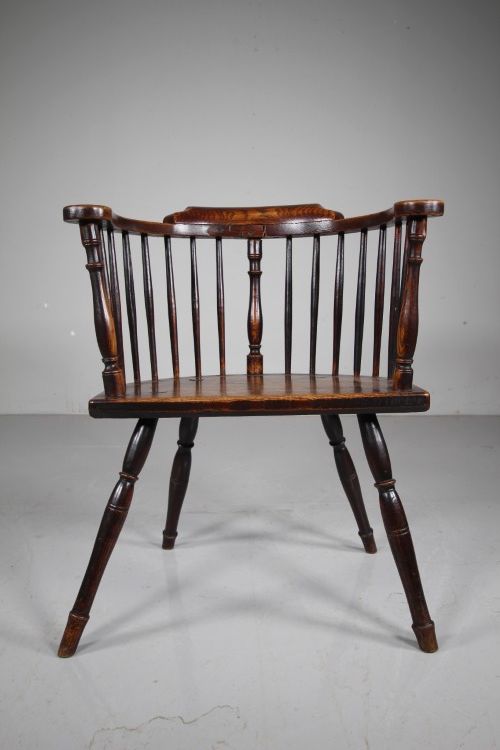
When you search for an english provincial armchair, you encounter robust seating shaped by regional cabinet makers rather than metropolitan workshops. These chairs emerge primarily from the nineteenth and eighteenth centuries, bearing the utilitarian spirit of English country life.
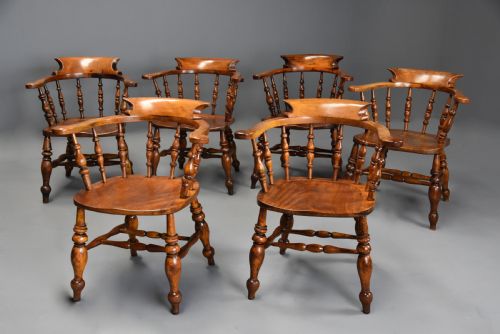
The most common examples you meet on this page are Windsor chairs and smokers bows, often built with substantial wooden seats and spindle backs. Regional variations range from elm and yew combinations to ash and beech frames reflecting local woodland resources.
Beyond standalone carvers, the selection extends to Georgian country chairs and Lancashire style rush seat dining chairs. Each piece demonstrates how rural makers prioritized practical durability alongside pleasing vernacular proportions.
How they were made
Makers constructed these chairs using native hardwoods such as elm, yew, beech, ash and oak, selecting each timber for its specific structural strength. Elm provided a tough, non-splitting seat board, whilst yew and ash offered flexible resilience for bentwood hoops and spindles.
Traditional joinery techniques governed the construction, utilising turned legs fitted directly into thick saddle seats alongside steam-bent components. Rush seating also appears on regional dining variations, woven tightly over sturdy frames to create supportive surfaces.
English Provincial Armchair Retail Price Guide 2026
Typical asking prices for english provincial armchair among the pieces listed under this phrase on Sellingantiques today, from the lower quarter to the upper quarter. They describe what is for sale here now, not the wider market.
Listings feature pieces spanning the eighteenth, nineteenth and early twentieth centuries, anchored primarily by elm, yew and beech.
What varies in quality
Quality in an english provincial armchair rests upon the integrity of the timber selection and the retention of original surface patination. Chairs featuring desirable woods like yew and figured elm command attention for their rich grain contrast and warm, untouched finishes.
Structural harmony also dictates distinction, as pieces retaining their original turned components and balanced proportions outrank those altered by heavy restoration. The refinement of the saddle seat shaping and the tightness of the spindle joints reveal the hand of a more skilled rural artisan.
The English Provincial Armchair Glossary
- Windsor chair
- A traditional wooden seat design featuring individual spindles inserted into a thick saddle-shaped wooden base. These chairs often incorporate bentwood bows and comb backs originating from rural English districts.
- Smokers bow
- A low-backed Windsor variant also known as a Captain's chair, designed with a continuous curved armrail above short spindles. They provided sturdy, comfortable seating in vernacular domestic and tavern settings.
- Carver
- A traditional term for an armchair, typically designed to match a set of smaller single dining chairs. These pieces usually feature open arms and slightly grander proportions.
- Rush seat
- A seating surface woven from dried marsh reeds stretched across a wooden frame. This technique produces a textured, yielding platform common in regional chairmaking.
English Provincial Armchair: Frequently Asked Questions
How do I date an antique armchair?
Dating an antique armchair involves examining the tool marks, timber shrinkage patterns and construction methods used in the frame. Eighteenth-century examples often display simpler hand-turned components and deep patination accumulated through generations of use.
Nineteenth-century pieces frequently incorporate steam-bent components and standardised lathe work reflecting industrial advances. Comparing the wear patterns around the feet and armrests also offers clues to the age of the timber.
Where were provincial armchairs made?
These armchairs originated in rural workshops across various English counties, utilising timber harvested from local woodlands. Specific regions developed recognizable traits, such as the Windsor chairs associated with Nottinghamshire or the ladder and rush traditions of Lancashire.
Local timber availability dictated the appearance, meaning chairs from southern counties might feature fruitwood and elm, whilst northern pieces relied heavily on ash and oak.
How do I live with a country chair?
Living with a country chair requires simple placement away from direct heat sources and sudden humidity changes to protect the timber. These sturdy seats function well as desk chairs, reading seats or decorative accents in hallways.
Maintenance involves occasional dusting and treating dry wood with appropriate natural waxes to preserve the surface. Their resilient nature ensures they handle daily use whilst retaining their historical character.