


English Porcelain Dog
English porcelain dog figures charm collectors with their delightful modelling, ranging from spaniels and poodles to greyhounds.
English Porcelain Dog
Makers produced these decorative figures and desk accessories in various sizes, from miniature poodles to grand garniture sets. Georgian examples often showcase refined Derby models including figures with hunters and candlesticks, while nineteenth-century pieces lean towards robust Staffordshire earthenware and porcelain traditions.
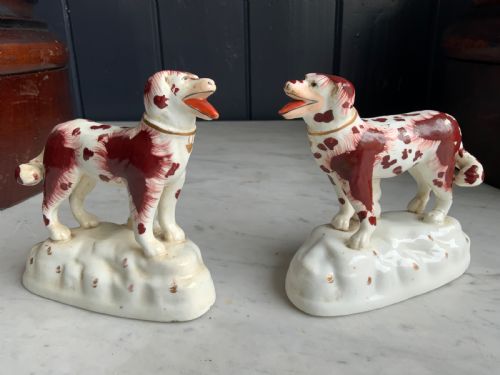
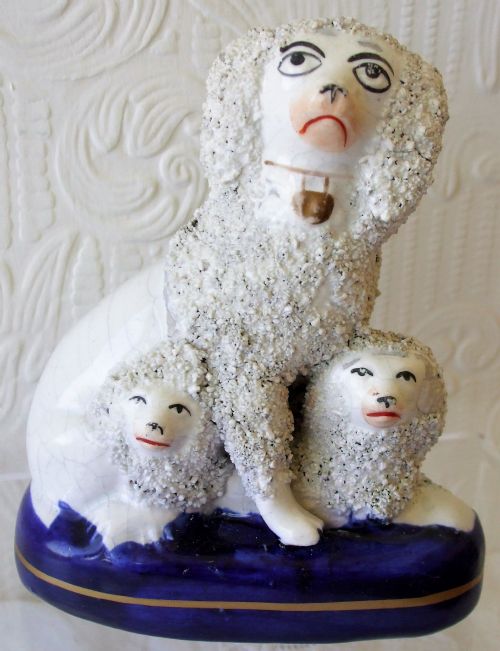
Collectors frequently meet seated comforter spaniels, white and gilt pairs, and expressive poodle groups complete with pups. These domestic figures mirror the changing tastes in ceramic modelling across the nineteenth century, moving from Rococo influences toward distinct Victorian styles.
Materials and production techniques
Listings feature periods from the Georgian era through to Art Nouveau, with a strong focus on nineteenth-century Victorian Staffordshire earthenware and porcelain.
Judging quality in ceramic dogs
Proportion and stance dictate the visual appeal of a pair, with top-tier examples showing balanced symmetry and naturalistic poses. The quality of the glaze and the complexity of the subject, such as figure groups with multiple pups or associated birds, further elevate certain models above standard single figures.
Derby Porcelain·Mason’s Ironstone·Royal Dux·James Dudson·Minton Porcelain
The English Porcelain Dog Glossary
- Comforter spaniels
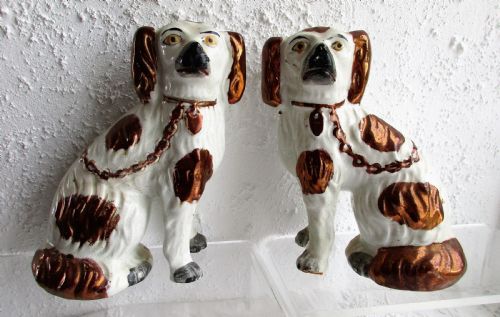
- Staffordshire mantel figures modelled as seated spaniels. These pairs traditionally sat on either side of a fireplace in Victorian homes.
- Blanc de chine
- A French term for white Chinese porcelain, later used to describe unglazed or clear-glazed white English porcelain figures such as early gundogs.
- Garniture
- A set of matched ceramic vases or vessels designed for display together on a mantelpiece or shelf.
- Ironstone
- A heavy, durable type of earthenware patented in the nineteenth century. It bridges the gap between refined porcelain and porous pottery.
- Enamel
- Coloured vitreous glass fused to the ceramic surface during firing. It provides the vibrant decoration seen on coats and collars.
English Porcelain Dog: Frequently Asked Questions
How do I date an antique dog figure?
Dating ceramic dogs relies on identifying the underlying material, the style of the modelling, and any visible factory marks. Georgian figures often display softer paste porcelain and Rococo scrollwork, whereas Victorian examples tend to utilise heavier earthenware bodies.
Examining the glazing and enamel colours also helps narrow the production period. Earlier pieces from the eighteenth century show distinct potting characteristics compared to nineteenth-century Staffordshire output.
Were these figures meant for display?
Most ceramic dog figures served primarily as decorative mantel ornaments in period homes. Pairs were arranged symmetrically on mantelpieces, chests of drawers, and side tables to project status and taste.
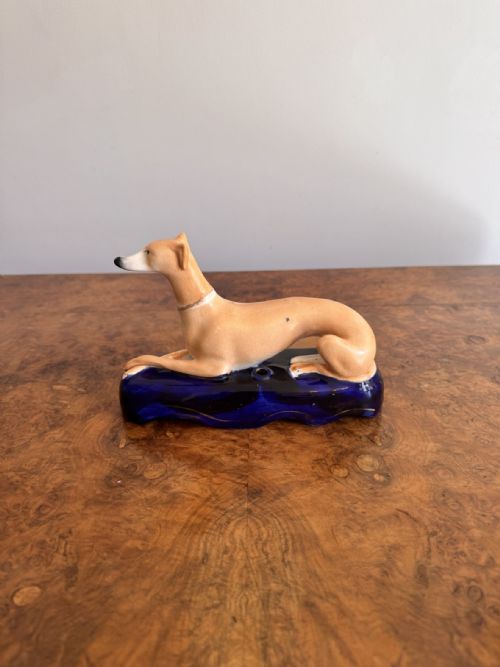
Certain items, however, combined decoration with utility, such as greyhound quill holders and candlestick figures. These dual-purpose pieces allowed owners to display their love of dogs while keeping practical items close at hand.
What is the difference between porcelain and earthenware dogs?
Porcelain dogs feature a finer, vitrified white body that is hard and sometimes translucent under light. Earthenware dogs use a more porous clay body that requires an opaque glaze to conceal the darker ceramic underneath.
Potters reserved porcelain for higher-end manufactories like Derby and Minton, while Staffordshire potteries frequently employed earthenware for robust domestic figures.
How should I clean antique ceramic figures?
Cleaning antique porcelain and earthenware requires gentle care to protect delicate hand-painted enamels and fragile gilt highlights. Dusting with a soft brush keeps the surface clean without risking abrasion to the glaze.
Avoid using harsh chemical cleaners or submerging antique ceramics in water for extended periods, particularly pieces with porous earthenware bodies or old repairs.