



English Pine Kitchen Table
An english pine kitchen table brings utility and warmth to a room, offering a sturdy surface built for daily domestic life.
English Pine Kitchen Table
An english pine kitchen table is a practical domestic surface designed for food preparation and communal dining in country houses and farmhouses. These pieces span the eighteenth and nineteenth centuries, capturing periods from the Georgian era through to Victorian times.
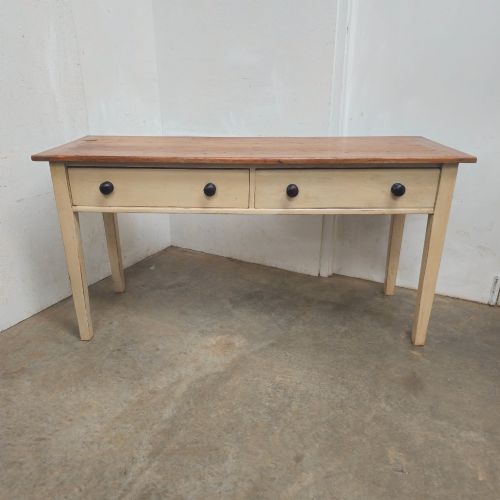
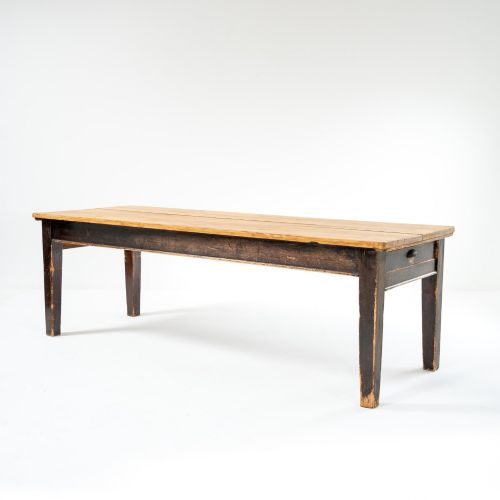
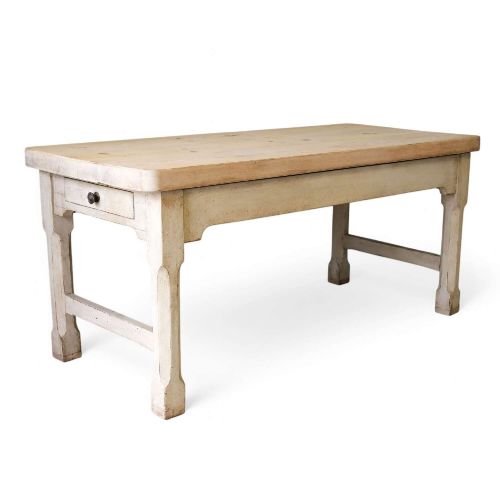
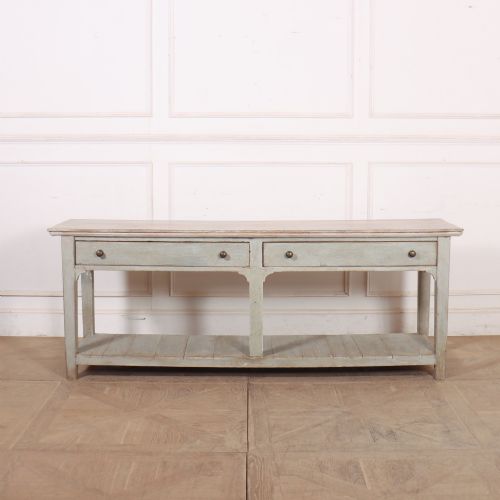
The most common examples on this page are nineteenth-century farmhouse and dining tables shaped by utilitarian needs. They appear alongside related forms such as prep tables, tavern trestle tables, and dresser bases utilised for storage.
Originating from English country houses, sculleries, and mills, these tables display regional variations in scale and construction. Buyers encounter long harvest tables alongside compact variants fitted with single or multiple drawers.
How They Were Made
Carpenters constructed these tables primarily from solid pine and pitch pine, sometimes pairing them with oak, mahogany, or iron for added structural strength. Surfaces were left bare, waxed, or treated with layers of paint over the decades.
Joinery techniques relied on sturdy pegged tenons, trestle supports, and robust framework designed to withstand heavy daily use. Metal brackets, brass fittings, and iron braces appear on industrial and work table variants.
Many surviving examples show the marks of hand-planing and sustained wear across the wooden tops. Later applications of paint frequently overlay earlier finishes, recording the changing decoration of domestic interiors.
Several tables retain traces of ancient flour and pastry dough stubbornly wedged into the grain by generations of bakers.
What Varies In Quality
Quality rests in the integrity of the timber selection and the retention of original surfaces, such as early or original paintwork versus later overpainting. Tables retaining their unblemished proportions and honest patination command greater interest from collectors.
Structural honesty distinguishes finer examples, where joints remain tight and aprons retain their depth without extensive timber replacement. The balance between the top boards and the supporting base dictates the visual harmony of the piece.
The English Pine Kitchen Table Glossary
- Potboard dresser base
- A low sideboard featuring an open lower shelf traditionally used for storing pots and pans. These units frequently accompany kitchen tables in domestic settings.
- Trestle table
- A table comprising two or more supports connected by a horizontal beam holding the top. This form offers stability and unobstructed legroom.
- Pitch pine
- A dense, resinous variety of pine utilised for heavy-duty furniture construction. It provides increased durability compared to standard softwoods.
- Refectory table
- A long, narrow dining table historically designed for communal meals. Examples in pine offer a rustic interpretation of this formal architectural form.
- Prep table
- A utilitarian work surface intended for food preparation in large kitchens or sculleries. These pieces often feature scrubbed timber tops and sturdy underframes.
English Pine Kitchen Table: Frequently Asked Questions
How do I clean an old pine table?
Wipe the surface gently with a damp cloth and mild soap, avoiding harsh chemical cleaners that strip the historic finish.
Apply a clear beeswax periodically to nourish the dry pine timber and maintain a soft protective sheen.
Were these tables used for dining?
Many examples served a dual purpose for food preparation during the day and family meals in the evening.
Larger harvest and refectory variants accommodated multiple diners in busy farmhouse kitchens.
How can I tell the period?
Examine the construction methods, tool marks on the underside, and the type of timber used in the frame.
Georgian and early nineteenth-century pieces often show hand-sawn boards and pegged joinery distinct from later industrial variants.
Can I use a kitchen table daily?
These tables were built specifically for heavy domestic work and easily withstand the demands of modern living.
Using placemats and coasters helps protect historic timber surfaces from excessive moisture and heat damage.