




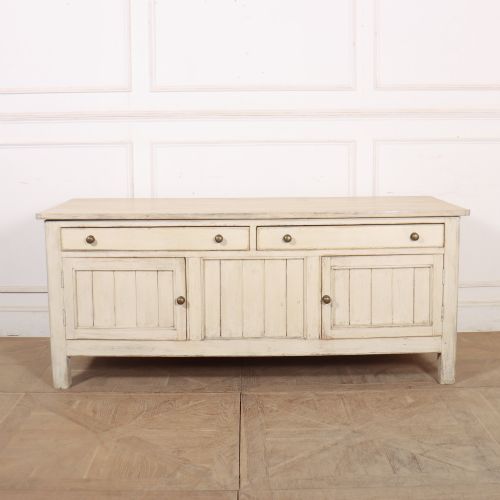


English Pine Dresser Base
An English pine dresser base is a robust, utilitarian surface built for domestic work, prized for practical storage and honest utility.
English Pine Dresser Base
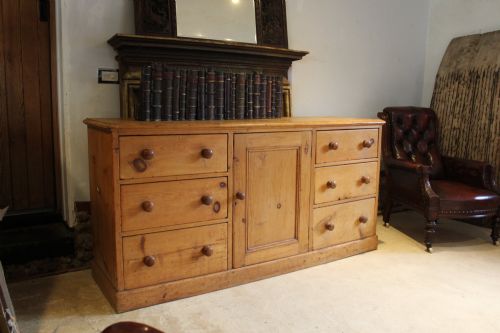
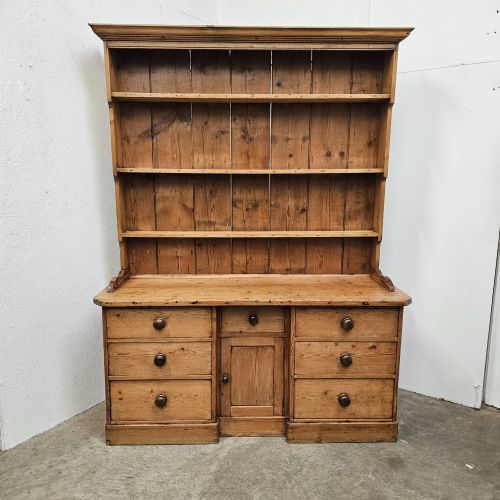
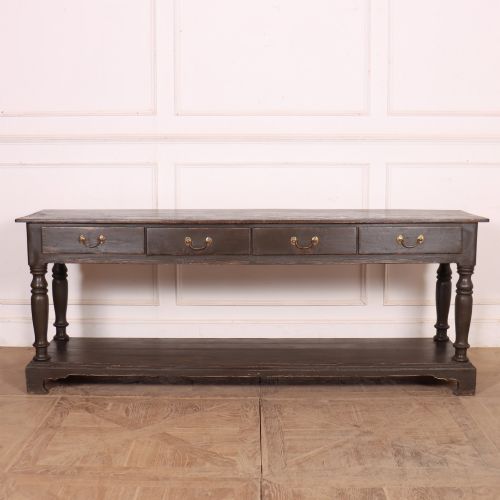
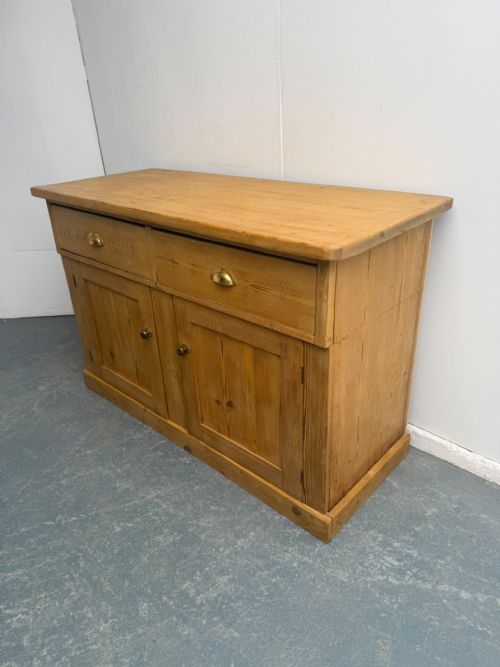
An English pine dresser base serves as a heavy-duty storage and workspace foundation, typically found in kitchens and pantries. These pieces generally incorporate a combination of deep drawers and lower cupboards, sometimes featuring an open potboard shelf beneath.
Most examples encountered here date from the eighteenth and nineteenth centuries, spanning Georgian, Victorian, and Edwardian periods. They emerge from regional traditions of English country house and farmhouse utility.
Forms range from compact three-drawer units to wide, multi-door kitchen cupboards and serving tables. Their primary purpose remains robust surface utility combined with concealed storage.
Materials and Construction
Makers built these pieces primarily from solid pine and elm, utilising durable local timber selected for daily wear. Brass handles and metal hardware appeared frequently on drawers and cupboards during later periods.
Surfaces received either clear waxing to protect the natural timber or layers of oil paint. Many surviving examples retain their original painted finishes, showing the accumulation of decades of domestic use.
English Pine Dresser Base Retail Price Guide 2026
Typical asking prices for english pine dresser base among the pieces listed under this phrase on Sellingantiques today, from the lower quarter to the upper quarter. They describe what is for sale here now, not the wider market.
Generations of vigorous scrubbing left these pine surfaces with gentle dips around the drawer pulls where fingers reached for flour.
Judging Quality and Character
Quality rests in the integrity of the timber framing and the degree of original surface preservation. Pieces retaining untouched historic paint or deep patination command greater interest than those stripped down to bare wood.
Proportion and structural honesty separate everyday utility from finer examples. Well-proportioned drawer arrangements and solid, unaltered potboards reflect superior workshop construction.
The English Pine Dresser Base Glossary
- Potboard
- An open lower shelf built into the base of a dresser, historically used for storing heavy pots and pans. This lower tier provides structural rigidity to the legs.
- Chiffonier
- A compact sideboard or cabinet featuring drawers and lower doors, commonly produced during the Victorian and Edwardian eras. These offer smaller-scale storage similar to a dresser base.
- Dresser Base
- The lower half of a kitchen dresser, functioning as a standalone sideboard or serving table with surface space and enclosed storage below. These units dispensed with the upper plate rack.
- Patinated
- Surface character developed through age, handling, and repeated waxing or cleaning over generations. This finish records the physical history of the object.
- Housekeeper's Cupboard
- A large storage cabinet utilised in country houses for linens, dry goods, and household provisions. These tall or wide bases provide substantial internal capacity.
English Pine Dresser Base: Frequently Asked Questions
What is a dresser base?
A dresser base is the lower portion of a traditional kitchen dresser, functioning independently as a sideboard or serving table. It provides a solid working surface above a configuration of drawers and cupboards.
Historically, these pieces stood in kitchens and sculleries for food preparation and storage. Unlike complete dressers, they lack the upper shelving tier for plates.
How do I date an antique pine base?
Dating relies on examining construction techniques, timber selection, and hardware styles across Georgian, Victorian, and Edwardian periods. Eighteenth-century examples often display simpler, heavier joinery and older fastener types.
Later nineteenth-century pieces typically incorporate machine-cut elements and standardised drawer linings. Paint layers and surface wear also provide clues to the age of the piece.
Where were these pieces used?
These utility pieces originated in country houses, farmhouses, and domestic kitchens across England. They served as central workstations for food preparation, baking, and household administration.
In modern interiors, they function well as kitchen islands, sideboards, or storage buffets. Their durable pine construction suits high-traffic living spaces.
Should I choose painted or waxed pine?
The choice between painted and waxed pine depends on whether the piece retains historic paint layers or has been stripped to bare wood. Many eighteenth and nineteenth-century pieces were painted to protect the softwood timber.
Original painted finishes offer authentic period character and colour. Waxed pine highlights the natural grain and patination of the solid wood.