


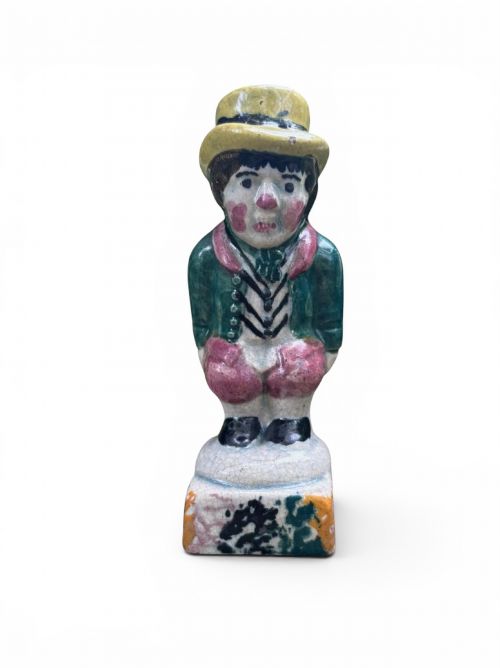


English Pearlware Figure
An english pearlware figure brings the vivid character of Georgian and nineteenth-century ceramic art directly into your home.
English Pearlware Figure
When you search for an english pearlware figure, you enter a world of earthenware ceramic artistry spanning the Georgian and nineteenth-century periods. These decorative figures encompass animal studies, literary and religious groups, portrait busts, and functional pieces like pepper pots and cow creamers.
You are most likely to encounter Staffordshire and Yorkshire productions originating around eighteen hundred to eighteen thirty. These pieces capture contemporary tastes through modelled forms that range from whimsical animals to moralising figure groups.
How they were made
Potters shaped these objects from earthenware, applying a characteristic pearlware body that utilised a subtle blue-tinted glaze to achieve a paler surface than earlier creamware. Artisans then painted the details by hand using bright enamel colours.
The finishing touches relied on lead glaze to seal the ceramic body and impart a glossy sheen over the painted decoration. Figures were typically modelled with flat bases for stability on mantelpieces and side tables.
English Pearlware Figure Retail Price Guide 2026
Typical asking prices for english pearlware figure among the pieces listed under this phrase on Sellingantiques today, from the lower quarter to the upper quarter. They describe what is for sale here now, not the wider market.
The listings on this site show pearlware figures spanning the Georgian era and the nineteenth century, executed in earthenware with lead glaze and enamel.
What varies in quality
Colour saturation also dictates worth, as vibrant and carefully applied enamels elevate an individual piece far above dull or carelessly dabbed surfaces. The ambition of the subject matter, from complex multi-figure groups to simpler utilitarian jugs, further separates standard wares from exceptional items.
Walton·Mexborough
The English Pearlware Figure Glossary
- Pearlware
- A refined type of earthenware developed in the eighteenth century featuring a thin glaze over a white body, which pools slightly blue in crevices. This innovation allowed potteries to compete visually with Chinese porcelain.
- Prattware
- Earthenware decorated with underglaze ceramic colours, typically blue, ochre, brown, and green, under a lead glaze. The style is particularly associated with lively figures and utilitarian wares from the late Georgian era.
- Lead glaze
- A glossy coating containing lead oxide applied to earthenware before firing. It provides a waterproof surface and enhances the brilliance of the underlying enamels.
- Figure group
- A ceramic composition depicting two or more figures or animals interacting in a narrative scene. These pieces often illustrate biblical stories, pastoral life, or theatrical moments.
- Flat base
- An unglazed or glazed flat underside common on nineteenth-century shelf figures. It allowed the ceramic piece to stand securely without the need for a separate mount or base.
English Pearlware Figure: Frequently Asked Questions
How do I date an english pearlware figure?
Dating relies upon stylistic clues, the tone of the pearlware glaze, and the specific palette of the enamel colours used by the pottery. Pieces from the late eighteenth century often exhibit different modelling characteristics compared to those produced around eighteen thirty.
Examining the base and the method of construction also helps establish the era of manufacture. Comparing unmarked pieces to documented works by known makers provides further chronological context.
Where were these figures made?
The vast majority of these ceramic pieces originated in the Staffordshire potteries, though Yorkshire kilns also produced notable animal and figure groups. Regional potteries developed distinct styles in modelling and enamel application.
Specific towns and workshops contributed unique forms, from utilitarian pepper pots to large decorative busts. The availability of local clay and materials shaped the distinct output of each region.
How were cow creamers used?
Cow creamers served as functional tableware items on Georgian dining tables, holding milk or cream to pour from the animal's mouth. A removable lid on the cow's back allowed the vessel to be filled.
Despite their practical origins, these whimsical ceramic pieces were decorative conversation starters. They combined utility with the popular pastoral aesthetic of the period.