

English Pastoral Scene Painting
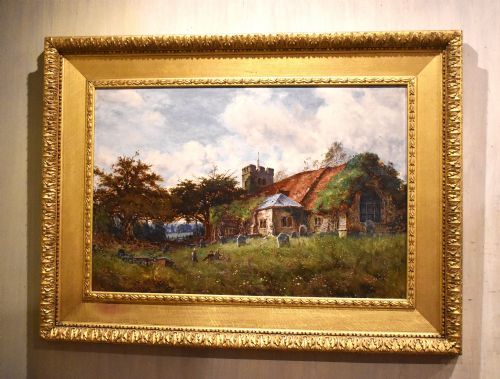
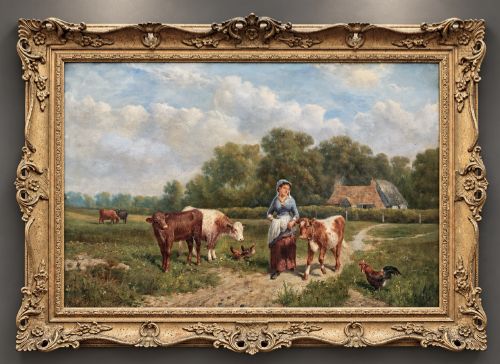
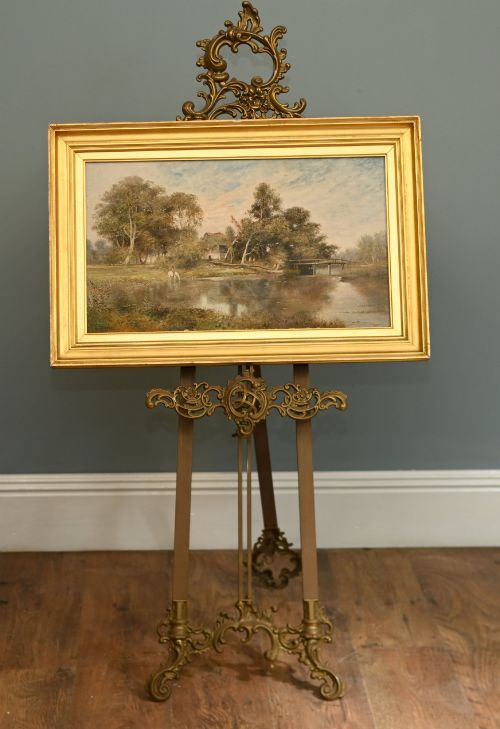
An english pastoral scene painting brings the quiet fields, riverbanks, and thatched cottages of the British countryside directly into a room.
English Pastoral Scene Painting
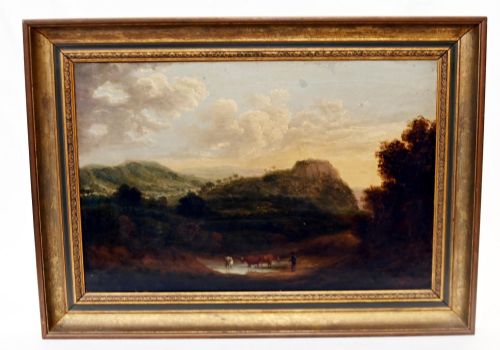
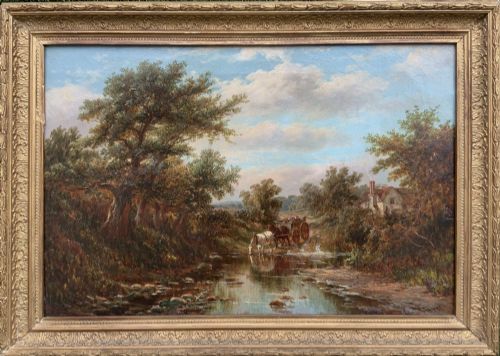
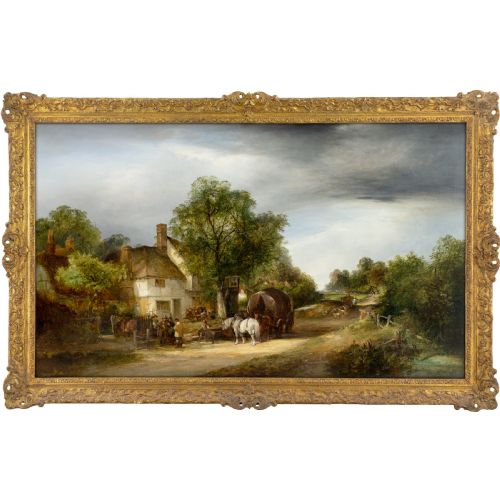
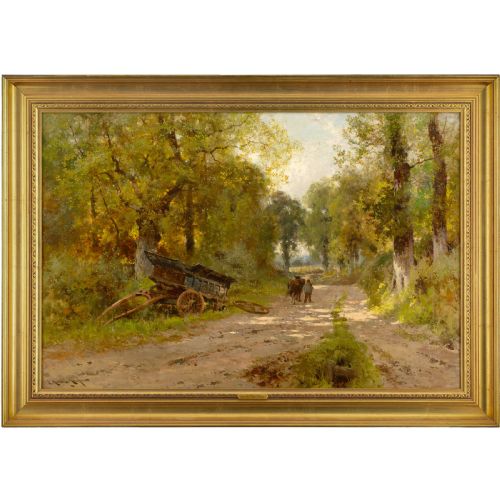
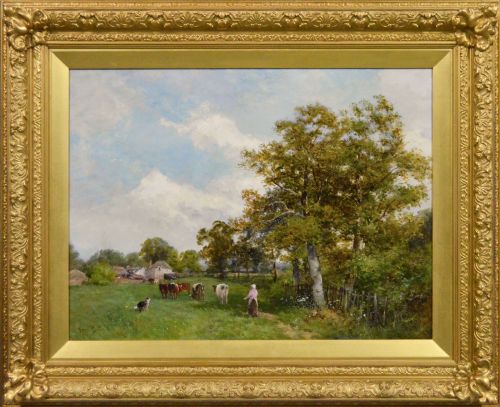
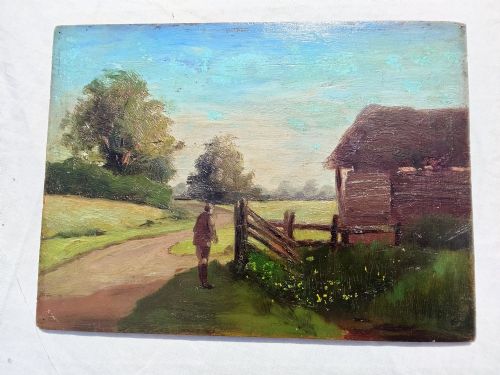
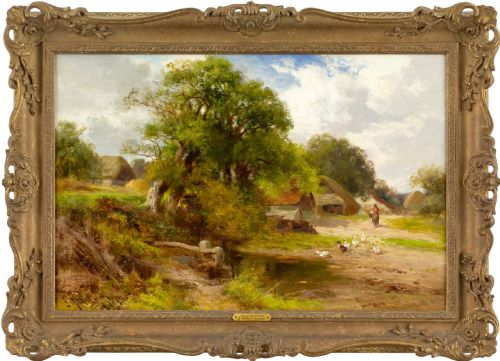
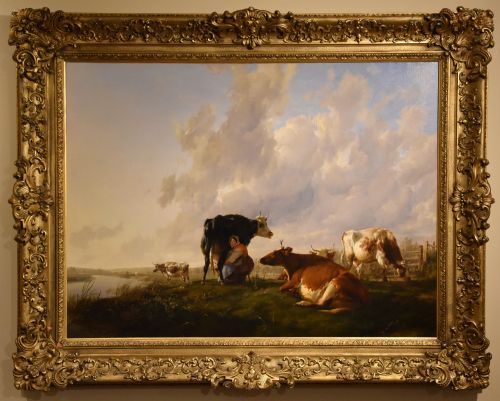
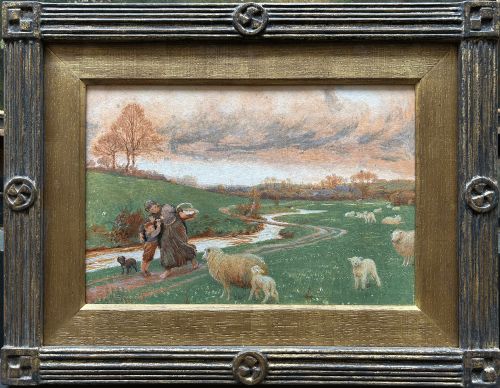
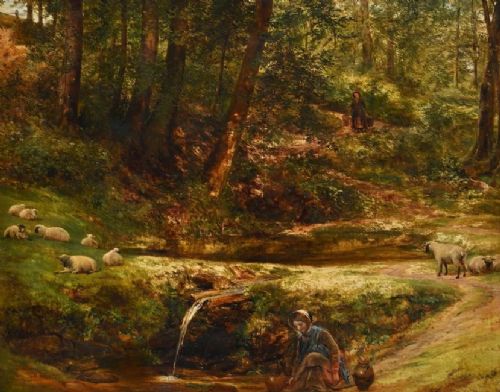
When searching for an english pastoral scene painting, buyers encounter framed artworks depicting rural British life, river views, and agricultural labour. The selection on this page leans heavily into nineteenth-century and early twentieth-century interpretations of the countryside.
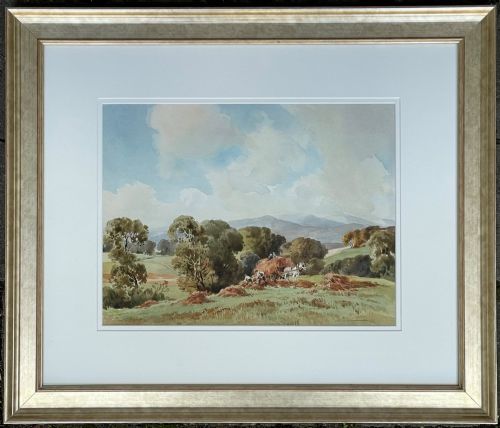
The subjects typically capture figures by ponds, milkmaids tending cattle, farm carts, and sheep grazing under apple blossom. Works appear in both oil and watercolour mediums, often housed in their original frames.
Originating mainly from British schools, these pieces reflect the Victorian and Edwardian fascination with traditional rural life. The forms range from small watercolours on paper to large oil paintings on canvas and wooden board.
Factors that separate quality tiers
The hierarchy of quality rests on the artist's ability to handle natural light, atmospheric depth, and anatomical accuracy in figures and animals. Skilled brushwork brings vitality to foliage and water, whereas lesser examples rely on stiff repetition and muddy colour mixing.
Condition and originality also dictate the standing of a piece. Retaining the original frame, clear signatures, and undisturbed surfaces place works higher than those with heavy restoration or altered framing.
Listings feature watercolours and oil paintings on canvas, board, and paper from the nineteenth and twentieth centuries.
George Graham·Percy Lancaster·John Horace Hooper·David Bates·Thomas Sidney Cooper·Richard Redgrave·George Oyston·T C Hofland·Henry H Parker·Miles Birkett Foster·Ernest Higgins Rigg·John Sanderson Wells·Henry John Kinnaird·James William Booth·Frederick Septimus Lewis·Samuel Joseph Clark·James Hardy Junior·Robert John Hammond·Frederick James Knowles·Robert Thorne Waite·Charles Vickers·John Linnell·Robert Finley McIntyre·J C Grey·Benjamin Williams Leader
The English Pastoral Scene Painting Glossary
- Oil on Canvas
- Pigments bound in a drying oil applied to stretched woven fabric. This medium allowed artists to build rich textures and deep colour tones.
- Watercolour
- Paint consisting of transparent pigment suspended in a water-based solution applied to paper. It yields luminous washes that capture delicate light effects.
- Gesso
- A white paint mixture consisting of a binder mixed with chalk, gypsum, or pigment. It prepares rigid surfaces and frames to receive oil or gold leaf.
- English School
- A classification for works produced by artists trained or working within Britain. It groups together stylistic movements sharing regional landscape traditions.
English Pastoral Scene Painting: Frequently Asked Questions
What periods do these paintings cover?
The listings span from the eighteenth century through the Victorian and Edwardian eras up to the mid-twentieth century.
Nineteenth-century works form the largest share, alongside pieces dated around nineteen-ten and nineteen-twenty.
How should I hang an oil painting?
Hang paintings on sturdy walls away from direct sunlight and damp conditions to protect the canvas and pigments.
Ensure picture wires and hooks match the weight of the framed artwork securely.
Are watercolours framed under glass?
Watercolour paintings on paper require glass protection to shield the delicate pigments from moisture and dust.
Many retain their period frames which add character to the display.
What subjects appear most often?
Common subjects include rivers, farmyards, cattle, sheep, cottage gardens, and labourers at work in the fields.
These motifs reflect the traditional British countryside admired by Victorian and Edwardian artists.