




English Pastoral Oil Landscape
An english pastoral oil landscape captures the quiet rhythm of rural life through nineteenth and early twentieth century brushwork.
English Pastoral Oil Landscape
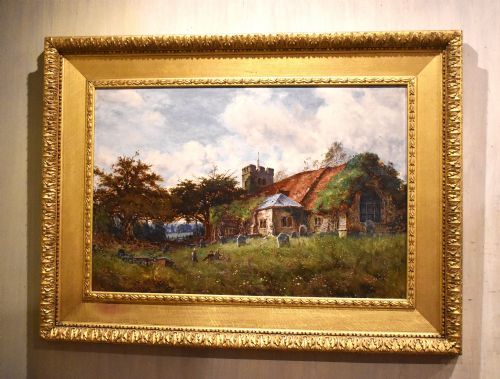
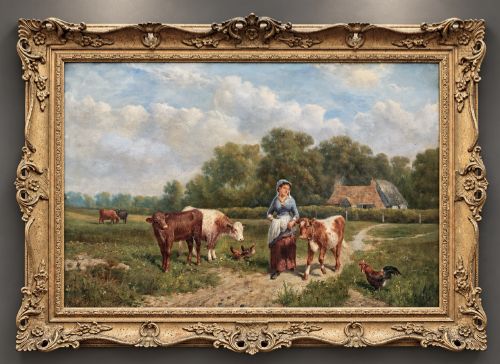
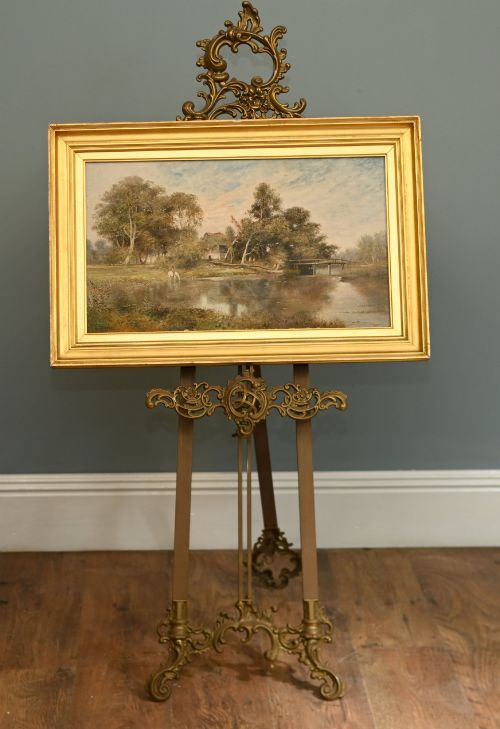
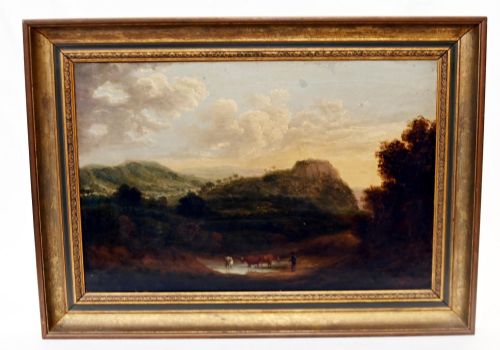
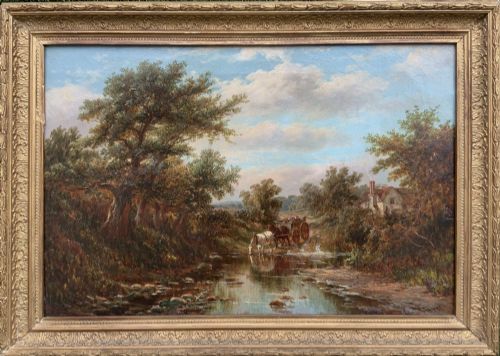
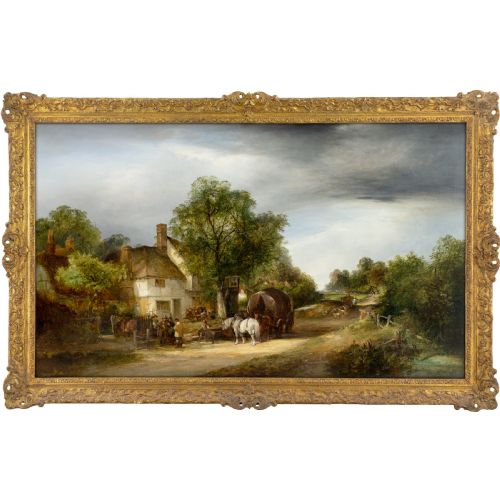
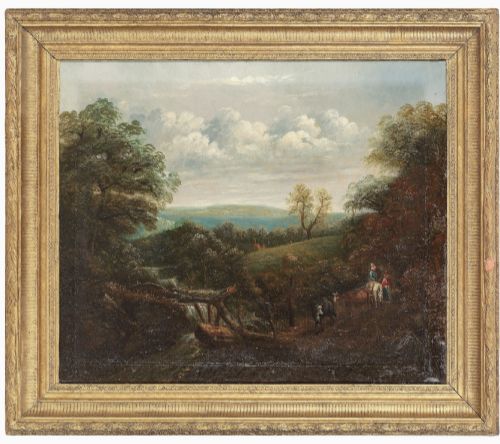
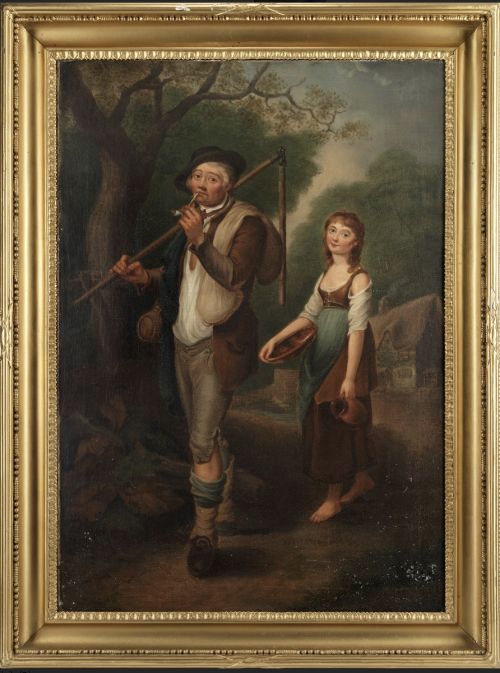
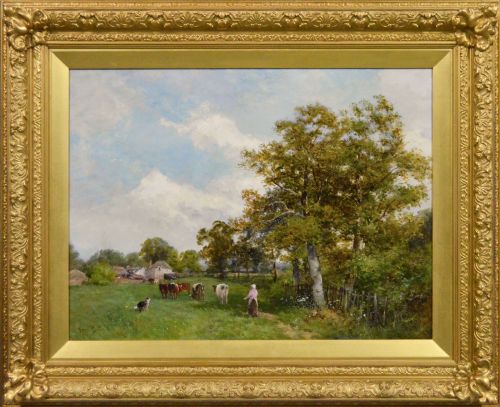
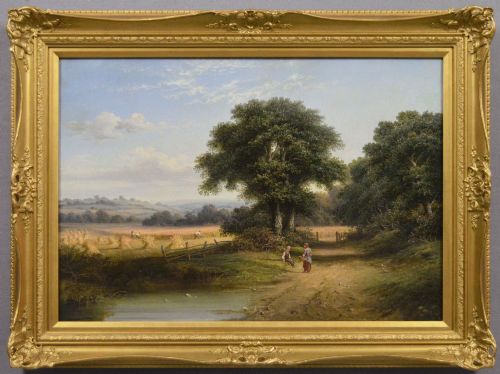
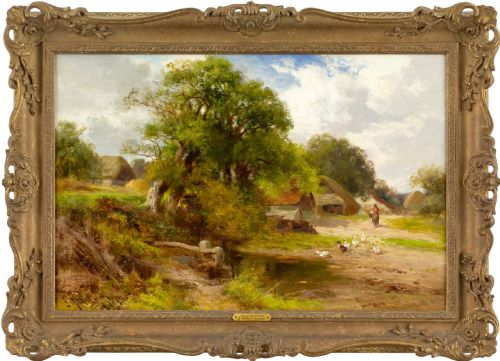
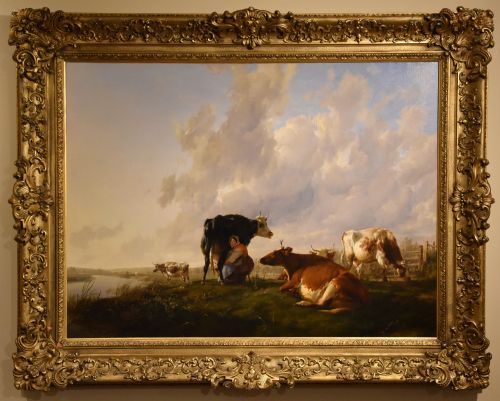
An english pastoral oil landscape portrays rural scenes featuring cottages, riverbanks, farm animals, and figures labouring or resting in the countryside. These works span the Victorian, Edwardian, and Georgian periods, originating primarily from British schools of painting.
Buyers meet canvases and wooden boards rendered in oil paint, often housed in period giltwood or gesso frames. The subjects concentrate on familiar domestic countryside views, ranging from river locks and harvest fields to dairy cattle by ponds.
Distinctions in execution
Execution rests upon the artist's handling of natural light, atmospheric perspective, and anatomical precision in figures and livestock. Superior canvases demonstrate confident brushwork and harmonious tonal balances that evoke the specific mood of a rural day.
The integration of the frame with the painting alters the overall presentation, with original period giltwood mouldings enhancing the historical integrity of the artwork.
Listings feature oil paintings on both canvas and wooden board from the nineteenth and early twentieth centuries.
Thomas Sidney Cooper·George Morland·Thomas Barker of Bath·David Bates·Walter Heath Williams
The English Pastoral Oil Landscape Glossary
- Pastoral
- A genre of art depicting the idealized life of shepherds, farmers, and rural labourers in a peaceful countryside setting.
- Impasto
- Paint applied thickly to a canvas, standing out in relief from the surface to give texture to foliage, water, or clouds.
- Gesso
- A plaster-like mixture applied to wooden frames as a base before gilding with gold leaf.
- Giltwood
- Timber that has been coated with gold leaf or a gold-coloured finish, standard for nineteenth-century picture frames.
- British School
- A term used to categorise works produced by artists trained or working within Britain during specific historical periods.
English Pastoral Oil Landscape: Frequently Asked Questions
Where should I hang a landscape?
Choose an interior wall away from direct sunlight and strong heat sources such as radiators. Stable room temperatures protect both the canvas and the wooden frame.
Direct sun fades oil pigments over decades, while humidity fluctuations cause canvas tension to shift. Diffused lighting highlights the brushwork best.
What frames are original?
Period frames usually show matching wear, corner construction methods, and patination consistent with the age of the canvas. Giltwood frames often develop fine craquelure and minor losses over time.
Replaced frames may fit awkwardly or use modern fixings. Evaluating the rabbet and stretcher fit helps determine if the painting has remained in its initial housing.
How do I date an antique landscape?
Dating relies on costume styles of figures, agricultural equipment, stretcher construction, and artist signatures. Canvas stamps from nineteenth-century colourmen also provide production dates.
Comparative stylistic analysis places works within specific eras like the Victorian or Edwardian periods. Documentation or signatures further narrow the creation window.