



English Parlour Table
An English parlour table brings domestic hospitality and pastimes together, offering sturdy timber surfaces designed for games, tea, and sewing.
English Parlour Table
An English parlour table encompasses a varied selection of domestic furniture intended for social rooms, ranging from dedicated card and games tables to occasional, centre, and sewing tables. When searching for an English parlour table, buyers encounter forms spanning the Georgian, Regency, and Victorian periods, alongside later revival pieces.
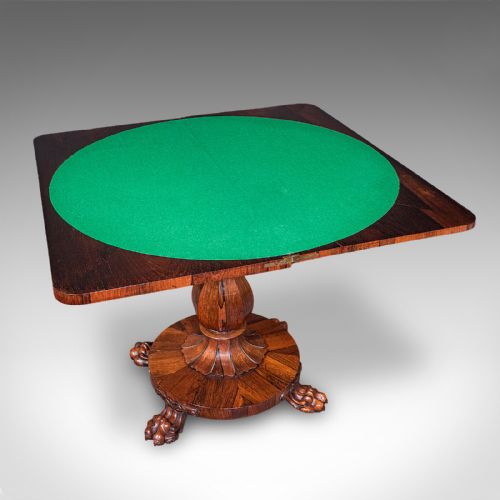
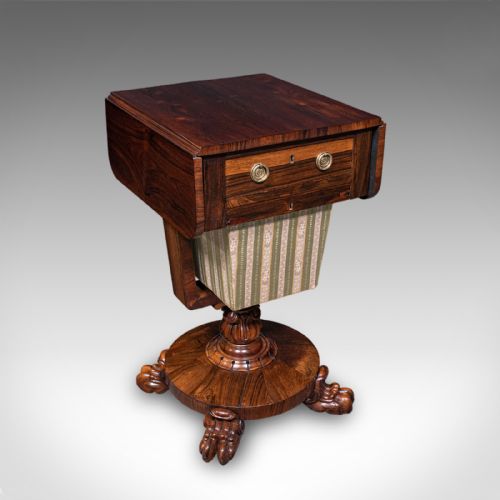
The most frequent examples on this page include mahogany and oak centre tables, fold-over card tables from the William IV and Georgian eras, and specialised hobby or sewing tables. These pieces reflect the active social life of historical drawing rooms, designed to host everything from supper and cards to tarot and needlework.
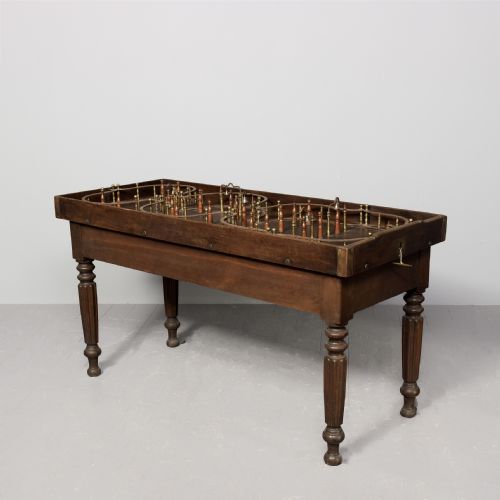
Object types stretch beyond standard tables to include games boards, bagatelle tables, and compartmented storage boxes associated with parlour entertainment. Woods such as rosewood and walnut appear frequently, often demonstrating the craftsmanship of nineteenth-century cabinet makers.
Materials and construction methods
Makers utilised dense cabinet timbers such as mahogany, oak, walnut, and exotic rosewood to build durable parlour furniture. These hardwoods provided the structural stability needed for fold-over mechanisms on card tables and the weight required for freestanding centre tables.
Surface treatments incorporated rich veneers, such as burr walnut and macassar ebony, alongside detailed joinery like drop leaves and folding tops. Interior surfaces frequently featured baize or fabric inserts for card playing, while specific hobby tables integrated fitted wooden boxes for sewing and games.
English Parlour Table Retail Price Guide 2026
Typical asking prices for english parlour table among the pieces listed under this phrase on Sellingantiques today, from the lower quarter to the upper quarter. They describe what is for sale here now, not the wider market.
Form variations range from occasional and centre tables to dedicated card, bagatelle, and sewing tables.
Distinctions in construction and finish
Quality in these tables rests upon the selection of timber and the precision of the cabinet work, particularly in mechanical elements like fold-over tops and drop leaves. Superior examples display carefully matched wood grains, such as burr walnut or rosewood veneers, rather than plain secondary timber.
The refinement of carved details, such as the zodiac carvings on Victorian oak tables or Chippendale style motifs on early twentieth-century tea tables, separates standard production from finer workshop output. Robust joinery and the original integrity of internal games compartments or sewing wells further indicate higher standards of manufacture.
The English Parlour Table Glossary
- Centre table
- A freestanding table designed to be viewed from all sides, placed in the middle of a room rather than against a wall. These often feature circular or rectangular tops supported by a central pillar or robust legs.
- Card table
- A specialised table featuring a hinged fold-over top that opens to reveal a baize or fabric-lined playing surface. They often include hidden wells for storing counters and cards.
- Bagatelle table
- A Billiards-related game table popular in the nineteenth century, featuring holes or cups on the playing surface into which balls are struck with a cue.
- Drop leaf
- A table top design with hinged flaps on the sides that can be raised to extend the surface area or lowered when space is required. This mechanism appears frequently on sewing and hobby tables.
- Baize
- A coarse woolen fabric, traditionally green, used to line the playing surfaces of card and games tables to protect cards and dampen the sound of play.
English Parlour Table: Frequently Asked Questions
What is an English parlour table used for?
These tables served multiple social functions in the home, acting as surfaces for card games, tea service, sewing, and reading. Their versatile designs often included fold-over tops or storage compartments to accommodate various domestic pastimes.
Today, they function well as decorative occasional tables or central display pieces in living spaces, retaining their historical character while fitting into modern routines.
How do I identify a Victorian parlour table?
Victorian examples often feature darker timbers like walnut and rosewood, substantial proportions, and ornate details such as burr veneers or carved motifs. They frequently take the form of heavy centre tables or specialised hobby and game tables.
Examining the construction methods and secondary woods helps distinguish these mid-nineteenth-century pieces from earlier Georgian or Regency predecessors.
How do I care for antique wood tables?
Maintaining antique timber involves keeping tables away from direct sunlight and extreme temperature fluctuations to prevent the wood or veneer from warping and cracking. Regular dusting with a soft cloth preserves the finish without requiring heavy polishes.
For tables with baize or fabric inserts, gentle brushing helps remove debris while protecting the vintage textiles from moisture.