
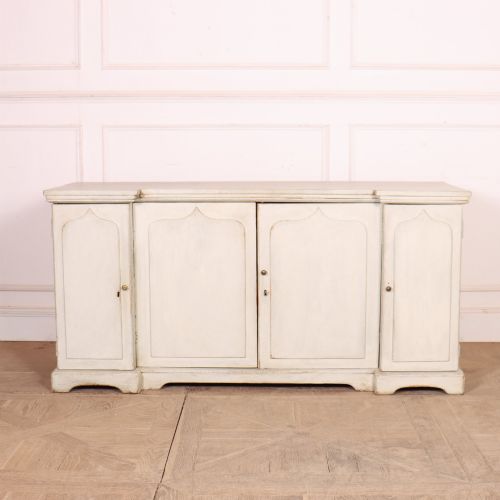
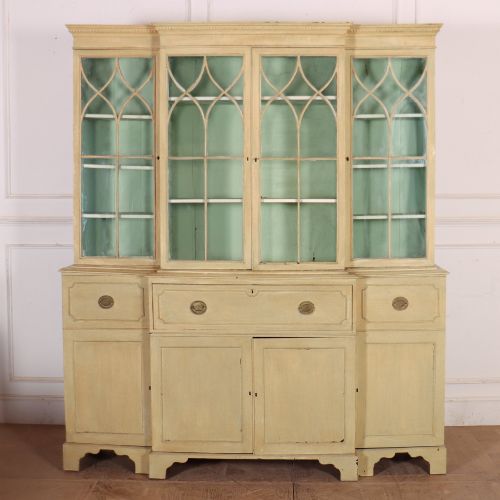


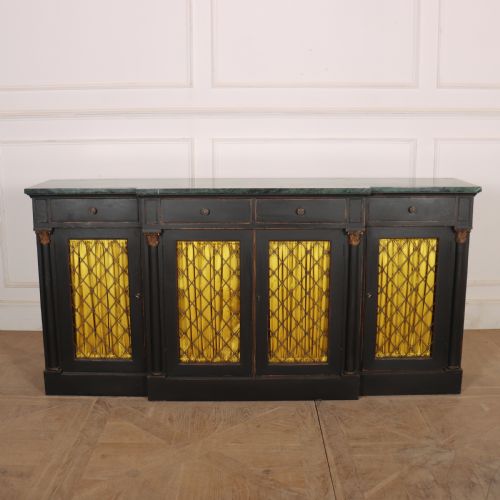


English Painted Breakfront
An english painted breakfront brings architectural presence and ample storage to a room, offering the surface charm of aged painted wood.
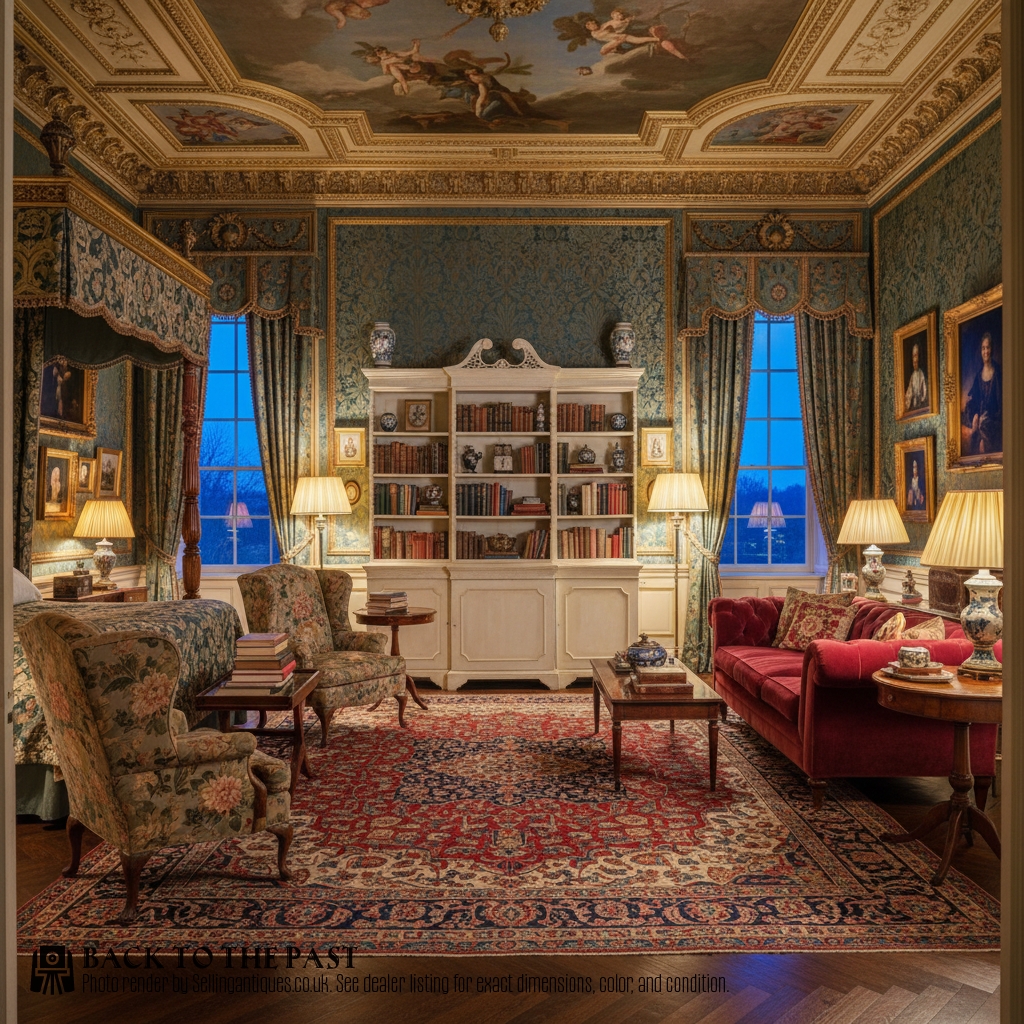
English Painted Breakfront
An english painted breakfront stands out for its recessed central section flanked by projecting wings, creating a distinguished facade that commands attention in a room. These pieces span the eighteenth and nineteenth centuries, taking the form of bookcases, dresser bases, housekeepers cupboards, and side cabinets.
The aesthetic leans towards English country utility or refined Georgian and Regency styles, alongside occasional Gothic revival notes. Buyers frequently encounter painted wood finishes that reveal decades or centuries of weathering, giving each piece a distinct character.
Materials and Construction
Carpenters relied upon sturdy timbers such as pine, beech, and general wood stock to build the carcases of these large storage items. Brass hardware and glass panes frequently complete the cabinetry, particularly on the library bookcases and display units.
Surface treatment relies entirely on paint, applied over wood to protect the timber and provide a decorative finish. Wire mesh occasionally appears in place of glass on cabinet doors, reflecting the practical domestic origins of the pieces.
Listings feature pieces spanning the eighteenth century through to nineteen twenty, utilising pine, beech, glass, and wire mesh.
Judging Quality
Quality rests upon the architectural proportion of the breakfront facade and the integrity of the original timber frame. Pieces retaining their early paint surfaces hold greater visual honesty than those stripped or heavily refinished in later decades.
The refinement of the joinery and the subtlety of the proportions distinguish simpler country kitchen dressers from formal library bookcases and grand wardrobes.
The English Painted Breakfront Glossary
- Breakfront
- A cabinet or sideboard whose central section projects forward from the flanking wings. This configuration breaks up a flat wall and adds depth to large furniture.
- Dresser Base
- A low sideboard or cupboard unit typically fitted with drawers and cupboards beneath a solid top. These served hardworking domestic roles in kitchens and pantries.
- Housekeepers Cupboard
- A large storage cabinet traditionally used for linens, china, and provisions in large country houses. They offer extensive internal shelving enclosed by panelled doors.
- Gothic Revival
- An architectural and decorative style drawing on medieval forms, featuring pointed arches and vertical emphasis. This style appears on nineteenth century wardrobes and bookcases.
- Secretaire
- A desk form incorporating a drop-down writing flap that conceals small drawers and pigeonholes. It merges writing utility with cabinet storage.
English Painted Breakfront: Frequently Asked Questions
What is a breakfront?
A breakfront is a large piece of furniture featuring a central section that extends forward while the outer sections step back. This design creates a tiered facade that breaks up long walls and adds shadow and depth.
In historical pieces, this configuration accommodated different internal depths for books, linen, or serving ware while maintaining balanced proportions.
How do I use a housekeeper cupboard?
A housekeeper cupboard provides substantial vertical storage suited for modern living rooms, hallways, or large kitchens. The deep cupboards and shelving swallow bulky items while keeping rooms orderly.
These pieces work well as standalone focal points where their painted surfaces and architectural presence can dominate an empty wall.
Are these pieces made of solid wood?
The construction relies on solid timbers such as pine and beech for the structural carcases and internal framing. Traditional cabinetmakers built these pieces to endure heavy daily domestic service.
Surfaces are finished with paint rather than polished veneer, reflecting utilitarian origins or decorative country tastes.
How do I distinguish eighteenth and nineteenth century pieces?
Eighteenth century examples often display simpler, heavier joinery and proportions associated with country house service. Nineteenth century pieces frequently incorporate revival styles like Gothic elements or refined Regency proportions.
Paint analysis and timber patination also help indicate the age of the underlying woodwork.