

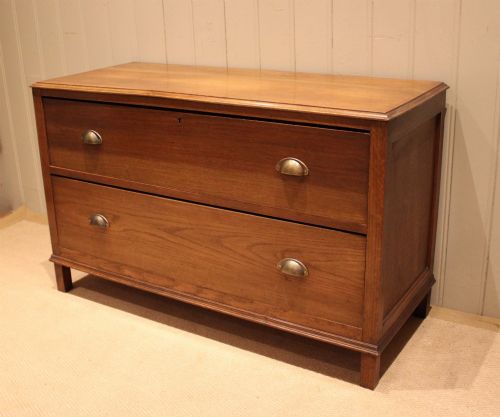
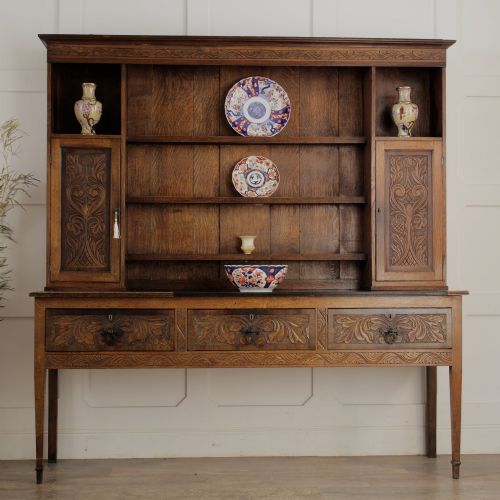
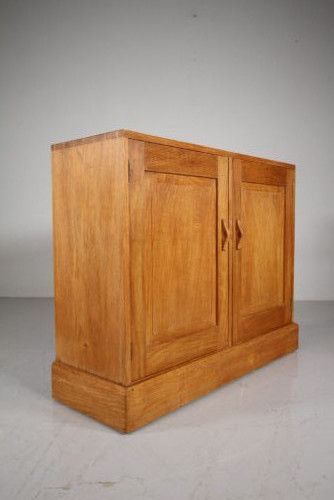
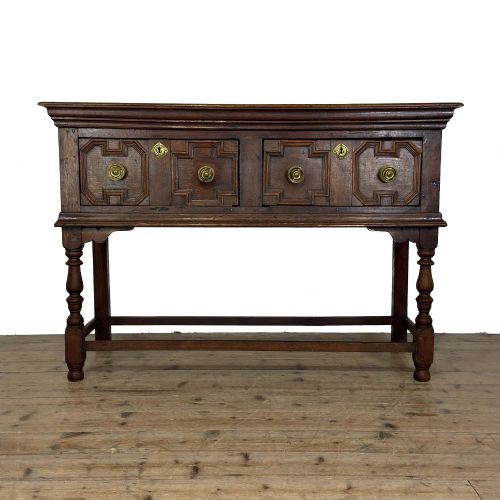

English Oak Sideboard
An english oak sideboard anchors a room with generations of utility, combining heavy timber construction with practical storage.
English Oak Sideboard
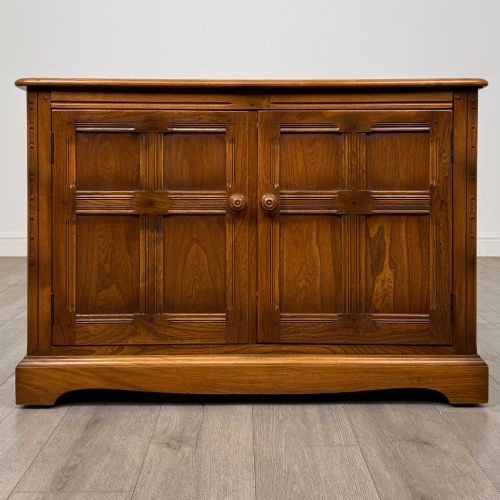
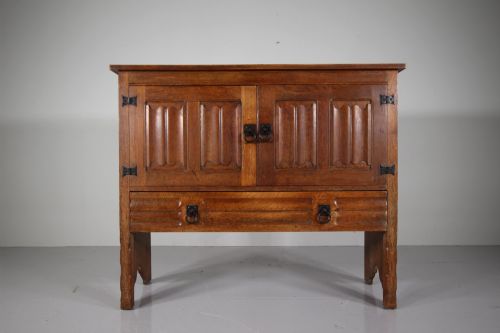
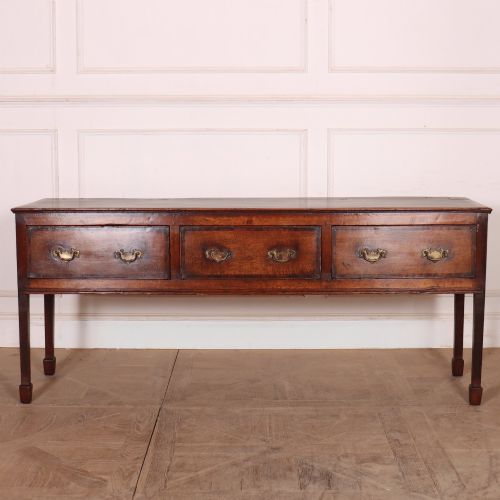
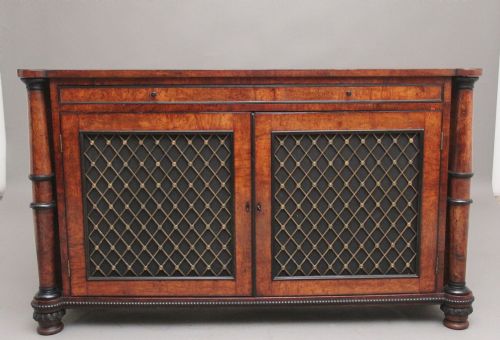
An english oak sideboard encompasses low dresser bases, potboard servers, and carved cupboards spanning from the seventeenth century through to the twentieth century. These forms originate primarily from domestic country houses, townhouses, and farmhouses where durable timber storage was essential.
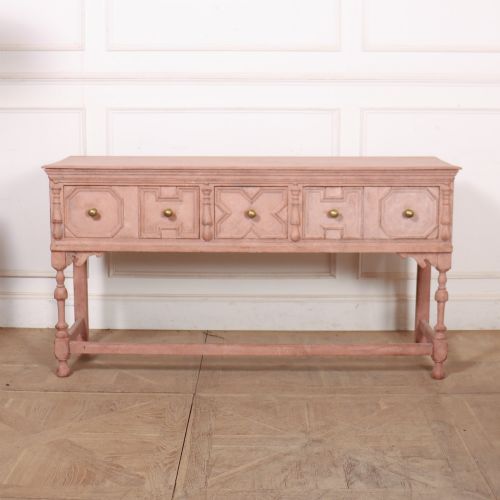
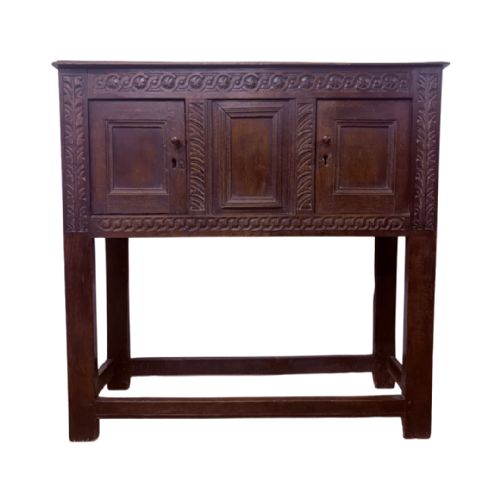
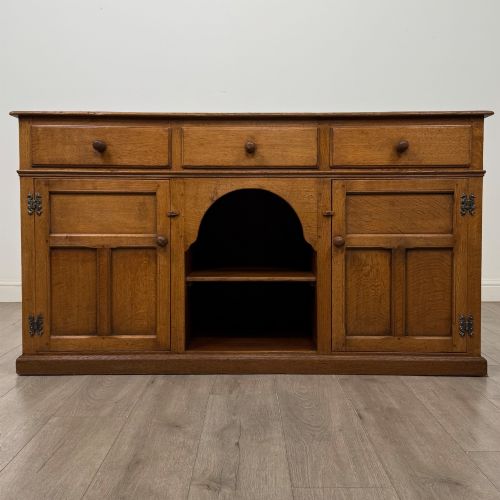
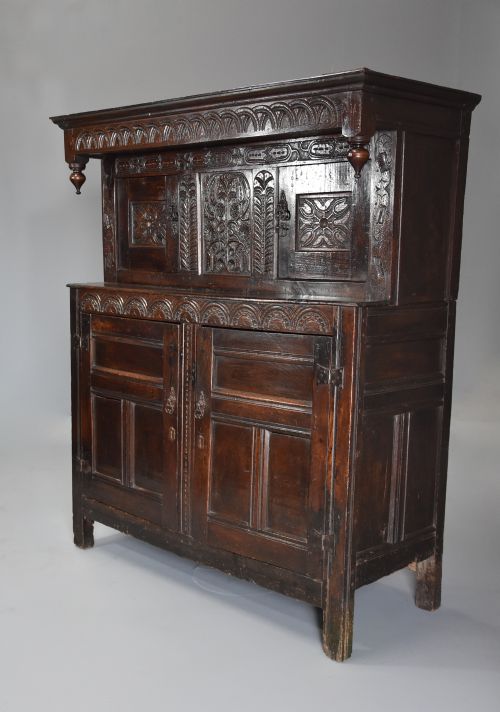
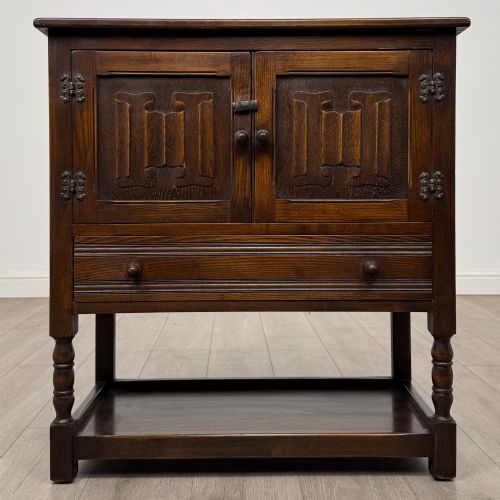
The sixteenth and seventeenth-century examples frequently present as joined cupboards, court cupboards, or low servers with geometric mouldings and panelled doors. Georgian and eighteenth-century interpretations lean towards open potboard bases, cabriole legs, and multiple drawer configurations designed for kitchen and dining spaces.
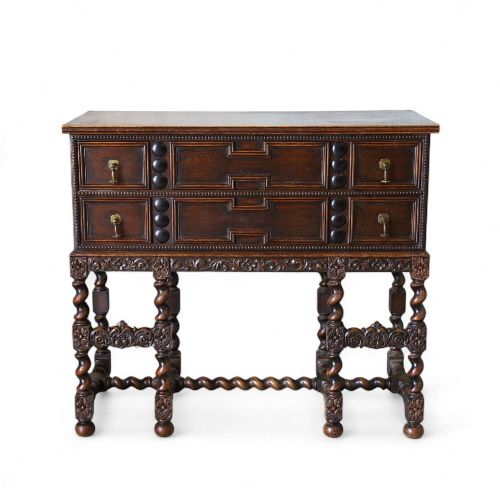
Victorian and later iterations revive earlier Jacobean and Gothic aesthetics, introducing heavy carving, barley-twist supports, and polished finishes alongside cleaner Arts and Crafts lines. Buyers meet everything from stark seventeenth-century utilitarian boards to Edwardian golden oak iterations on this page.
How They Were Made
The core structure relies on solid oak, frequently paired with secondary timbers like elm, pine, or mahogany for drawer linings and internal shelving. Early pieces utilise pegged mortise and tenon joinery, creating rigid frames built to endure centuries of daily household use.
Surface treatment ranges from raw, untouched patinas developed over hundreds of years to geometric raised mouldings, chip carving, and painted finishes. Cabinetmakers incorporated brass drop handles, iron H-hinges, and occasionally pollard oak or ebony veneers to accent the primary timber grain.
The listings span eight distinct periods, led by eighteenth-century and seventeenth-century joined oak examples alongside Victorian and Edwardian revivals.
What Varies in Quality
Quality rests in the integrity of the timber selection, the depth of the original surface patina, and the retention of early structural elements like potboards and panelled doors. Pieces retaining their untouched, period surface show a warm, undulating grain that heavy modern stripping destroys.
The crispness of hand-carved mouldings, the tightness of traditional joinery, and the presence of original hardware distinguish workshop craftsmanship from standard provincial output. Finer examples display balanced proportions, thick quarter-sawn oak boards, and minimal later alterations to the drawer configurations or base supports.
Liberty and Co·Harris Lebus
The English Oak Sideboard Glossary
- Potboard
- An open lower shelf beneath a dresser base traditionally used for storing ceramic plates and heavy kitchen pots. This board sits just above the floor, resting on low stile feet.
- Court cupboard
- A two-stage enclosed cabinet dating from the sixteenth and seventeenth centuries, featuring a recessed upper section supported by turned columns. These pieces served to display household wealth and store provisions.
- Joined oak
- Furniture constructed using interlocking mortise and tenon joints secured with wooden pegs rather than metal nails. This method defines seventeenth-century cabinet making.
- Pollard oak
- Timber taken from trees that were pollarded, resulting in a dense, highly figured burl grain used for decorative veneers during the nineteenth century.
- Barley-twist
- A turned column or leg carved in a spiral shape resembling a twisted rope, popular during the seventeenth century and revived in later Victorian and Carolean revival pieces.
English Oak Sideboard: Frequently Asked Questions
How do I spot a seventeenth-century piece?
Seventeenth-century examples display hand-split oak boards, pegged mortise and tenon joinery, and heavy panelled doors with geometric mouldings. The construction is robust and relies entirely on wooden pins rather than modern screws.
Look closely at the backboards and drawer linings, which should show adze marks or pit-sawing. An authentic early surface develops a deep, dark patina over centuries of handling.
What is the difference between a dresser base and a sideboard?
A dresser base originally functioned as a kitchen work table and storage unit, frequently featuring an open potboard shelf at ground level or multiple drawers in a row. Sideboards evolved specifically for the dining room to serve food and store linens.
Earlier pieces from the seventeenth and eighteenth centuries are almost universally termed dresser bases or servers. Later Victorian and Edwardian iterations adopt the sideboard terminology with enclosed lower cabinets.
Where should I place an oak sideboard at home?
These substantial timber pieces anchor dining rooms, hallways, and large kitchens, providing deep surface space and enclosed storage for tableware. Keep them away from direct heat sources and strong sunlight to protect the historic oak finish from drying or splitting.
Allow sufficient clearance around doors and drawers to operate original wooden runners and iron hardware safely. Their neutral tones blend easily against lime-washed walls or exposed brick.
How do I care for the surface patina?
Maintain the wood using traditional beeswax applied sparingly with a soft cloth, buffing gently to preserve the historic sheen. Avoid modern silicone sprays or liquid polishes that build up a sticky residue over the ancient grain.
Clean surfaces with a dry or barely damp cloth to remove dust from carved mouldings and panel grooves. Regular, light waxing protects the oak pores without altering the natural colour.