




English Oak Pedestal Table
An english oak pedestal table brings together solid timber and sturdy support, offering a practical surface suited to any room.
English Oak Pedestal Table
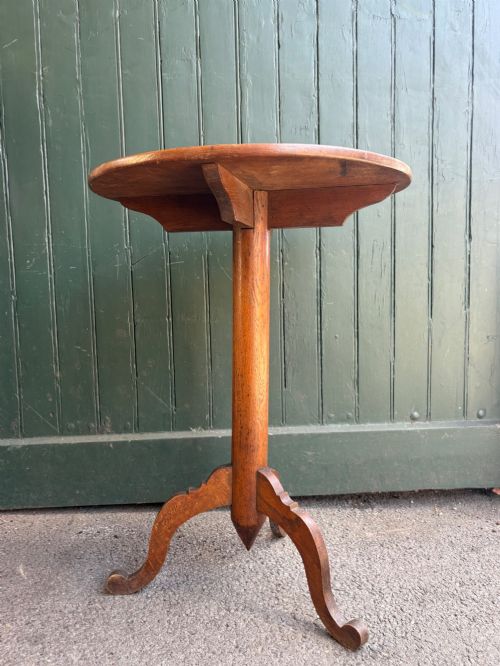
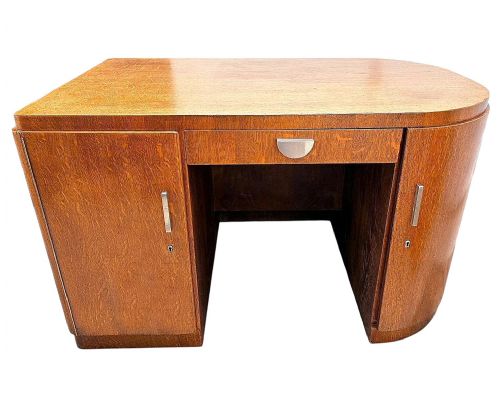
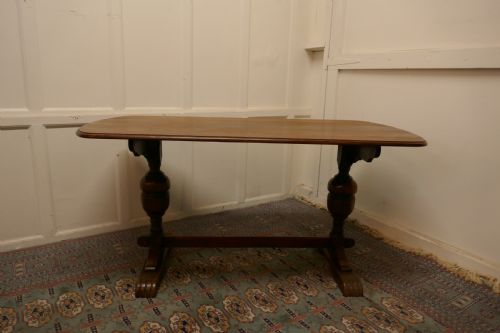
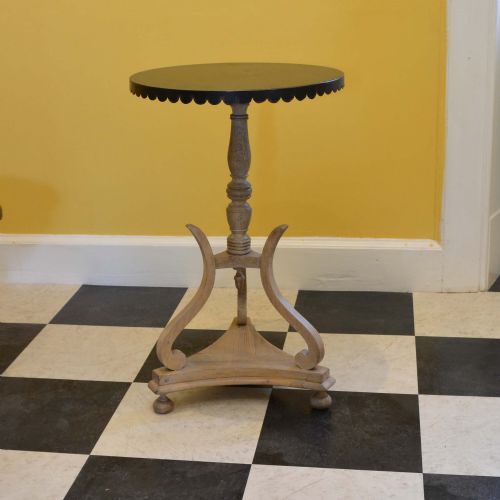
When you search for an english oak pedestal table, you encounter a varied selection of surfaces supported by central pillars, ranging from compact tripod tables to substantial twin pedestal desks. The pieces listed span multiple eras, including 18th century country examples, Regency centre tables, and later Victorian and Edwardian writing desks.
Occasional tables and plant stands appear frequently alongside larger library and writing furniture, showing how makers adapted the pedestal format for different domestic uses. Oak dominates these listings, often combined with secondary timbers and specialised top surfaces.
You are likely to meet Georgian tripod designs and Victorian or Edwardian desks most often on this page. These versions reflect both simple country craftsmanship and formal period styling.
Materials and Technique
Makers utilised solid oak supplemented by decorative veneers such as pollard oak, burr oak, satinwood, and yew wood to create contrasting grains on top surfaces. Structural elements rely on sturdy turned pillars, tripod legs, and twin pedestals designed to support heavy use.
Additional materials like brass hardware, leather writing inserts, and ebonised details appear across various periods to enhance both function and appearance. Carved ornamentation, zodiac motifs, and barley twist legs demonstrate traditional woodworking techniques applied to the timber.
Listings feature oak combined with leather, brass, satinwood, and pollard oak across periods from the 18th century to the 1930s.
Assessment of Quality
The standard of a piece depends heavily on the selection of timber, particularly where figured veneers like pollard or burr oak are matched across the top surface. Superior examples demonstrate careful attention to the turning of pillars, the stability of tripod bases, and the integration of secondary woods.
Refinement in carving and the quality of fitted leather writing surfaces or brass mounts separate standard utility pieces from finer designated workshop output. The cohesion of the design, from the central column to the feet, dictates the overall success of the construction.
Gillows·Merryweather and Son·Shoolbred
The English Oak Pedestal Table Glossary
- Pedestal table
- A table supported by a central pillar or column rather than four corner legs. This format allows for greater legroom and circular or rectangular top configurations.
- Tripod table
- A small occasional table whose pedestal base terminates in three legs. These often feature tilt-top mechanisms for storage.
- Centre table
- A freestanding table designed to be viewed from all sides rather than pushed against a wall. They frequently occupy the middle of a principal room.
- Pollard oak
- Oak timber taken from a tree that has been pruned at a height above animal reach, producing a dense, highly figured grain pattern used for veneering.
- Twin pedestal desk
- A large writing table featuring two separate stacks of drawers that support the main desktop. These heavy pieces typically incorporate inset leather writing surfaces.
English Oak Pedestal Table: Frequently Asked Questions
How do I identify an 18th century oak pedestal table?
Eighteenth century examples typically show simpler construction methods, often featuring pegged joints, solid timber tops, and tripod bases without complex mechanical fittings.
The grain of the oak appears deeper and more weathered over time, showing the hand-working of the period rather than mass-produced uniformity.
What is the difference between a centre table and an occasional table?
Centre tables are traditionally larger, designed to sit in the middle of a room with finished detailing on all sides. Occasional tables are smaller, more movable pieces used for specific, temporary tasks.
Both utilise the pedestal format, but their scale and placement within a historic interior differ significantly.
How should I care for an antique oak desk?
Keep the timber away from direct heat sources and dramatic humidity shifts to prevent the oak and any decorative veneers from splitting. Regular light dusting preserves the finish without requiring heavy polishes.
Leather inserts on writing surfaces benefit from occasional neutral conditioning to keep the material supple.
What are pollard oak and burr oak?
Pollard oak comes from trees pruned specifically to create dense, knotted growth patterns that yield highly decorative veneer surfaces. Burr oak similarly displays swirling, knotted grain formations caused by tree growth irregularities.
Makers utilised these figured timbers on prominent surfaces like table tops and desk lids to catch the light and show off the grain.