

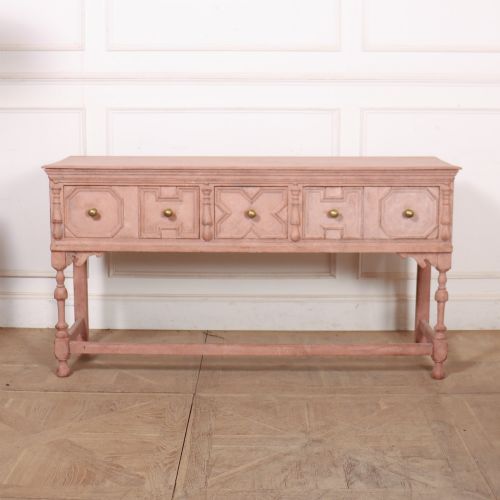
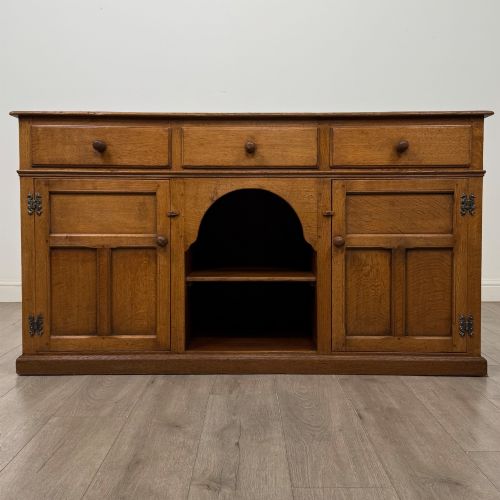
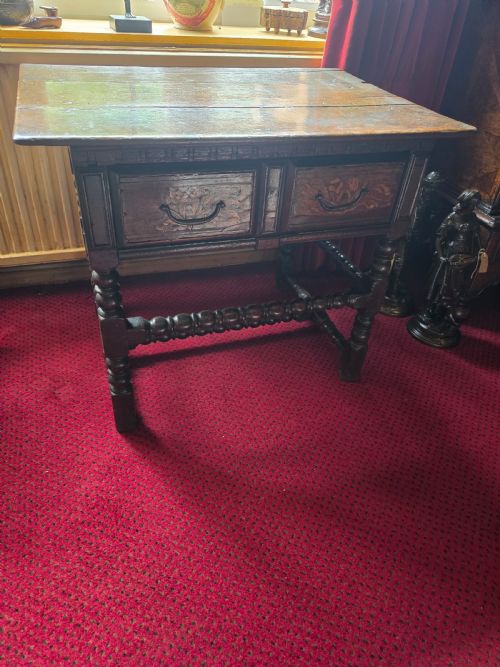
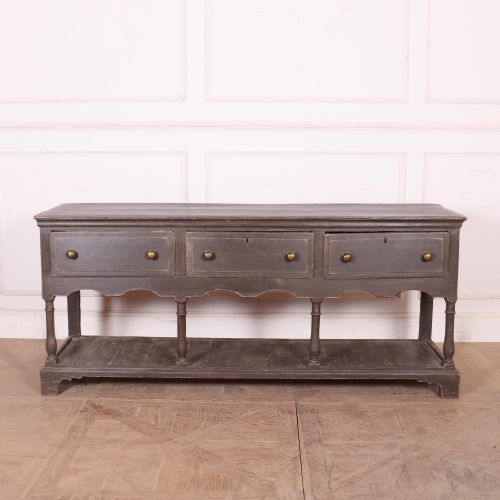


English Oak Low Dresser
An english oak low dresser is a heavy, utilitarian serving piece that anchors a room with generations of sturdy domestic history.
English Oak Low Dresser
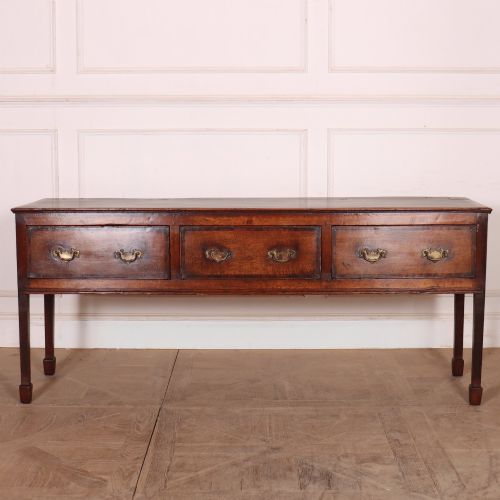
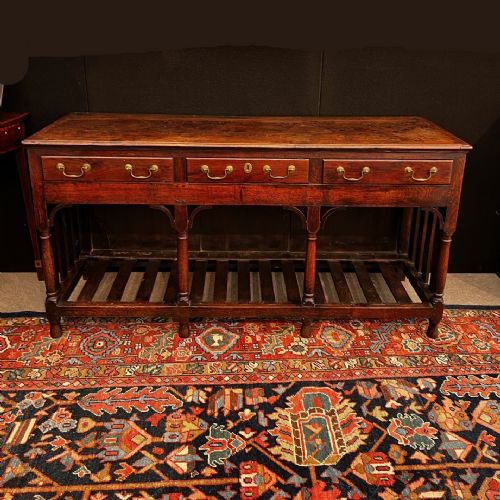
An english oak low dresser is a foundational piece of furniture designed for storage and display in domestic spaces, appearing most frequently in eighteenth-century forms. These low boards combine surface utility with drawer or cupboard storage below, often featuring potboards or open bases.
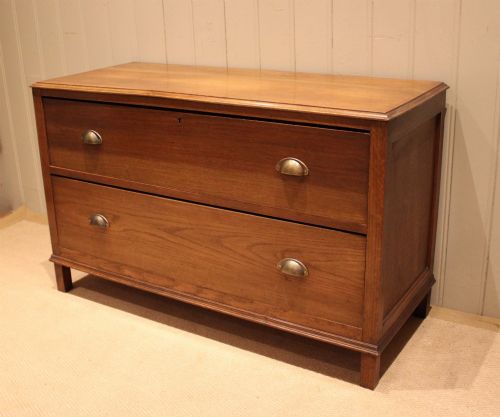
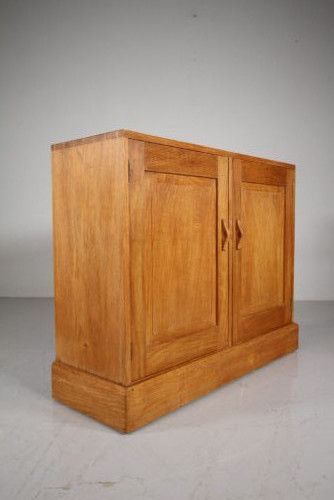
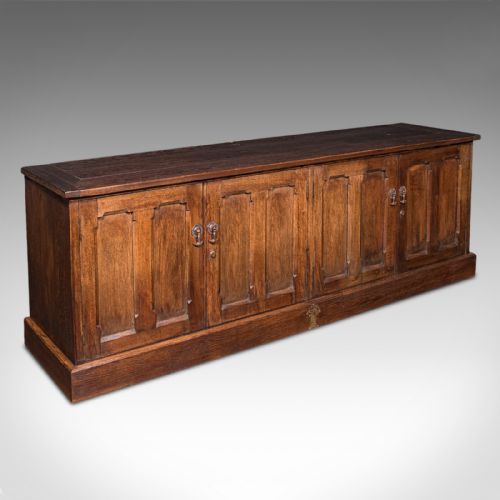
The pieces on this page span from the seventeenth century through to the twentieth century, taking in Georgian periods, Arts and Crafts movements, and revival styles. Regional variations emerge across Shropshire, Cheshire, and Lancashire, showing how local workshops adapted the basic form.
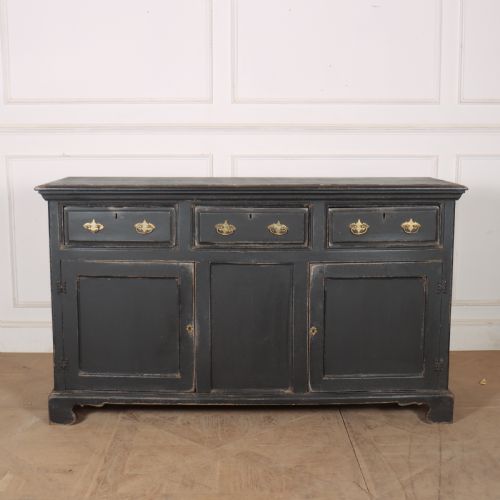
Buyers encounter dresser bases, joined low dressers, and server configurations without upper display racks, alongside related side tables and cupboards. The proportions remain low to the ground, prioritising a stable working height over towering storage.
What varies in quality
The depth of colour and patination in the timber separate superior examples from plain ones, reflecting decades of wax polishing and careful use. Original brass hardware and untouched drawer linings add significant weight to a piece's authenticity.
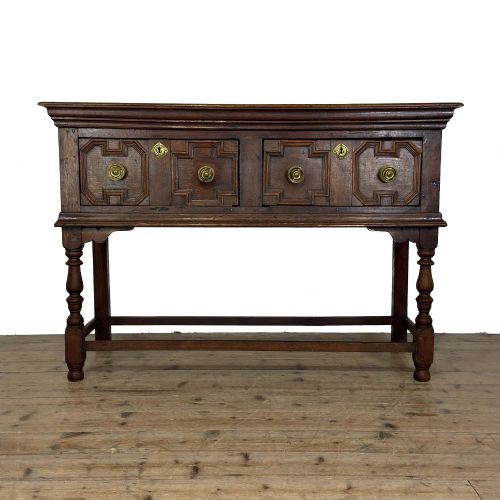
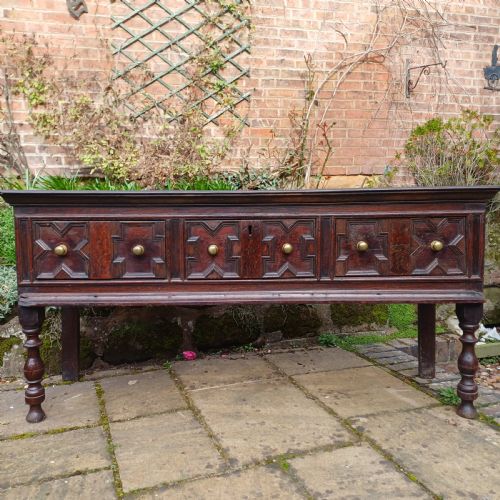
Joinery execution tells its own story, where tight joints and precise geometric mouldings or carvings denote skilled workshop production. Regional characteristics, such as joined potboards from Shropshire or Lancashire, display varying degrees of structural ambition.
Listings span from the late seventeenth century through the Georgian and Victorian eras into the nineteen-thirties, using oak, elm, paint, and brass.
The English Oak Low Dresser Glossary
- Potboard
- A lower shelf fitted between the legs of a dresser base, traditionally used for storing pots and domestic utensils.
- Dresser base
- The lower section of a kitchen or dining dresser, functioning as a sideboard with drawers and cupboards.
- Joined
- A term for furniture constructed using mortise and tenon joints secured with wooden pegs rather than modern fasteners.
- Geometric moulding
- Raised decorative profiles applied to drawer fronts in repeating patterns, common in seventeenth-century joinery.
English Oak Low Dresser: Frequently Asked Questions
What is a low dresser?
A low dresser is a horizontal storage unit with a flat top surface and drawers beneath, designed for serving and domestic organisation.
Unlike tall dressers with upper display racks, these low versions sit comfortably below eye level and function much like modern sideboards.
Where were these dressers made?
These pieces originate from various English regions, with particular regional styles documented in Shropshire, Cheshire, and Lancashire.
Local timber and traditional joinery methods shaped the specific regional characteristics found across different rural workshops.
How do I style an oak dresser?
An oak dresser anchors a dining room or kitchen, providing a solid surface for lamps, ceramics, or everyday objects.
Pair the piece with simple walls and natural textures to let the patinated timber and grain take visual precedence.
How do I date an old dresser?
Dating relies on construction methods, hardware types, timber choices, and stylistic cues like geometric mouldings or cabriole legs.
Seventeenth-century pieces display heavy joined oak frames, while eighteenth-century Georgian examples often feature refined drawer arrangements and polished brasses.