
English Oak Coffer Chest
An English oak coffer chest offers rugged domestic storage rooted in centuries of vernacular woodworking.
English Oak Coffer Chest
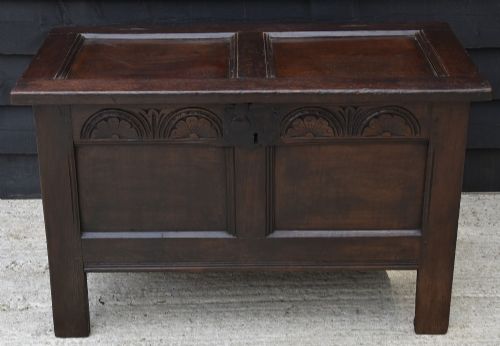
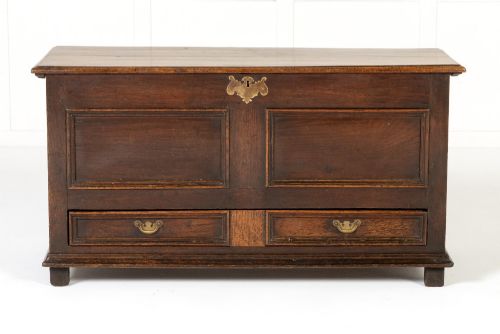
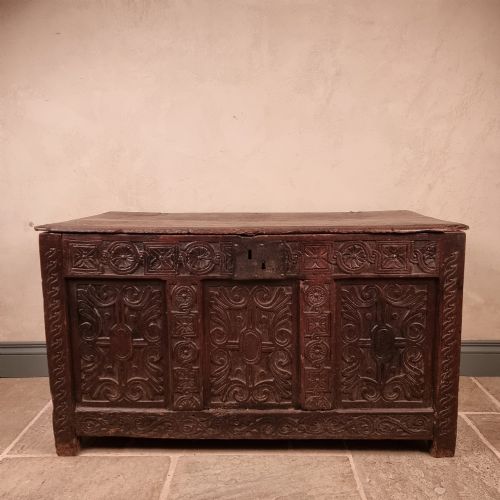
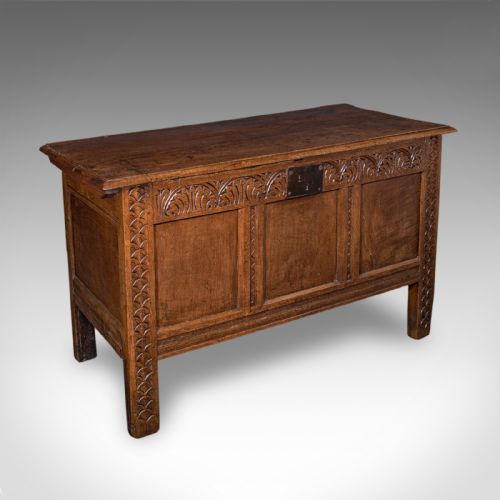
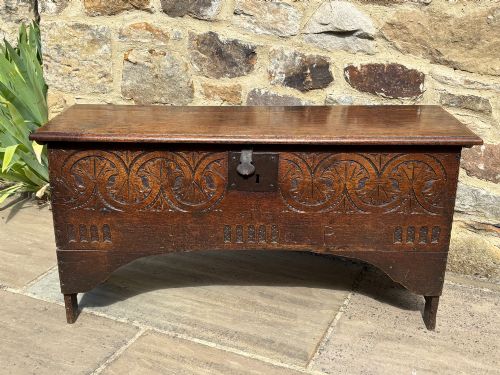
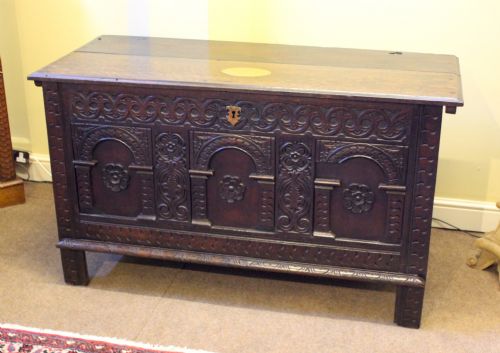
An English oak coffer chest functions as a sturdy storage trunk, blanket box or occasional seating bench found across domestic interiors from the sixteenth century onwards. Buyers searching this phrase encounter robust boarded constructions, multi-panel joined chests and variants like mule chests fitted with lower drawers.
The selection spans sixteenth-century Elizabethan survivals, seventeenth-century Jacobean and Charles II examples, and eighteenth-century Georgian interpretations. Simpler bible boxes, document boxes and silver chests also appear alongside full-scale blanket trunks.
Most pieces on this page originate from the seventeenth and eighteenth centuries, reflecting the primary eras of joined oak furniture production. Makers utilised native timber to build heavy-duty vessels designed to safeguard valuables, textiles and household documents.
How They Were Made
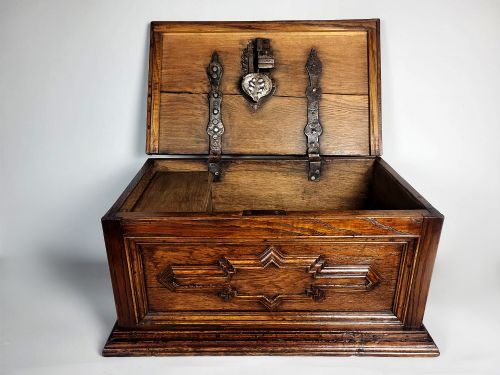
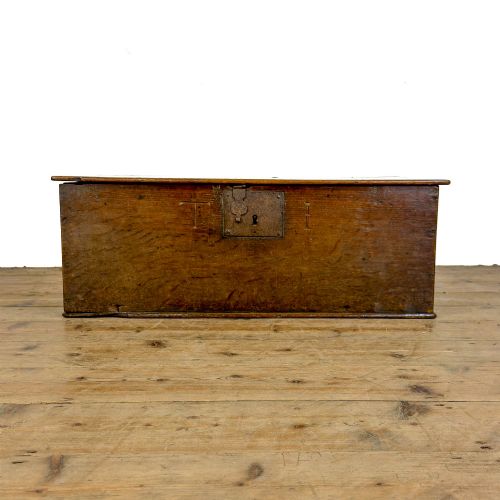
Makers constructed these pieces primarily from native English oak, joined using traditional mortise and tenon frames secured with wooden pegs or simple six-plank boards nailed and pegged at the joints. Iron, brass and steel hardware such as hinges, straps and complex locks reinforced the heavy timber structures.
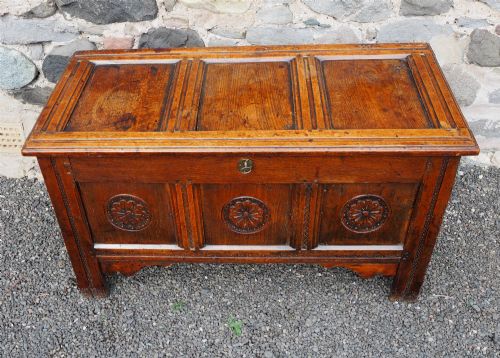
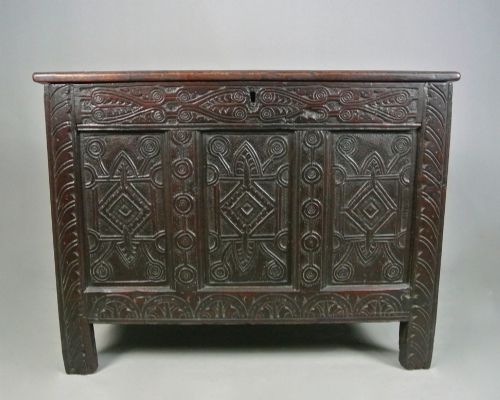
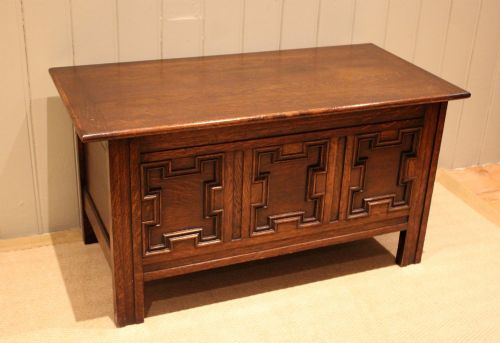
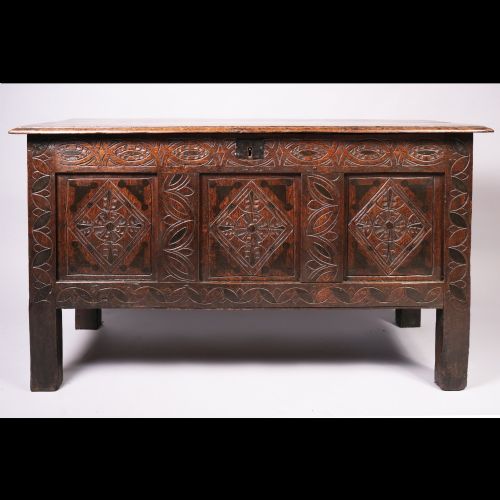
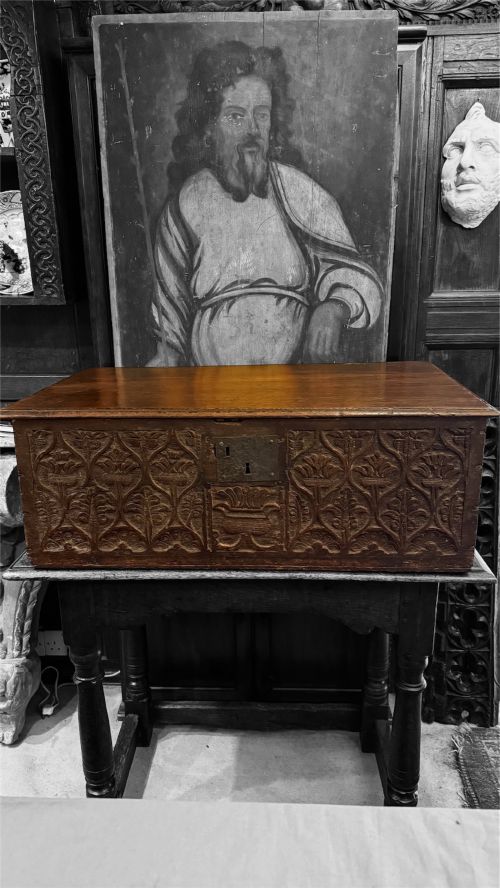
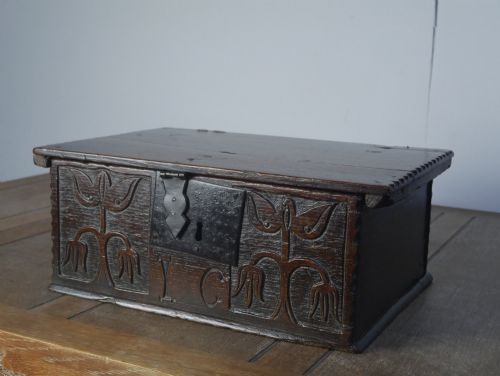
Surface ornamentation relied on gouge carving, arcading, geometric mouldings and panel relief work executed by hand using basic chisels and edge tools. Wood inlay occasionally provides secondary contrast on select panels and friezes.
Joined variants utilise separate stiles, rails and floating panels to accommodate seasonal wood movement without splitting the primary structure.
Materials recorded across the archive include native oak paired with iron, brass, steel, and wood inlay.
What Varies in Quality
The degree of hand-carved detail and the crispness of architectural motifs like arcading or geometric panelling distinguish standard vernacular boxes from exceptional atelier pieces. Timber selection also matters, as quartersawn oak displaying prominent medullary rays indicates superior initial material cost and stability.
The survival of original ironwork, complex locking mechanisms, hinges and feet elevates a piece above examples that have undergone extensive timber replacement or hardware substitution over centuries of domestic use.
The English Oak Coffer Chest Glossary
- Coffer
- A heavy wooden chest traditionally used for storing valuables, linens or documents. These storage vessels often doubled as benches or window seats within early homes.
- Mule chest
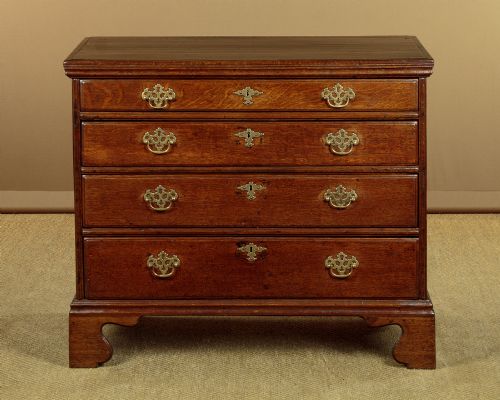
- An oak storage chest featuring one or more drawers built into the base beneath the primary trunk compartment. This hybrid form emerged during the late seventeenth and eighteenth centuries.
- Six plank board
- A basic chest construction method utilising six individual timber boards joined simply at the edges to form a rectangular box. This technique represents an early and utilitarian form of trunk making.
- Arcading
- A decorative carved motif depicting a sequence of small arches supported by columns. It frequently decorates the friezes of seventeenth-century panels.
- Bible box
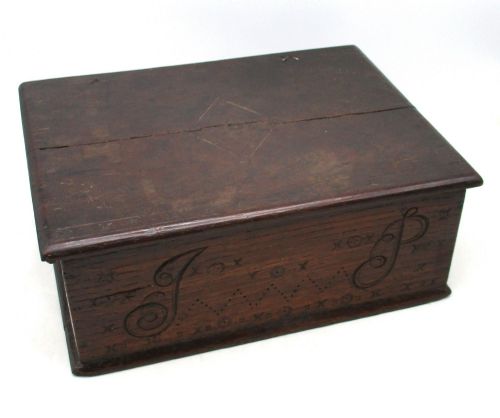
- A small tabletop desk or slanted storage box designed to hold sacred texts and writing materials. These compact oak boxes often feature hinged lids and carved fronts.
English Oak Coffer Chest: Frequently Asked Questions
How were these chests originally used?
Households utilised these heavy timber boxes primarily to secure valuable textiles, clothing, silver and important documents from dampness and theft. Their flat lids also allowed them to function as tables, benches or window seats in domestic rooms.
Over time, as household storage evolved into specialised wardrobes and drawers, these trunks transitioned into blanket repositories and decorative furniture pieces.
How do I tell a seventeenth-century piece from a later copy?
Early pieces exhibit genuine tool marks, hand-split or quartersawn oak boards, and traditional pegged joinery rather than modern machine-cut fasteners. The timber develops a deep, dry patination and colour that modern reproductions struggle to replicate accurately.
Examination of the underside, internal floor boards, and hinges often reveals the hand-wrought ironwork and natural wear consistent with centuries of age.
What is the difference between a coffer and a mule chest?
A standard coffer consists solely of an upper trunk compartment accessed via a hinged lid. A mule chest incorporates one or more functional drawers beneath the main storage well, providing easier access to contents without lifting the heavy top.
This hybrid design became popular during the late seventeenth and eighteenth centuries as woodworking techniques advanced.
How do I care for an antique oak chest at home?
Keep the wood away from direct heat sources, radiators, and rapid humidity changes to prevent the dry oak boards from splitting or warping. Feed the surface periodically with traditional beeswax to maintain the natural finish without trapping moisture.
Avoid commercial liquid polishes, which can degrade the historic patination accumulated over centuries.