
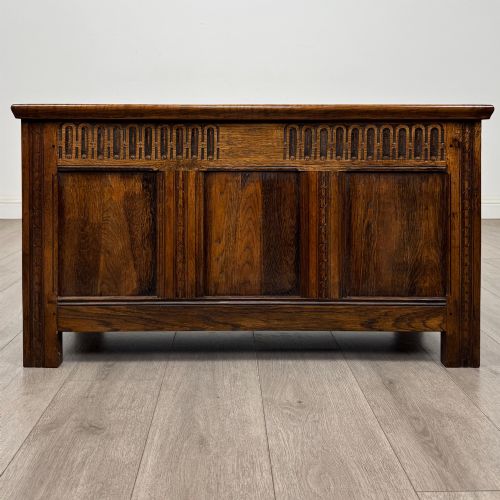


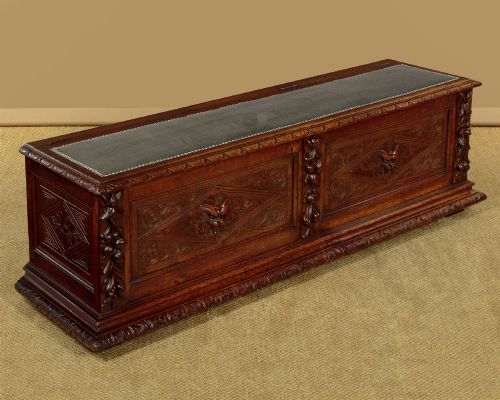
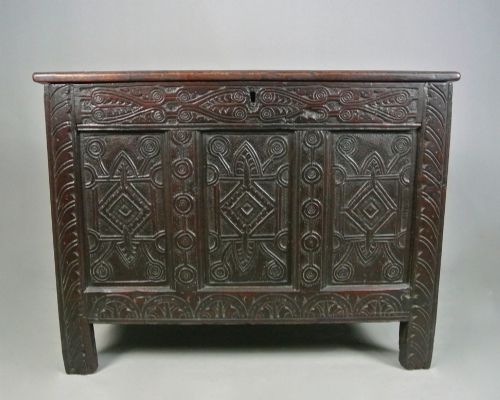
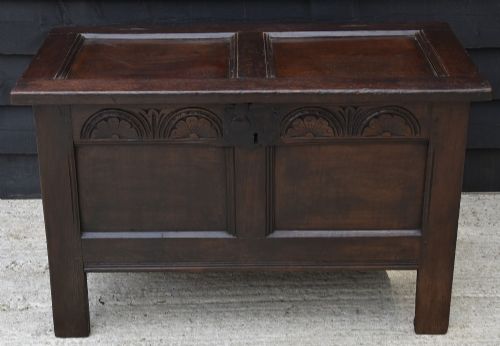
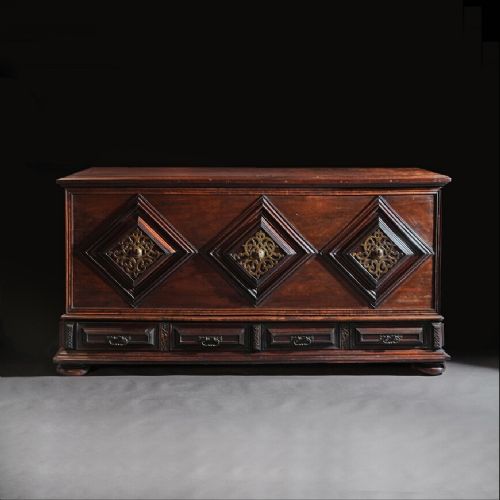
Dark Wood Coffer Chest
These dark wood coffer chest pieces provide sturdy historical storage, constructed from solid timber for practical utility and enduring presence.
Dark Wood Coffer Chest
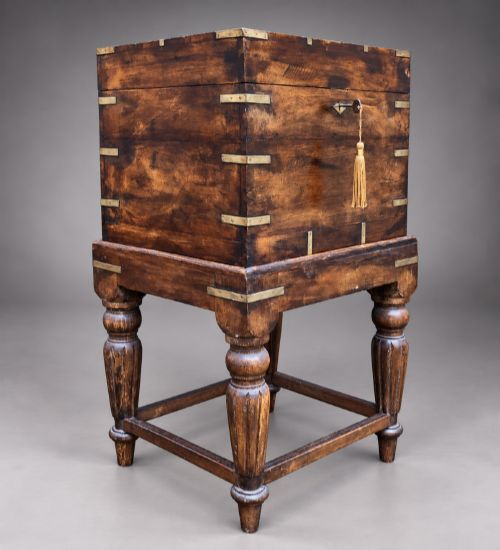
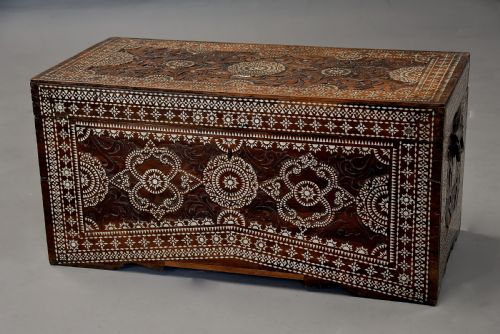
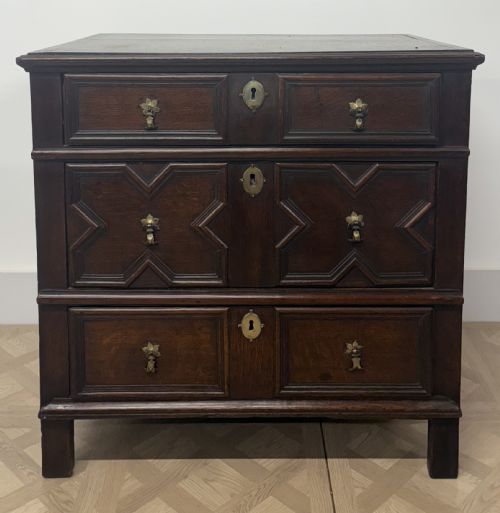
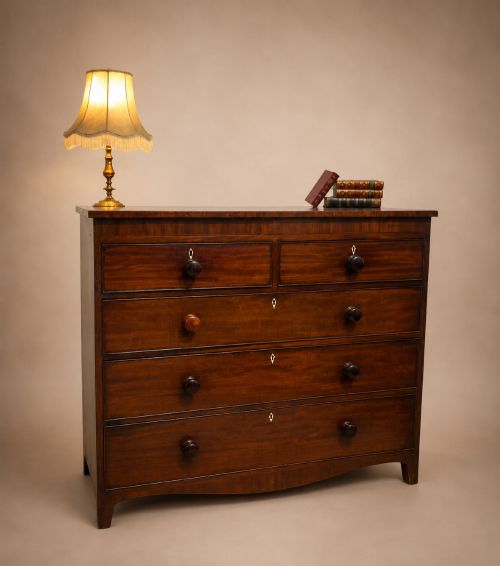
A dark wood coffer chest is a heavy wooden storage receptacle built for domestic or institutional use across centuries. The items found here span from the 17th century through to the 20th century, encompassing styles such as Jacobean, Georgian, and Victorian. Buyers searching this category frequently encounter solid oak examples alongside regional variations in mahogany, walnut, teak, and elm.
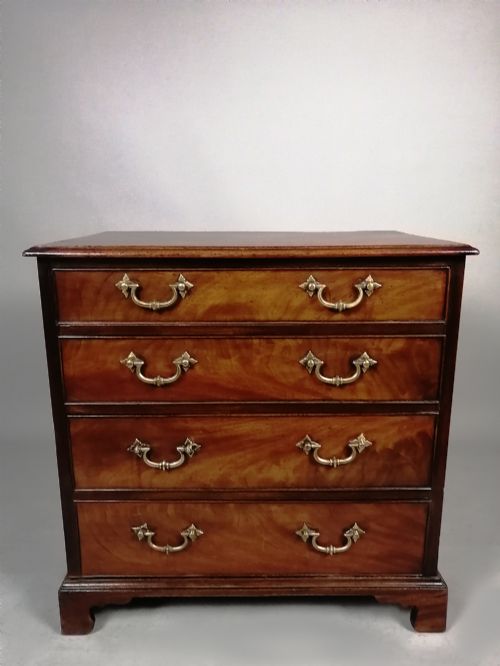
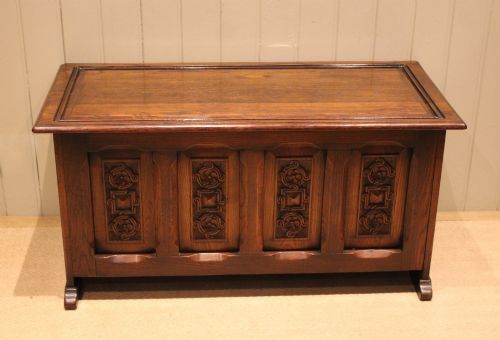
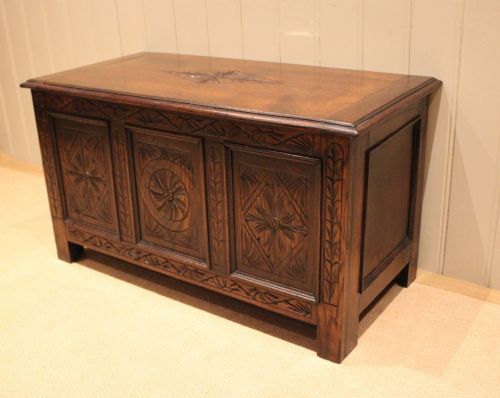
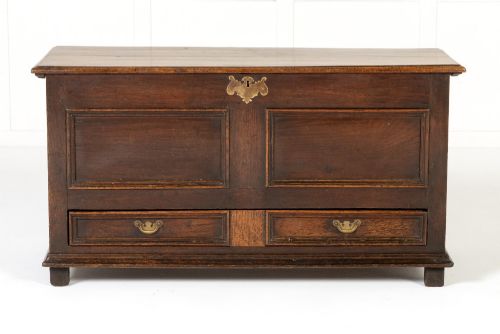
The form ranges from simple six-plank boxes and carved panelled coffers to mule chests fitted with lower drawers, as well as distinct international forms like Middle Eastern trunks and dowry chests. Early English examples often display linen fold panels or geometric mouldings, whilst later iterations incorporate brass handles, iron strapwork, or mother-of-pearl inlay.
Storage remains the primary function, though many function equally as blanket boxes, ottoman seats, or decorative focal points in English country houses and modern interiors alike. The selection reflects both utilitarian origins and highly decorative regional craftsmanship from periods spanning multiple centuries of woodworking history.
Materials and construction
Construction relies heavily on solid oak, walnut, mahogany, and teak, supplemented by secondary timbers such as pine and fruitwood. Carpenters utilised traditional joinery methods, including pegged mortise and tenon frames, dovetailing for drawer boxes, and simple butt joints secured by wooden pegs in early six-plank constructions.
Surface ornamentation involved hand-carving with gouges and chisels to create geometric strapwork, scrolling foliage, or figurative motifs. Iron hinges, brass escutcheons, and wrought iron strapwork provided both structural reinforcement and security, while occasional pieces integrate mother-of-pearl inlay or turned mouldings.
Assessing quality and origin
Quality rests upon the integrity of the timber, the depth and crispness of the hand-carved decoration, and the survival of original hardware such as hinges, locks, and handles. Pieces retaining their original boarded lids and untouched surface patination command greater interest from collectors than those subject to extensive timber replacement or harsh stripping.
The sophistication of the joinery and the regional attribution heavily influence the character of each box. Early 17th-century English oak coffers with pegged panels demonstrate a different standard of traditional craftsmanship compared to later 19th-century colonial or imported trunks decorated with brass studs and intricate inlay work.
The Dark Wood Coffer Chest Glossary
- Coffer
- A large wooden chest traditionally used for holding valuables, documents, or textiles. These sturdy receptacles often feature hinged lids and heavy timber framing.
- Mule chest
- A storage chest fitted with one or more drawers beneath the main compartment. This form bridges the traditional coffer and the chest of drawers.
- Linen fold
- A carved wood panel motif resembling folded linen cloth. This decorative technique is frequently encountered on 17th-century oak furniture.
- Six-plank
- A primitive chest construction method utilising six distinct boards joined at the corners. This technique represents an early form of box-making.
- Escutcheon
- A flat plate surrounding a keyhole designed to protect the surrounding wood. Metal varieties in brass or iron are common on older storage chests.
Dark Wood Coffer Chest: Frequently Asked Questions
What is a coffer chest used for?
These pieces served historically for securing household valuables, heavy garments, and important documents away from dampness and theft.
Today, they function well in contemporary homes as blanket storage at the foot of a bed or as coffee tables in living spaces.
How do I date an old oak chest?
Dating relies on examining the construction methods, such as hand-cut dovetails, pegged joints, and the tool marks left by early carpenters.
Stylistic clues like linen fold carving or Jacobean geometric mouldings also help narrow down the period of manufacture.
Are these chests made of solid wood?
The listings consist primarily of solid timbers including oak, mahogany, walnut, teak, and elm, rather than modern veneered composites.
This solid construction contributes to their considerable weight and durability over centuries of use.
What is the difference between a trunk and a coffer?
A coffer typically describes a heavy wooden box of architectural frame-and-panel construction used for domestic storage.
Trunks often incorporate external metal or leather coverings, carrying handles, and lighter materials intended for travel.