




English Oak Bedside Table
An English oak bedside table brings warmth and practicality to a bedroom through honest timber and timeless domestic utility.
English Oak Bedside Table
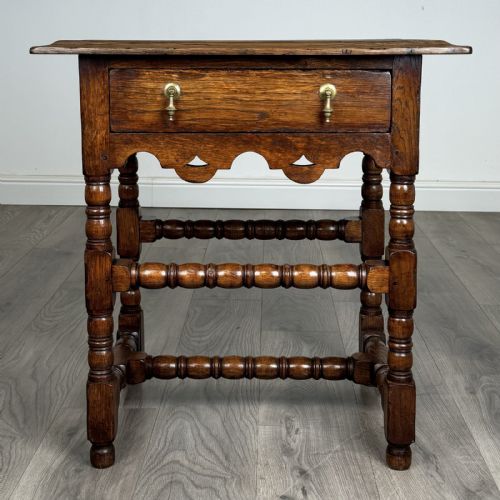
When you search for an english oak bedside table, you encounter practical timber furniture designed for domestic use beside a bed. The selection spans compact side tables, occasional pieces, and lamp tables, often adapted from earlier forms or built in later revivals.
The pieces appearing here include items from the eighteenth century, the nineteenth century, and the nineteen-twenties, alongside Georgian styles and English country interpretations. Many examples function flexibly as lamp tables or small occasional stands alongside their primary bedside role.
How they were made
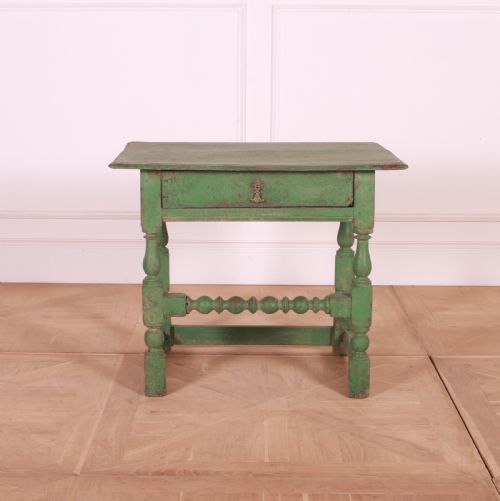
Construction relies primarily on solid oak, frequently paired with secondary timbers like pine and sometimes finished with paint or bleaching. Historical examples utilise traditional joinery suited to heavy domestic service.
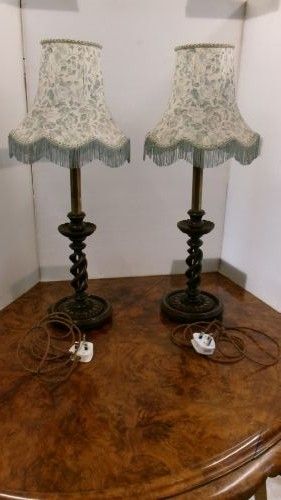
Surface treatments range from natural waxed grain to painted wood finishes, occasionally complemented by brass hardware or fabric elements on associated lighting.
What varies in quality
Quality rests in the choice of timber and the integrity of the construction, distinguishing robust country pieces from more refined Georgian revival work. The weight and figuring of the oak define the tactile character of each table.
Proportion and surface preservation dictate the visual success of the piece, where honest patination outweighs overly cleaned timber.
The English Oak Bedside Table Glossary
- Oak
- A durable hardwood native to Britain, prized for its strength, distinct grain, and longevity in furniture making. It forms the core material of these pieces.
- Occasional table
- A light, movable small table designed for a specific subsidiary purpose in a room. These versatile items often double as bedside surfaces.
- Georgian revival
- A stylistic movement that reinterprets eighteenth-century design principles in later furniture production. Pieces in this style emulate earlier proportions and details.
- Joint stool
- A sturdy wooden stool constructed with mortise and tenon joints, frequently utilised in historic interiors as a low table or bedside stand.
English Oak Bedside Table: Frequently Asked Questions
How do I date an oak bedside table?
Dating relies on observing construction methods, timber preparation, and wear patterns across the frame. Tool marks and joint types often reveal whether a piece dates to the eighteenth century or a later revival.
Hardware and secondary woods like pine also help establish the chronological context. Comparing the form against documented regional styles narrows the period further.
Are these tables solid oak throughout?
Many examples utilise solid oak for the primary surfaces and structural members, while secondary timbers such as pine appear in concealed areas like drawer linings. This traditional method accommodated timber movement over centuries of use.
Examining the underside and drawer interiors clarifies the construction materials used by the maker. Solid timber construction ensures durability and allows for future maintenance.
Can I use a lamp table as a bedside table?
Lamp tables share identical dimensions and proportions with traditional bedside tables, making them ideal for holding reading lights and books. Their compact surface area suits smaller bedroom spaces perfectly.
Many pieces listed under alternative names served multiple domestic functions historically. Their stable construction easily supports nighttime essentials.
How should I care for antique oak?
Maintain antique oak by applying natural beeswax sparingly to nourish the timber and preserve the surface sheen. Avoid placing wooden furniture near direct heat sources to prevent timber splitting.
Dust regularly with a dry cloth and clean spills immediately to protect the historic finish. Proper environmental humidity keeps the wood stable.