

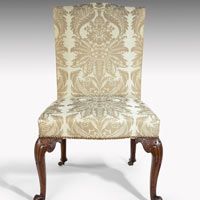
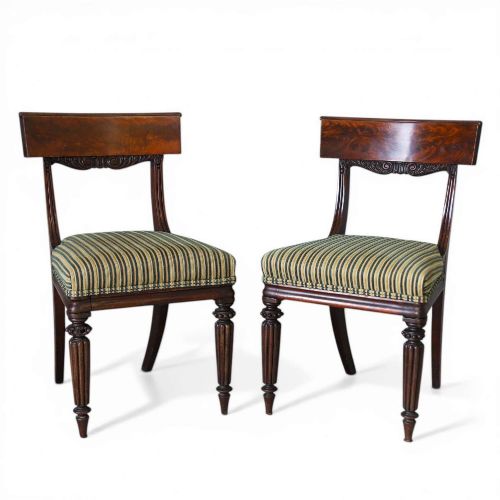
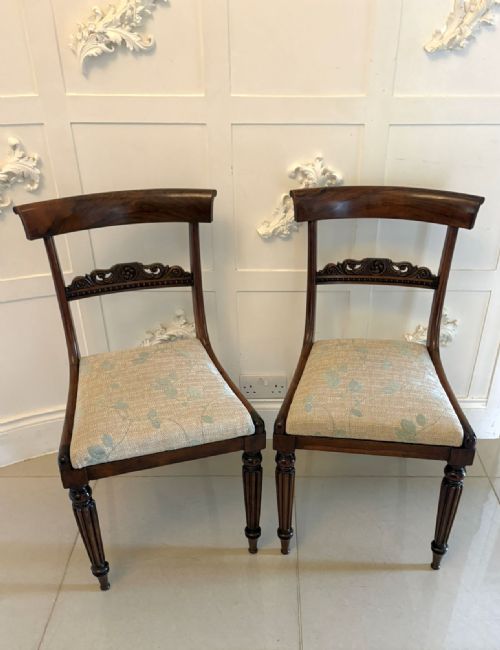
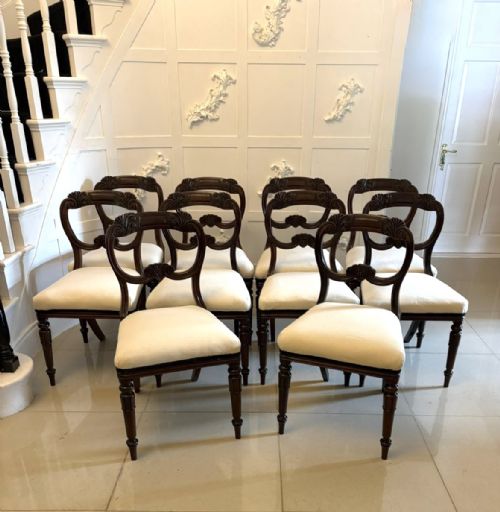
English Mahogany Side Chair
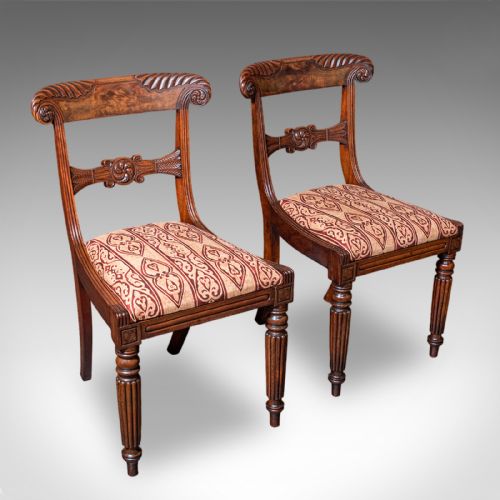
An english mahogany side chair offers sturdy timber construction and classical proportions, serving dining rooms and halls across Georgian, Regency and Victorian periods.
English Mahogany Side Chair
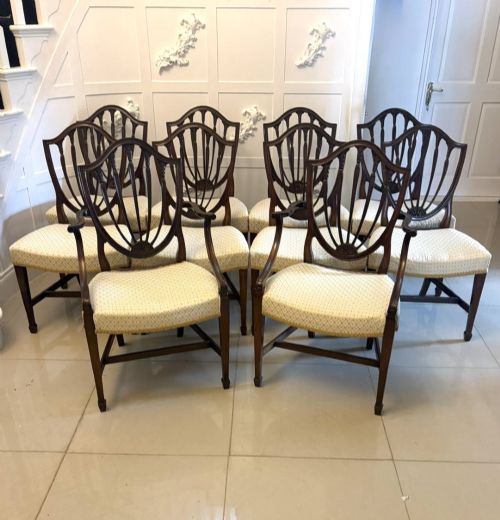
An english mahogany side chair functions as a versatile seat historically deployed around dining tables or positioned in hallways and reception spaces. These pieces emerge from periods spanning the Georgian era through to the Edwardian years.
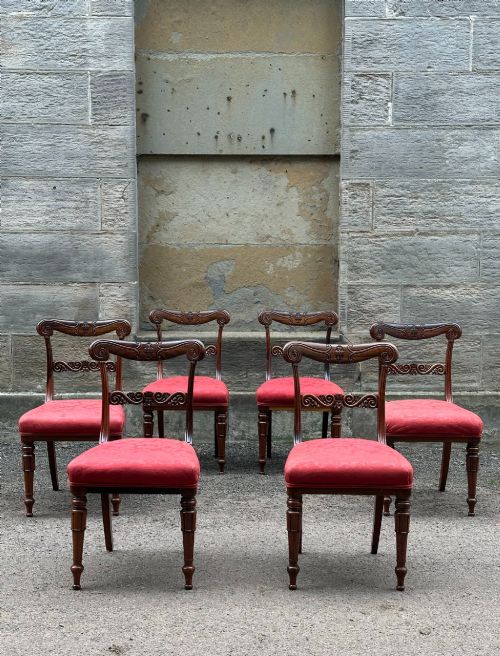
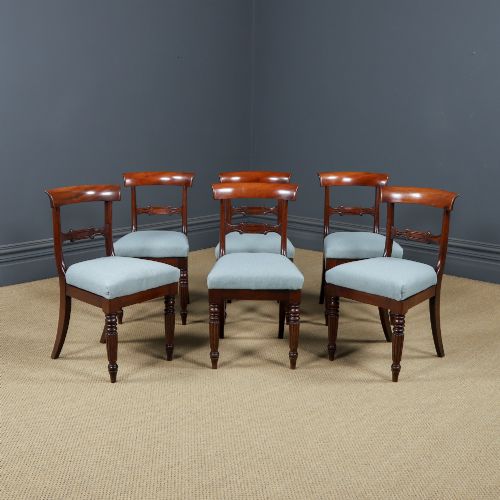
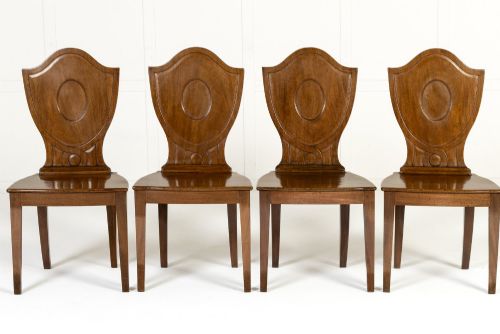
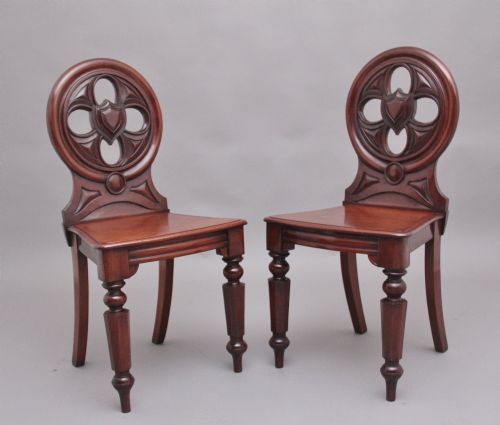
The inventory on this page ranges from single seating options to extensive matched sets of chairs. Buyers encounter formal hall chairs alongside upholstered dining variations reflecting diverse regional cabinetmaking traditions.
How They Were Made
Cabinetmakers built these frames primarily using solid mahogany, frequently incorporating secondary timbers for internal components. Joinery techniques relied on traditional mortise and tenon joints to secure the structural load.
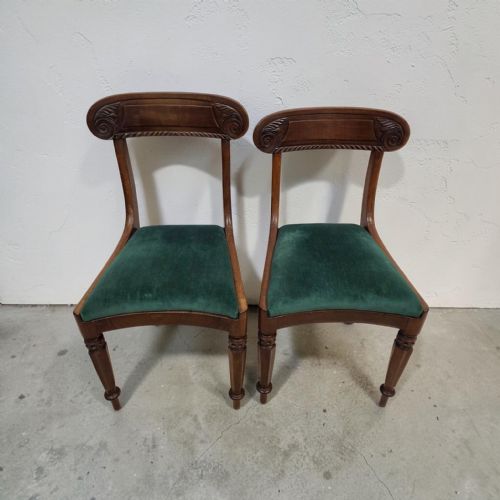
Surfaces received hand-applied finishes such as wax or polish to highlight the grain of the wood. Seats utilised webbing or solid panels supporting coverings in leather, horsehair, fabric or velvet.
Many a Victorian diner likely pondered politics while sliding across a horsehair cushion supported by imported West Indian timber.
What Varies In Quality
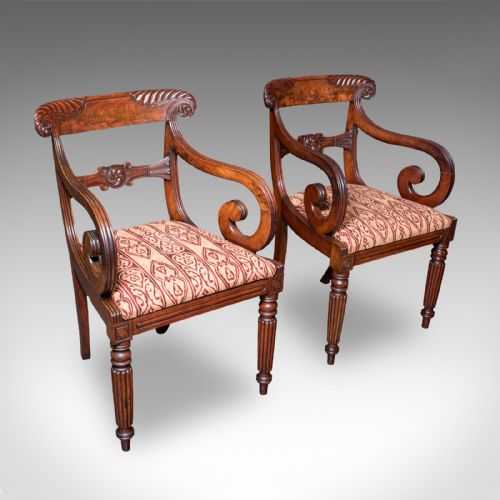
The grade of timber selection distinguishes standard output from exceptional workshop production. Dense, richly figured mahogany yields a heavier frame with sharper carved details along the crest rail and splat.
Construction rigidity depends upon the tightness of the joinery and the integrity of the original frame structure. Examples retaining undisturbed original blocking and authentic surface patination command greater attention.
Gillows·Maple And Co·Holland And Sons·Gill And Reigate·Thomas Chippendale
The English Mahogany Side Chair Glossary
- Side chair
- A chair without arms, designed primarily for dining or occasional use around a room. These forms make up the majority of seating found in domestic historical settings.
- Mahogany
- A durable tropical hardwood imported for British furniture production from the eighteenth century onward. Its stability and rich reddish-brown tone made it the favored material for quality seating.
- Chippendale style
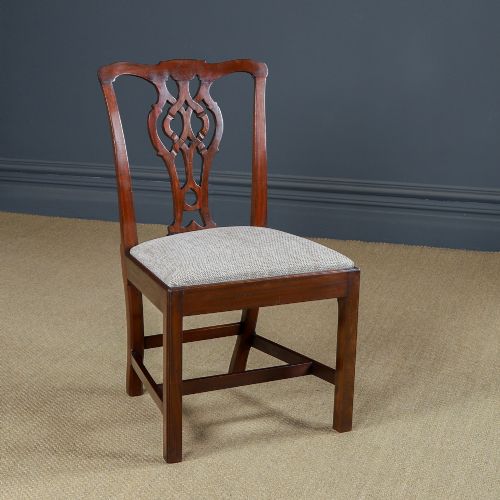
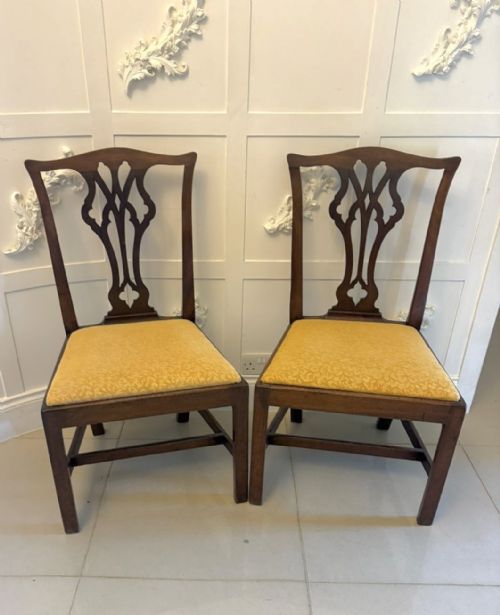
- A design grouping characterised by pierced ladder backs or interlaced ribbon splats, taking inspiration from cabinetmaker Thomas Chippendale. These chairs often feature carved cabriole legs terminating in ball and claw feet.
- Bar back
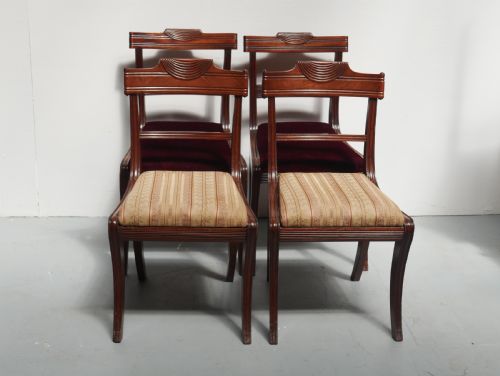
- A horizontal curved top rail resembling the shape of a barrel stave, typical of Regency and William IV periods. This design offers ergonomic support while maintaining a clean aesthetic silhouette.
- Balloon back
- A rounded, oval-shaped backrest popular during the Victorian era. The continuous curving frame often encloses carved floral motifs or plain mahogany panels.
English Mahogany Side Chair: Frequently Asked Questions
How do I identify a Georgian side chair?
Georgian pieces display robust proportions with carved mahogany details such as pierced splats and claw and ball feet. The construction prioritises heavy timber framing and classical motifs.
Later revival pieces often imitate these specific eighteenth-century characteristics closely, requiring careful examination of the wood maturity and interior joinery to confirm the date of manufacture.
Were these chairs used only for dining?
While frequently produced as sets for dining rooms, many variations served alternative domestic functions. Hall chairs, library seats and bedroom side chairs filled numerous spaces around the home.
Sturdier frames often doubled as office or desk seating due to their lack of armrests, which allowed them to tuck neatly beneath writing tables.
How should I care for mahogany furniture?
Maintain mahogany surfaces by applying traditional beeswax periodically to nourish the timber and preserve the historic finish. Avoid placing furniture in direct sunlight or near heat sources to prevent timber splitting.
Upholstered drop-in seats require gentle vacuuming and professional textile cleaning depending on the fabric composition, whether leather, velvet or printed cotton.