
Chippendale Mahogany Side Chair
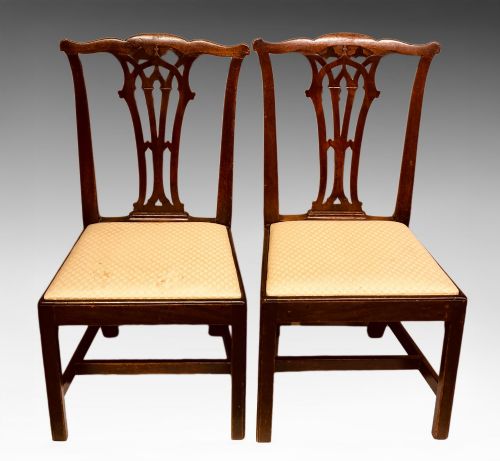
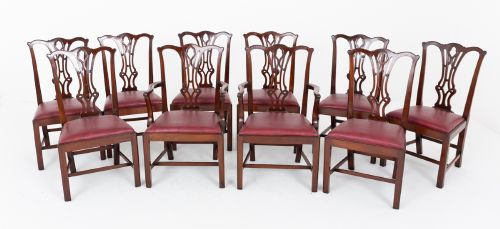
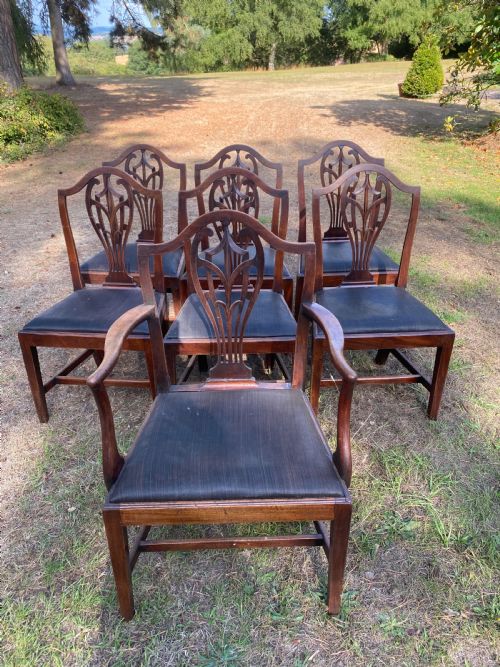
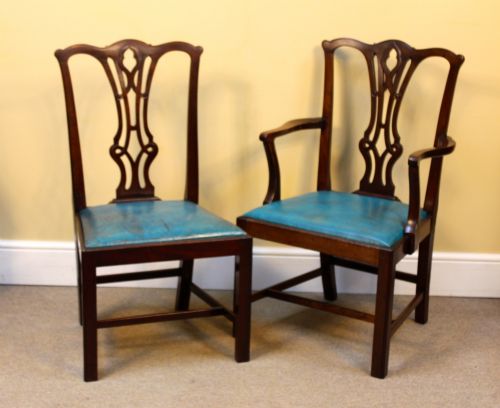
A chippendale mahogany side chair combines robust native hardwood with rhythmic pierced splats, serving as a durable seat for both formal dining rooms and studies.
Chippendale Mahogany Side Chair
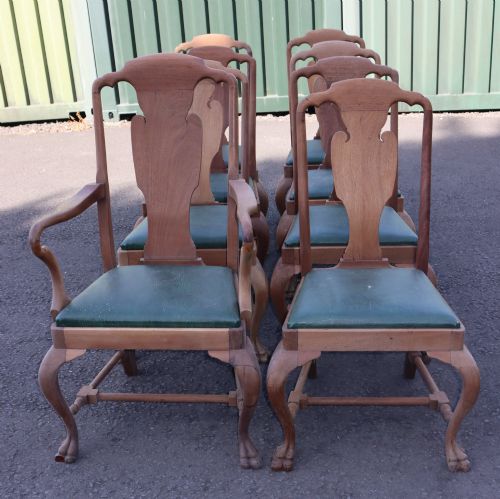
When searching for a chippendale mahogany side chair, buyers encounter pieces spanning from the mid 18th century Georgian period through to later revival movements in the Victorian and Edwardian eras. These seats function primarily as dining chairs or desk chairs, featuring distinct open backs and straight or cabriole legs.
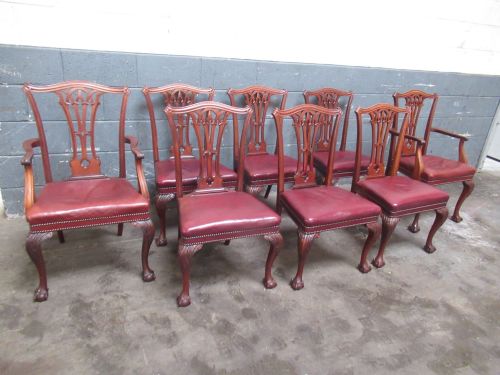
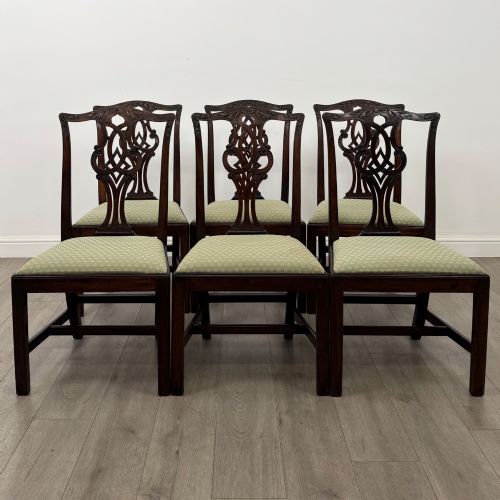
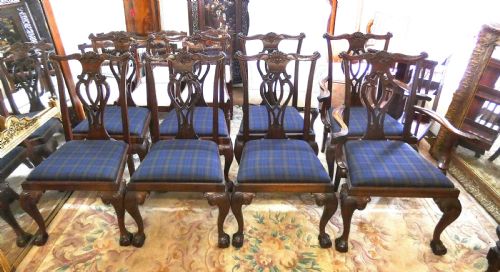
The selections on this page range from single antique chairs and pairs to substantial matched dining sets of six, eight or ten pieces. Both period originals from the 1700s and later Chippendale revival interpretations from around 1900 appear frequently in the listings.
How they were made
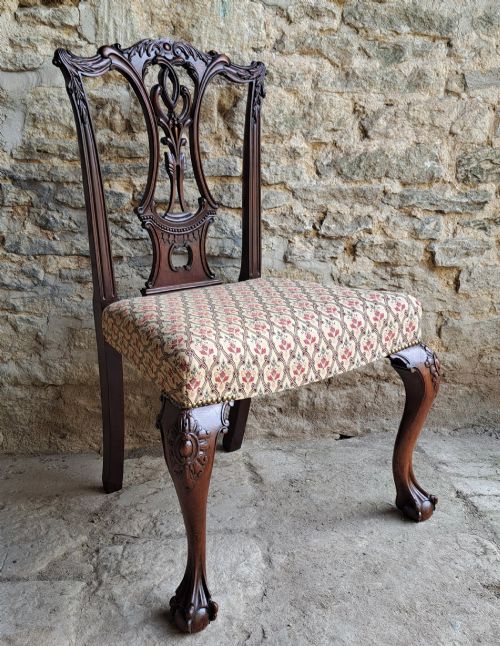
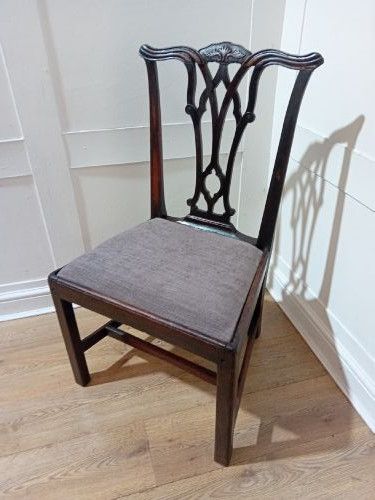
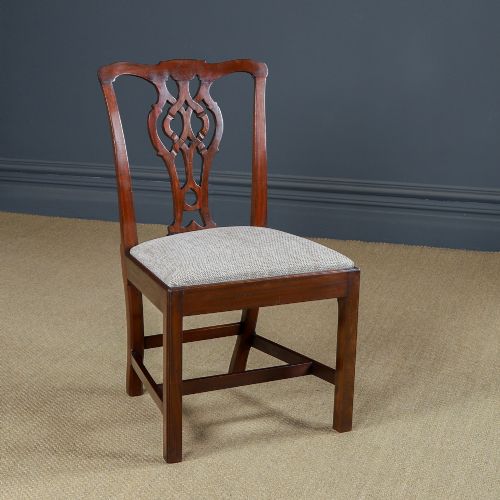
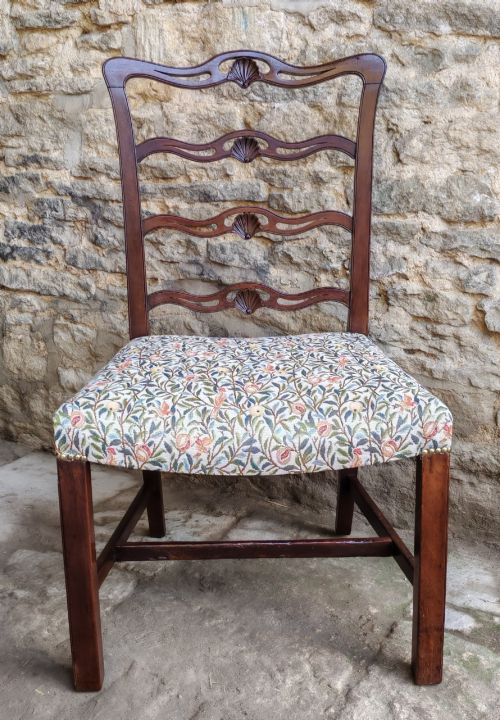
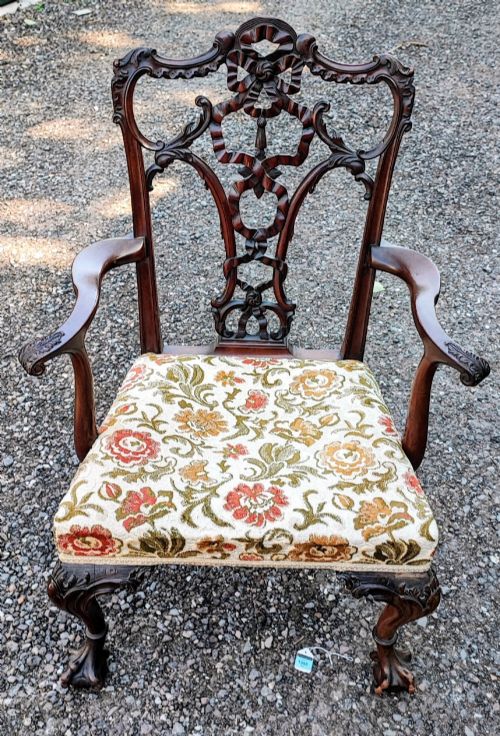
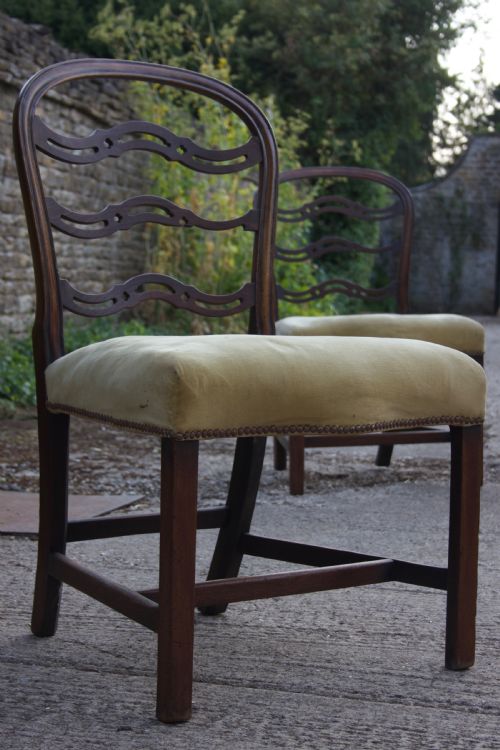
Cabinet makers constructed these seats predominantly using solid mahogany, including varieties like Cuban mahogany, shaped through carving and joinery rather than bending. Backrests incorporate intricate pierced splats, ladder backs, or Gothic arches, while frames frequently utilise corner blocks for structural rigidity.
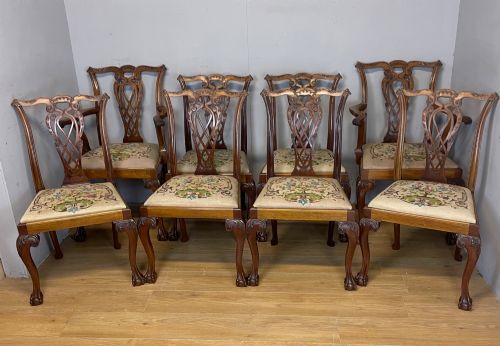
Seating portions are upholstered over webbing or drop in frames, utilising materials such as leather, fabric, velvet, and tapestry. Brass accents or nailhead trim occasionally secure the textile edges to the wooden rails.
Several chairs arrive with original tapestry seats that have outlived numerous generations of dinner guests.
What varies in quality
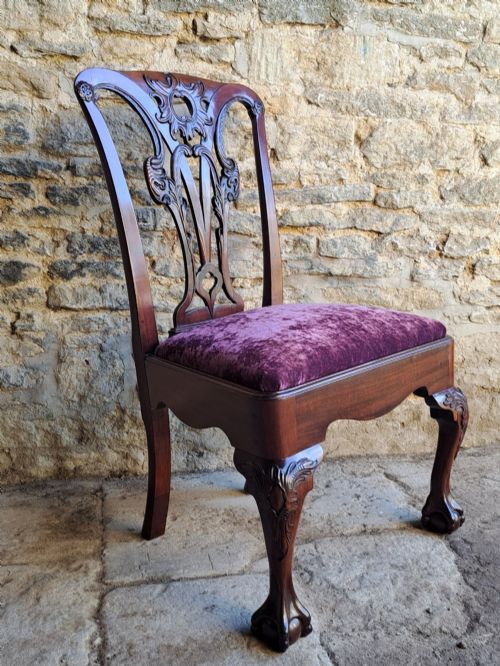
The distinction between standard examples and superior pieces rests in the depth and crispness of the wood carving, particularly along the top rail, splat, and knee. Exceptional chairs exhibit fluid lines and precise hand tool work that retains sharp edges rather than softened contours.
Integrity of the timber and the retention of original structural components also dictate value. Chairs retaining their period frames, authentic upholstery foundations, and matching sets display a higher degree of craftsmanship than assembled groups or heavily restored pieces.
Warings·Gill & Reigate·Wheelers of Arncroach
The Chippendale Mahogany Side Chair Glossary
- Chippendale style
- A furniture design category drawing from Thomas Chippendale's Director, characterised by carved ribbon, ladder, or interlaced splats. This style spans 18th century originals and subsequent 19th and 20th century revivals.
- Splats
- The vertical wooden strip down the centre of a chair back. In these chairs, they are frequently pierced and carved into elaborate geometric or organic patterns.
- Cuban mahogany
- A dense, heavy tropical hardwood native to the Caribbean, utilised extensively in high grade 18th century furniture. It is known for a rich grain and deep colour.
- Drop in seat
- A removable wooden frame upholstered separately and dropped into a recess in the chair rails. This construction allows easy reupholstering without dismantling the main frame.
- Cabriole leg
- A furniture leg that curves out at the knee and tapers inward to an ankle, frequently ending in a claw and ball foot. It forms a signature profile on mid 18th century seating.
Chippendale Mahogany Side Chair: Frequently Asked Questions
How do I date a Chippendale chair?
Dating relies on timber characteristics, tool marks, and stylistic conventions present in the frame and splat. 18th century originals display hand sawn components and dense Cuban mahogany, whereas revival pieces from the late 19th or early 20th century exhibit machine assisted joinery and standard mahogany stocks.
Secondary woods used for seat frames and interior blocks also provide clues. Oak and pine typically indicate earlier Georgian construction, while later revival pieces utilise beech or modern deal.
Are these chairs comfortable for daily dining?
These seats were designed for upright posture during formal meals and desk work, featuring supportive carved backs rather than deep cushioning. The ergonomic curve of the top rail and splat provides solid lumbar support.
Original seat heights and widths accommodate dining tables comfortably, though contemporary users frequently add supportive pads if utilising them for extended desk seating.
What is Chinese Chippendale?
Chinese Chippendale refers to a distinct sub style inspired by Chinese lattice work and fret motifs. These chairs feature straight legs with blind fret carving and open geometric patterns within the backrest.
This aesthetic gained popularity during the mid 1700s Georgian period and saw a strong revival in late Victorian and Edwardian cabinet making workshops.
How should I care for mahogany?
Maintenance involves protecting the timber from direct sunlight and extreme humidity fluctuations to prevent warping and fading. Regular dusting with a dry, soft cloth preserves the polished surface.
Application of appropriate paste wax feeds the wood periodically, maintaining the natural sheen of the mahogany without building up heavy chemical residues.