

English Mahogany Chest
An english mahogany chest brings substantial timber, classic proportions and centuries of domestic storage into a room.
English Mahogany Chest
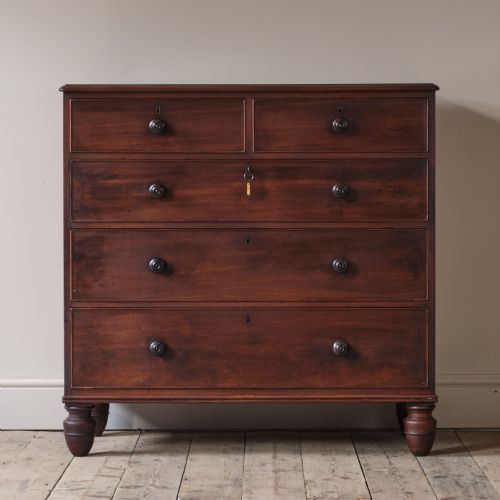
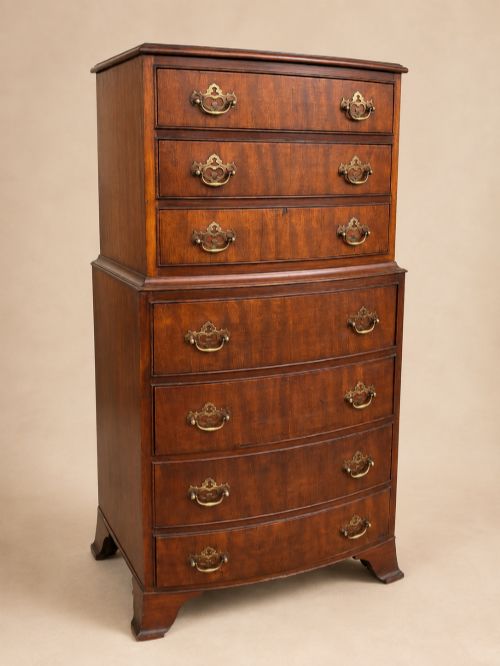
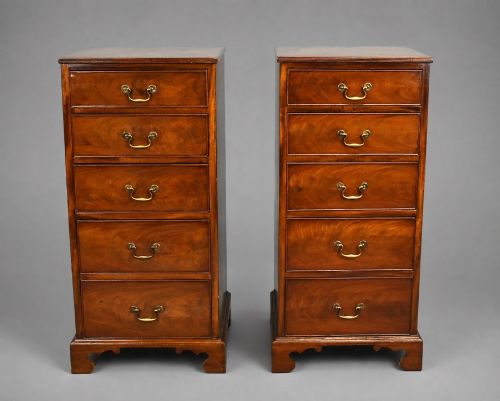
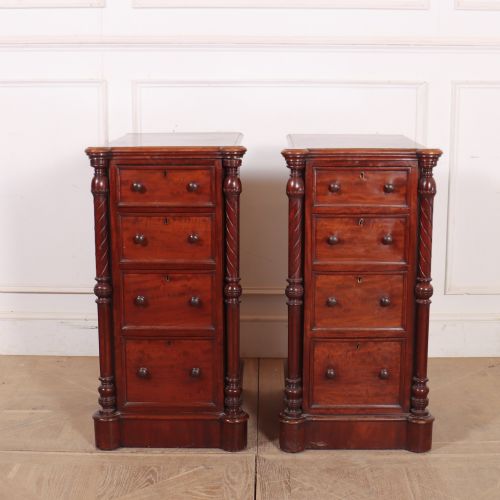
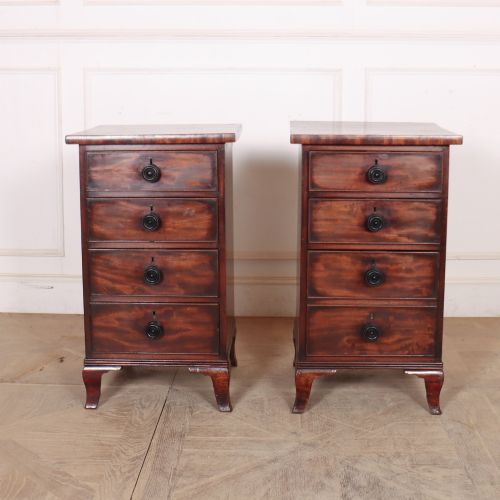
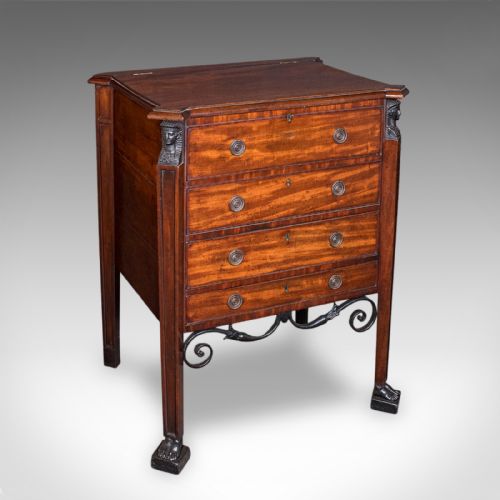
When you search for an english mahogany chest, you encounter a durable staple of historical British domestic furniture designed for linen, garments and valuables. The pieces recorded on this page range from compact bedside tables and lowboys to towering chest on chests and tallboys.
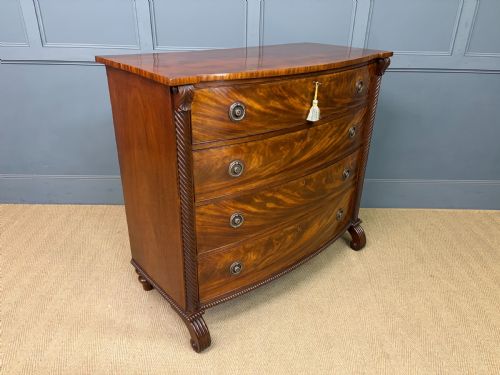
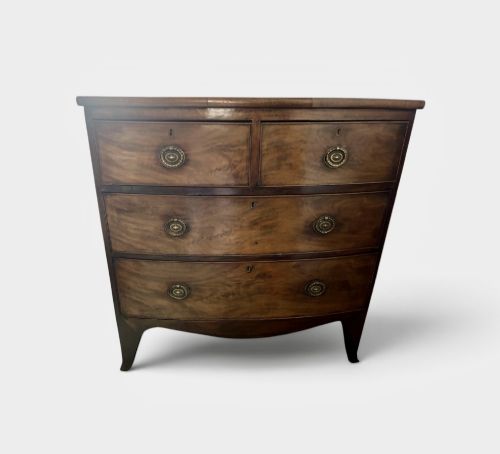
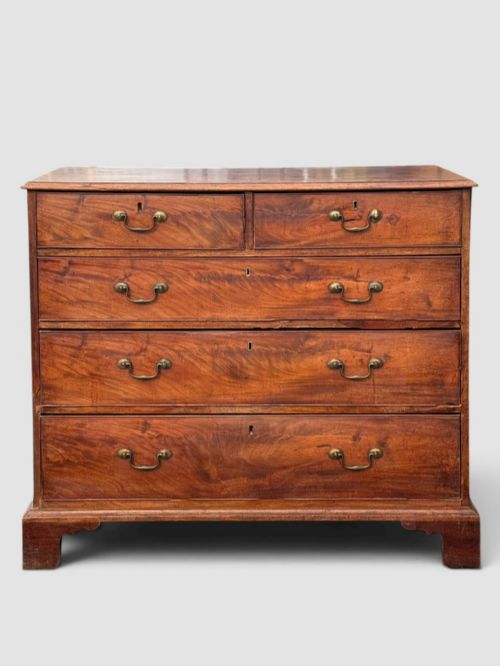
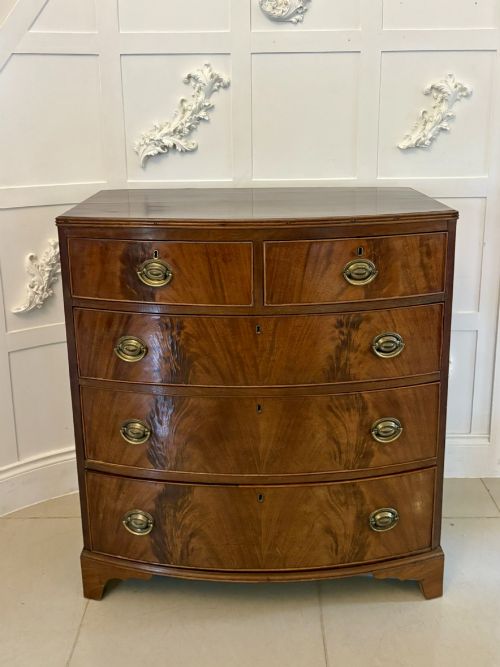
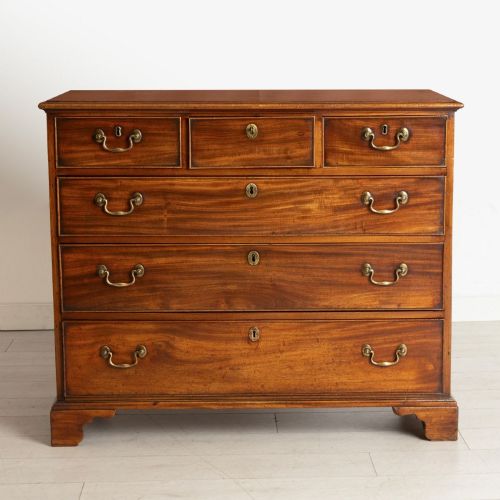
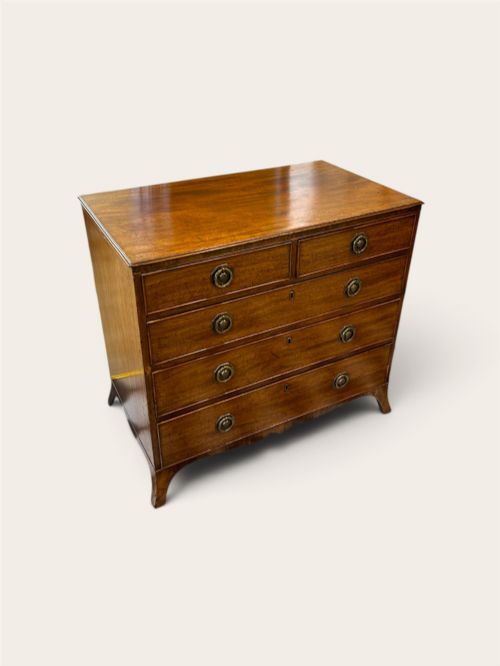
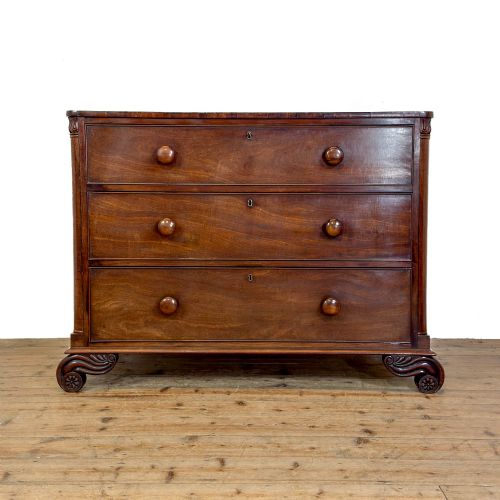
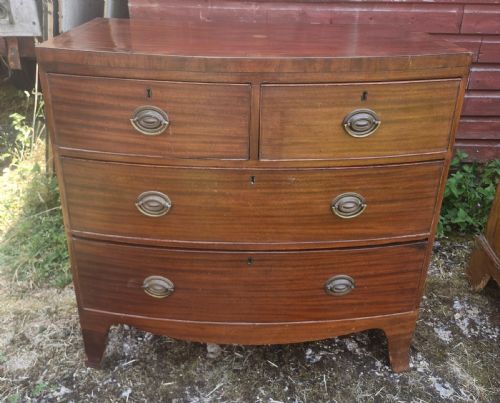
The standard form you are most likely to meet is the Georgian or Regency chest of drawers, frequently built with a straight or bow front and fitted with brass handles. Alongside these standard drawer configurations appear specialised forms such as linen presses, military chests and cellarettes in mahogany.
The timeline stretches from the eighteenth century through the Victorian era into later periods, showing shifts in taste from plain timber surfaces to figured veneers and cross-banded borders. Each variation reflects the prevailing style of its decade while maintaining the core utility of enclosed storage.
Materials and Construction
Cabinet makers relied heavily on solid mahogany and flame mahogany veneer, often pairing the primary hardwood with secondary timbers like oak for drawer linings and internal framing. Brass hardware, from drop handles to escutcheons, provided functional contrast to the dark timber.
Surfaces were frequently embellished with satinwood stringing, cross-banding or intricate inlay work to frame the grain of the mahogany. Flame veneers were chosen for drawer fronts to create dramatic, swirling patterns that caught the light.
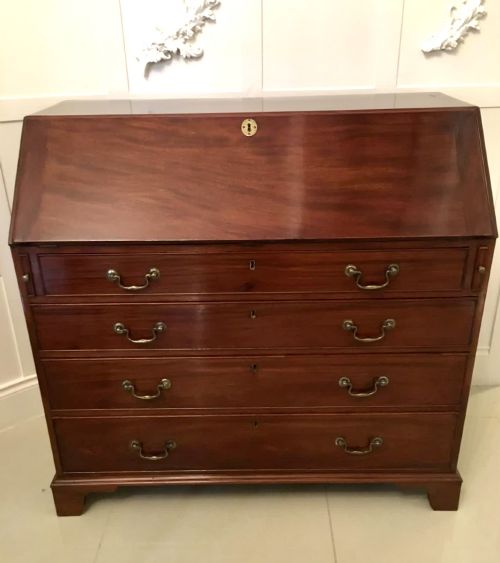
Several chests double as secret desks, hiding fold-down writing surfaces behind ordinary drawer faces.
Markers of Quality
Quality in an english mahogany chest reveals itself in the selection of timber and the precision of the joinery rather than ornamental excess. Superior examples display carefully matched grain across consecutive drawer fronts, while simpler versions utilise plain, uniform boards.
The integrity of the internal construction, including hand-cut dovetails on the drawers and solid oak drawer linings, separates high-workshop output from standard commercial production. Crisp carving on bracket feet or aprons further distinguishes the better pieces.
T G Seddon
The English Mahogany Chest Glossary
- Bow front
- A convex curved front that swells outward, popular during the Regency period to soften the boxy silhouette of standard chests.
- Chest on chest
- A tall storage unit comprising one smaller chest stacked directly upon a larger base chest, also known as a tallboy.
- Brush slide
- A pull-out shelf integrated above the top drawer, traditionally utilised for brushing clothes or inspecting garments.
- Cross-banding
- A decorative border technique where narrow strips of veneer are laid perpendicular to the grain of the main surface.
- Cellarette
- A dedicated lockable container or cabinet designed for storing wine bottles safely within a dining room.
English Mahogany Chest: Frequently Asked Questions
How do I identify a Georgian chest?
Look for hand-cut dovetails, unveneered oak drawer sides, and architectural proportions that rely on clean lines rather than heavy machine-carved applied ornament.
Hardware often consists of brass swan-neck pull handles or later cast backplates, mounted above bracket feet or a simple plinth base.
What is a military chest?
A military chest is built in two separate stacking sections with recessed brass carrying handles, designed for easy transport by officers on campaign.
The timber is usually reinforced with brass corners to withstand rough travel, and the drawers secure tightly for transit.
Where should I place a bedside chest?
These smaller chests fit neatly beside a bed to provide enclosed surface storage and drawer space for nighttime essentials in a bedroom.
Measure the height of your mattress surface to ensure the top of the chest sits at a comfortable level for reaching items.
How do I care for mahogany furniture?
Keep mahogany timber away from direct sunlight and heat sources to prevent the wood from drying out, fading, or causing the veneer to lift.
Dust regularly with a soft, dry cloth and apply occasional natural wax to nourish the grain without building up heavy silicone residues.