


English Landscape Sketch
An English landscape sketch captures the countryside and rural views of Britain through direct hand-drawn lines.
English Landscape Sketch
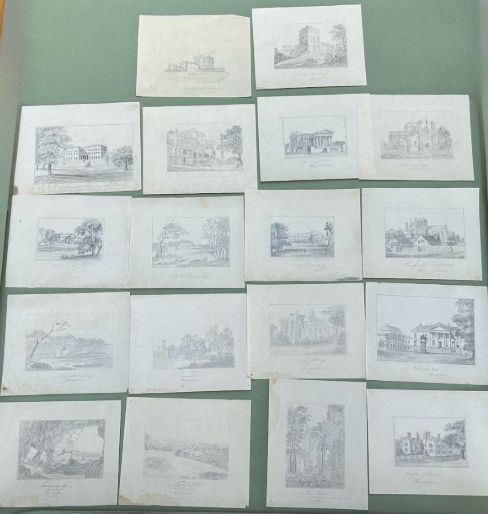
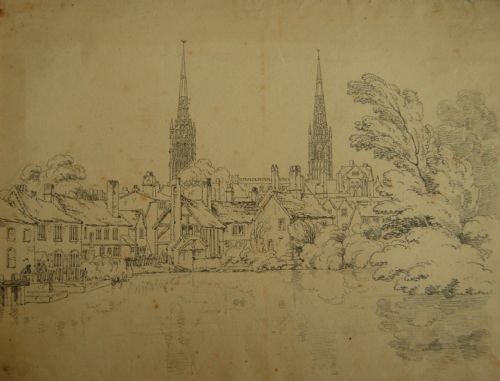
An English landscape sketch captures views of the British countryside, rivers, and rural architecture drawn directly on paper or panel. When searching this phrase, a buyer encounters works ranging from the eighteenth century through to the mid-twentieth century.
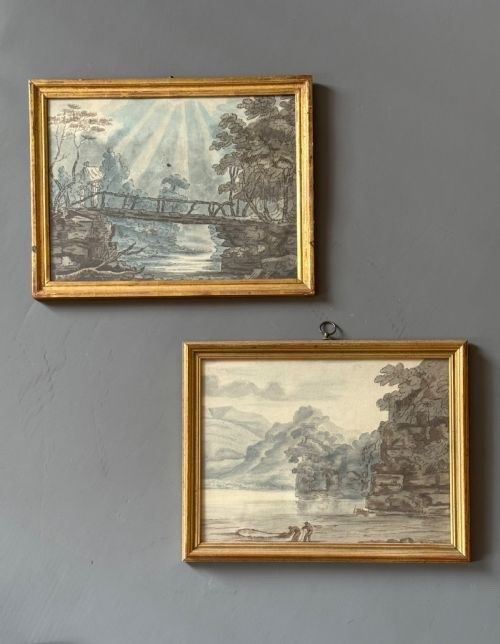
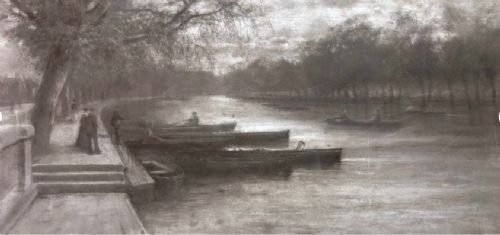
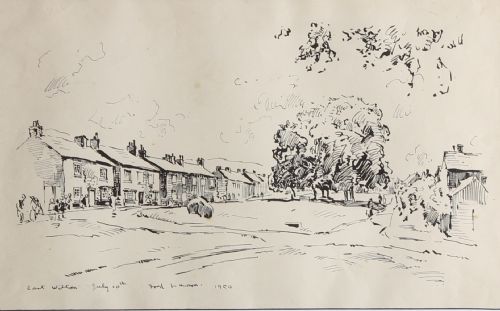
The selection frequently includes works on paper executed in pencil, graphite, charcoal, and ink, often with watercolour washes added to define skies and foliage. These pieces vary from rapid observational notes made on location to finished compositional studies.
Origins span regional locations across Britain, including Yorkshire, the Lake District, Sussex, and Hampshire, recorded by named artists and anonymous hands alike.
Materials and technique
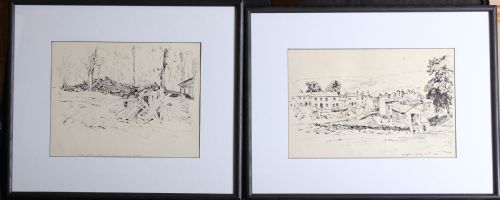
Artists relied on portable media such as graphite pencil, charcoal, and pen and ink to record observations directly on paper or occasionally on wooden panel. These dry and fluid lines established the initial perspective, contours of hills, and architectural details.
Watercolour washes were frequently applied over ink or pencil outlines to introduce tone, shadow, and local colour to skies, water, and vegetation. The direct application onto paper leaves the artist's working method visible in every stroke.
Materials documented across the works include paper, ink, watercolour, graphite, wood, glass, pencil, and charcoal.
Quality and execution
Quality rests upon the sureness of the hand and the economy of line used to define space and light. A successful sketch conveys atmosphere and topography with minimal hesitation, whereas weaker examples rely on heavy or laboured corrections.
The relationship between the drawn marks and the blank paper determines the visual balance of the composition. Stronger works make deliberate use of untouched paper to represent light on fields and water.
Fred Lawson·Henry Bright·Henry Edridge·Thomas Monro·Frances Wyndham Lady Burrell·George Charles Haite
The English Landscape Sketch Glossary
- Graphite
- A form of carbon used in pencils to produce grey lines of varying density. It allows for both sharp detail and soft tonal shading.
- Watercolour
- A paint consisting of pigment suspended in a water-based solution, applied in translucent washes over ink or pencil sketches. It provides atmospheric depth to skies and landscapes.
- Charcoal
- Burnished wood used to create deep black lines and broad smudged shadows on paper. It offers a rich texture for expressive landscape studies.
- Panel
- A flat piece of wood used as a rigid support for drawings or paintings. It provides a firm foundation distinct from flexible paper sheets.
English Landscape Sketch: Frequently Asked Questions
What is an English landscape sketch?
An English landscape sketch is an original artwork on paper or panel depicting rural scenes, buildings, and natural views across Britain. These works were created directly by artists observing the countryside.
They range from quick pencil notations made outdoors to detailed watercolour compositions produced across different centuries.
How were these sketches used?
Artists created these sketches as preparatory studies for larger oil paintings or as independent records of notable locations and architecture. Many were gathered together in bound books or albums by the artists themselves.
They served as portable visual diaries that captured the topography and atmosphere of specific regions across Britain.
How do I frame an antique sketch?
Paper works require conservation-grade mounting materials to prevent acid damage and ensure the drawing remains separated from the glass. Selecting a simple wooden frame protects the delicate medium while suiting the historic character of the piece.
Keep framed sketches away from direct sunlight to protect watercolours and inks from fading over time.
How can I tell the period of a sketch?
Dating relies on the style of the drawing, the type of paper stock, inscriptions, and artist attribution records. Eighteenth-century and Georgian works often show specific ink usage and framing styles distinct from later Victorian or twentieth-century pieces.
Signatures, dates written on the reverse, and recorded artist biographies help establish the precise timeline.