



English Landscape Drawing
An english landscape drawing captures the quiet topography of the countryside through delicate lines and washes.
English Landscape Drawing
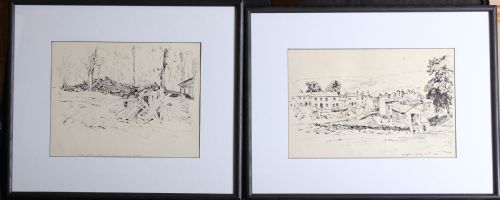
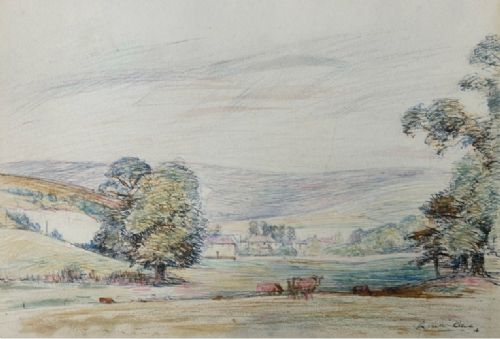
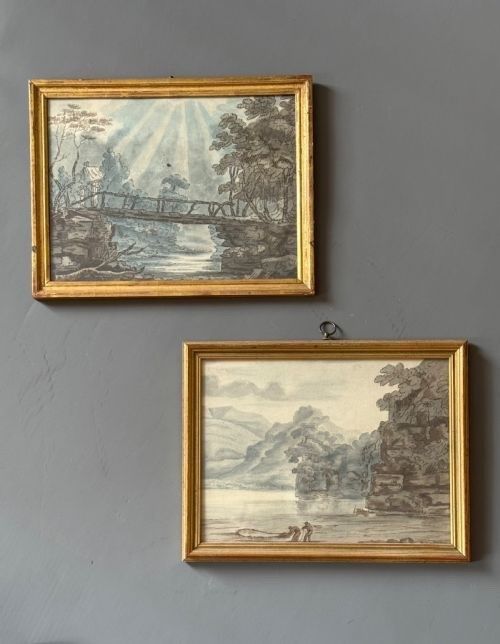
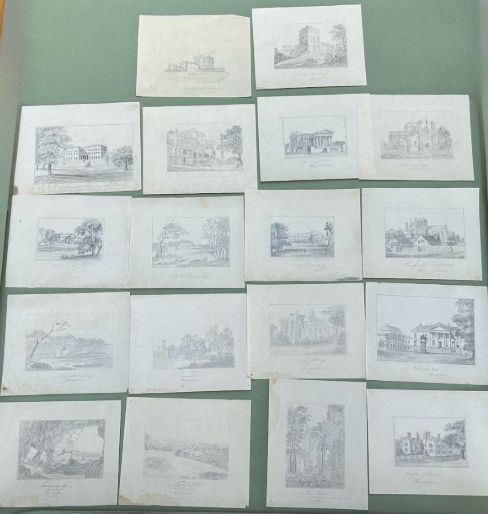
An english landscape drawing records rural views, country lanes, and historical ruins across centuries of artistic practice. The selection spans delicate ink sketches, atmospheric watercolours, and detailed pencil studies originating from Georgian elegance through to the mid-twentieth century.
Buyers encounter works attributed to regional schools alongside named artists, capturing locations from Yorkshire dales to southern river valleys. These pieces frequently employ paper supports housed behind glass within wooden or gilt frames, preserving the immediacy of the original hand.
The inventory demonstrates a strong representation of nineteenth-century depictions alongside early and mid-twentieth-century interpretations. Pastoral scenes and architectural landmarks dominate the subjects, reflecting changing attitudes towards the British countryside.
How They Were Made
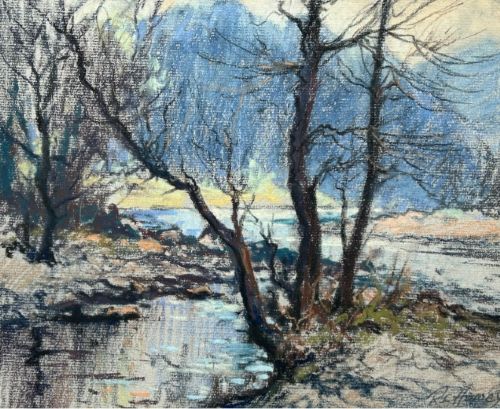
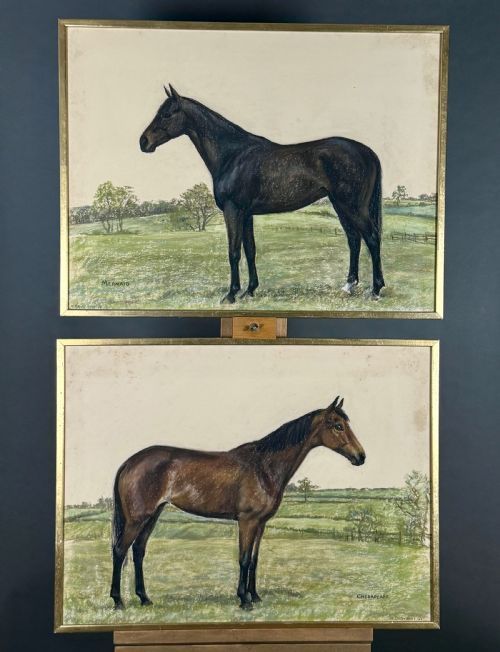
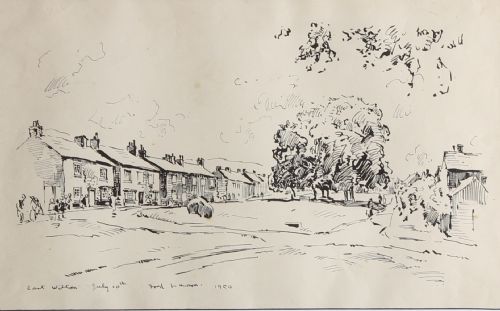
Artists relied primarily on paper supports, applying media such as graphite pencil, charcoal, pen and ink, and watercolour washes to build tone and depth. Pen and ink work provided crisp architectural outlines, while watercolours and pastels introduced atmospheric colour and shading.
Many works incorporate layered techniques, combining graphite underdrawings with ink linework and tinted washes to capture the play of light over foliage and stone. Framing materials typically involve wood and gilt wood, often protected by glass to safeguard the fragile paper surfaces.
The inventory records pieces spanning from the eighteenth century through the 1960s.
What Varies in Quality
The distinction in quality rests upon the surety of the draughtsmanship and the artist's ability to render light and atmosphere convincingly within the composition. Stronger examples exhibit confident linework and tonal harmony, whereas lesser pieces may display stiff proportions or hesitant hatching.
Provenance and documentation also influence standing, particularly where works can be securely linked to established regional traditions like the Norwich School or recognised practitioners. The preservation of the paper support and the clarity of the underlying medium directly affect the visual impact of the piece.
Alfred Young Nutt·Robert Leslie Howey·Fred Lawson·Russell Sidney Reeves·Stanley Orchart·Edward Dayes·Richard Leech·Samuel Henry Alken·John Charles Maggs·John Richard Worsdale·George De Paris·Frank Saltfleet·Henry H Parker·Reginald Mills·Henry Bright·Thomas Rowlandson·Henry Edridge·John Thirttle·John Joseph Cotman·Dr Thomas Monro·Marjorie Christine Bates·Arthur Henry Graham Hoggarth·Henry William Burgess
The English Landscape Drawing Glossary
- Wash
- A thin, transparent layer of diluted watercolour or ink applied to paper to create smooth background tones or shadows.
- Graphite
- A form of carbon used for sketching and fine line work, commonly referred to as pencil.
- Gilt Wood
- Timber framing finished with a thin layer of gold leaf or gold-coloured paint, frequently seen on traditional artwork displays.
- Pastel
- A dry medium composed of powdered pigment and a binder, pressed into sticks for direct application onto paper.
- Gouache
- An opaque water-based paint that produces a heavier, more solid surface appearance than traditional watercolour.
English Landscape Drawing: Frequently Asked Questions
What periods do these drawings cover?
The available selection spans from the eighteenth century through the Georgian and Victorian eras into the mid-twentieth century. Works reflect the shifting artistic styles of these distinct periods.
Collectors can find pieces representing early topographical traditions alongside later modernist-influenced landscape studies.
What materials were used by the artists?
Artists utilised paper as the primary support, applying graphite, charcoal, pen and ink, watercolour, and pastels. These media were chosen for their portability and ability to capture rapid field observations.
Framing materials commonly include traditional wood and gilt wood, often preserved beneath protective glass.
How should I display a paper drawing?
Drawings executed on paper require careful placement away from direct sunlight to prevent fading of watercolours and inks. Maintaining stable indoor humidity levels protects the paper support from warping or deterioration.
Utilising UV-filtering glass during framing offers an extra layer of conservation for antique works.
How do regional schools influence the art?
Regional groupings, such as the Norwich School, developed distinct approaches to capturing local topography, light, and weather conditions. These affiliations help historians and buyers contextualise the geographic focus of a given piece.
Stylistic influences often trace back to prominent artistic circles active during the nineteenth and twentieth centuries.