




English Ironstone Jug
An English ironstone jug offers sturdy utility alongside bold transfer-printed or hand-painted colour.
English Ironstone Jug
An English ironstone jug combines robust ceramic bodywork with decorative presence, frequently found in styles spanning the Georgian, Regency, and Victorian periods. Buyers search for these pieces to acquire durable serving vessels or washbasin jugs that display traditional nineteenth-century patterns.
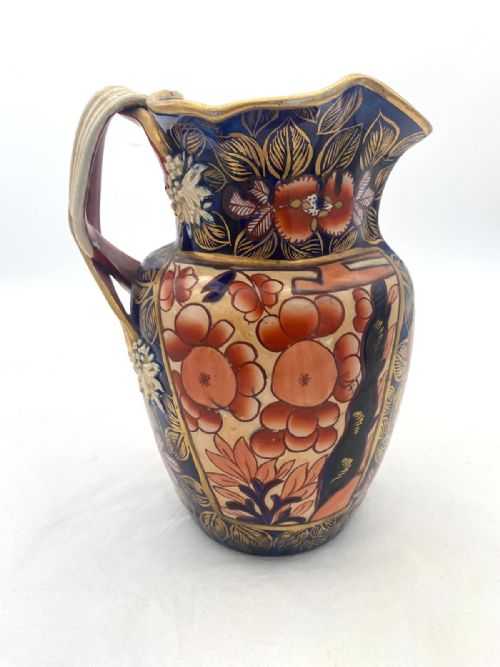
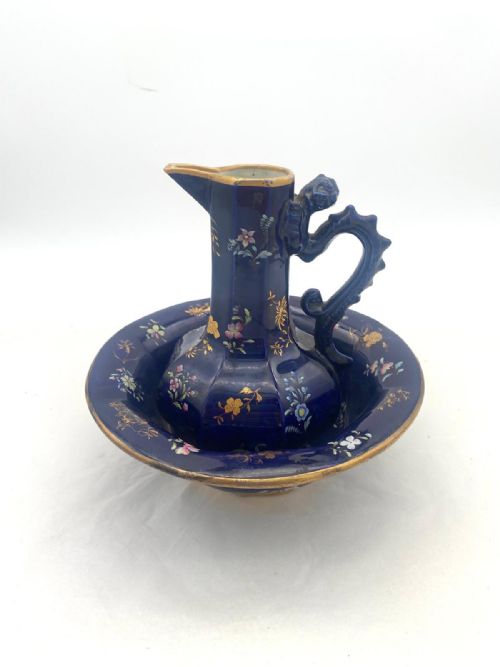
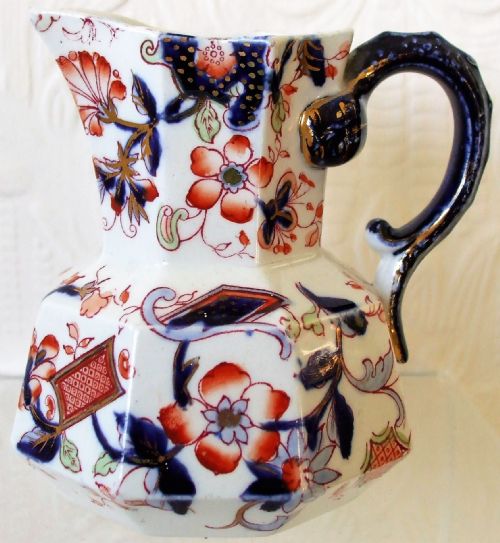
The versions most commonly met on this page include octagonal forms, botanical lustreware, and the distinctive snake-handled Hydra shape. These items range from single cabinet pieces to graduated sets of three or four, originating from prominent workshops of the nineteenth century.
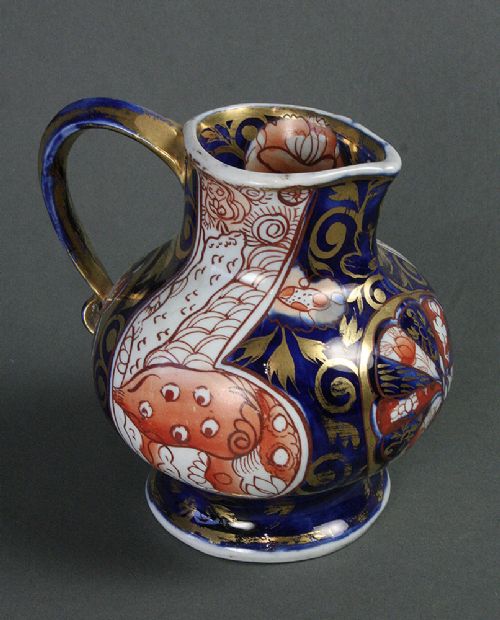
Forms vary from small miniature jugs to large washbasin vessels and full jug and basin sets. Makers utilised distinct decorative schemes such as Chinoiserie, Imari, and Gaudy Welsh palettes to finish the ceramic surfaces.
How They Were Made
Potters constructed an English ironstone jug using a dense ceramic body designed for heavy daily wear, applying smooth glazes to seal the surface. Many examples received hand-painted enamel colours or transfer-printed patterns before undergoing high-temperature firing.
English Ironstone Jug Retail Price Guide 2026
Typical asking prices for english ironstone jug among the pieces listed under this phrase on Sellingantiques today, from the lower quarter to the upper quarter. They describe what is for sale here now, not the wider market.
Potters borrowed mythological serpent anatomy for handles and peculiar pachyderm inspiration for bases, ensuring nineteenth-century breakfast tables remained thoroughly wild.
What Varies in Quality
The crispness of moulded details and the complexity of the painted or printed pattern define the upper tier of these vessels. Well-preserved gilt accents and clean enamel retention elevate an example above standard utility wares.
Completeness within a graduated set or a matching jug and basin pairing heavily influences the standing of a piece. Finer potting with thinner, more refined walls distinguishes superior nineteenth-century production from heavier, purely utilitarian ironstone.
Keeling and Co·Livesley Powell and Co·Davenport·Masons Ironstone
The English Ironstone Jug Glossary
- Ironstone
- A dense, durable type of ceramic patented in the nineteenth century to imitate porcelain while offering greater strength. It forms the heavy body of these jugs.
- Hydra
- A classical jug shape featuring a serpent-form handle and a flared rim, frequently produced by nineteenth-century potteries. The name derives from mythological serpent imagery.
- Gilt
- A thin layer of gold or gold-coloured material applied to ceramic surfaces for ornamentation. It highlights moulded rims and handles on better pieces.
- Chinoiserie
- A decorative style employing European interpretations of Chinese and East Asian artistic motifs. It appears across various nineteenth-century jug patterns.
- Imari
- A decorative scheme utilising rich blues, iron red, and gold, inspired by Japanese export porcelain. Victorian makers adapted this palette for ironstone bodies.
English Ironstone Jug: Frequently Asked Questions
What is an ironstone jug?
An ironstone jug is a heavy ceramic pouring vessel made from a durable earthenware body patented in the nineteenth century. These items were produced across the Georgian and Victorian eras for domestic utility and display.
Potters decorated them with rich enamel colours, lustreware, and gilt details, creating robust pieces that survived decades of household use.
How do I identify a Hydra jug?
A Hydra jug is instantly recognised by its distinct serpent-form handle, which arches from the rim down to the body. This classical shape was favoured by nineteenth-century makers like Mason.
They appear in various sizes, sometimes as graduated sets, featuring floral or exotic transfer-printed and painted patterns.
Were these jugs used for water?
Many larger examples served practical roles in bedrooms as part of a washbasin set, holding water for morning ablutions. Smaller versions functioned at the table for milk, water, or cider.
Their dense ceramic fabric made them ideal for containing liquids without absorbing moisture or odours.
How do I date an antique ironstone jug?
Dating relies on stylistic clues, pattern names, and maker marks stamped or printed on the base. Pieces from the Georgian period often display hand-painted Chinoiserie or Gaudy Welsh designs.
Victorian examples frequently introduce printed registration marks, brighter transfer colours, and more elaborate moulded body shapes.