


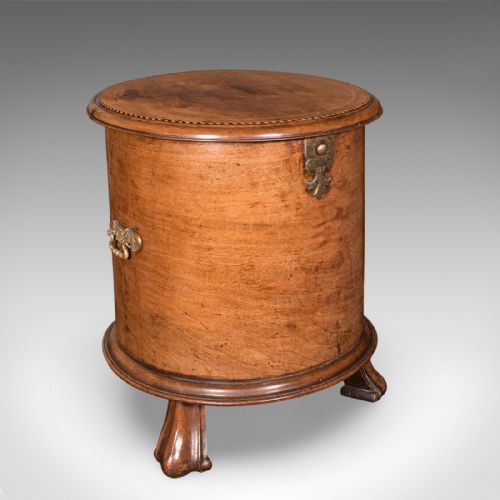


English Inlaid Wood Box
An English inlaid wood box brings together fine cabinetmaking and meticulous micro-mosaic decoration, offering a decorative storage piece with centuries of history.
English Inlaid Wood Box
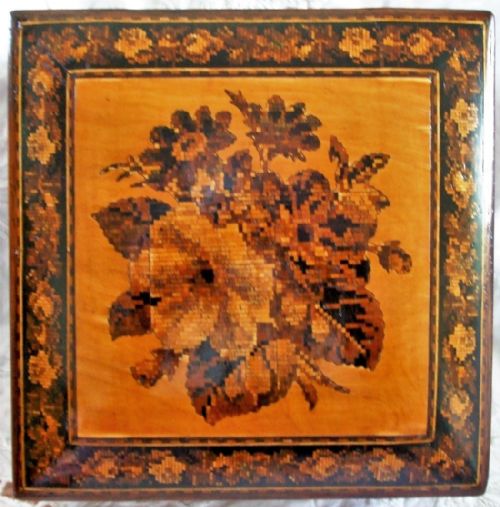
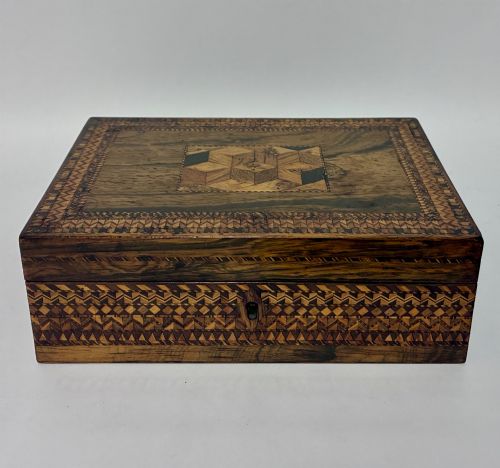
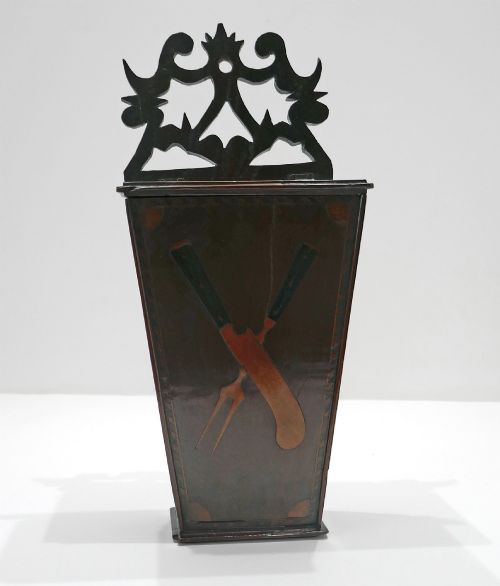
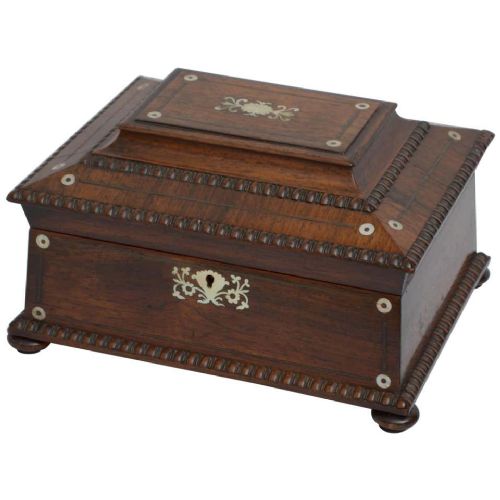
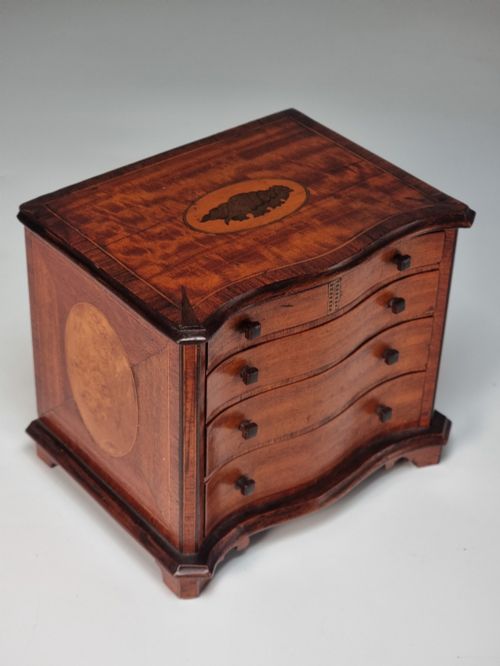
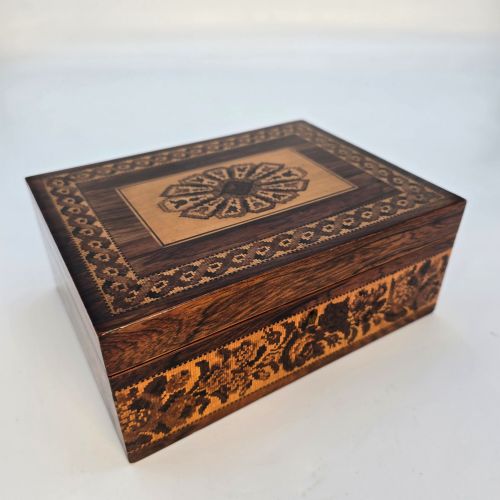
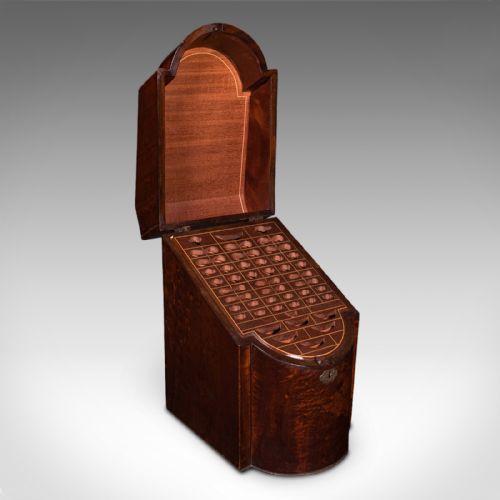
An English inlaid wood box is a small decorative or functional container created by British makers using contrasting timbers and geometric or pictorial veneers. The selection on this page centres heavily on nineteenth-century Victorian Tunbridge Ware and Regency examples designed for desktop or parlour use.
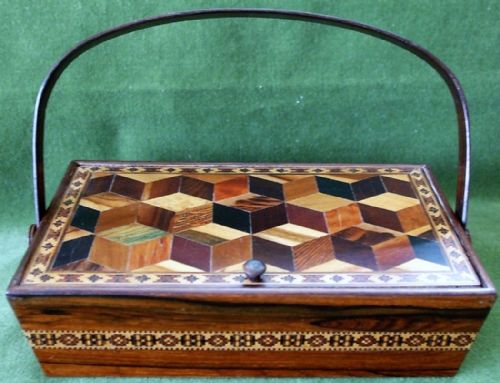
The objects span practical storage forms including tea caddies, jewellery caskets, needlework boxes, and stationery cases. Many pieces utilise rich secondary foundations such as rosewood, mahogany, and walnut to frame intricate bands of boxwood and ebony inlay.
Buyers encounter distinct period characteristics ranging from the sharp brass stringing of the Regency era to the elaborate mosaic pictorial scenes characteristic of Victorian Tunbridge Ware workshops. These functional containers served as personal luxury goods in period homes and retain their decorative appeal today.
Materials and construction methods
Cabinetmakers built the structural carcases of these boxes from dense timbers like mahogany, rosewood, walnut, and sycamore, often applying decorative veneers to the exterior surfaces. Tunbridge Ware pieces required thousands of tiny wood blocks glued together in bundles and sliced across the grain to produce repeating mosaic tile patterns.
Inlaid decoration relied on contrasting natural woods including boxwood, ebony, holly, and partridge-wood, sometimes combined with cut brass stringing or mother-of-pearl accents. Craftsmen shaped these materials by hand, routing channels into the primary wood to receive precise strips of contrasting veneer before scraping and polishing the exterior to a smooth finish.
English Inlaid Wood Box Retail Price Guide 2026
Typical asking prices for english inlaid wood box among the pieces listed under this phrase on Sellingantiques today, from the lower quarter to the upper quarter. They describe what is for sale here now, not the wider market.
The listings span the Georgian, Regency, William IV, Victorian, and Edwardian periods, utilising rosewood, walnut, coromandel, and sycamore.
Distinguishing quality in period boxes
The standard of an English inlaid wood box depends largely on the precision of the mosaic work and the complexity of the timber selection. Finer pieces demonstrate exceptionally tight joints in the wood inlay and sharp, unblurred geometric or pictorial motifs created by master makers.
Quality also shows in the retention of original interior fittings, working locks with functional keys, and stable carcases that resist warping. Pieces bearing the signatures or labels of recognised makers demonstrate superior workshop pedigree compared to anonymous production.
A. F. Lloyd·Edmund Nye·Henry Hollamby·Waring & Gillow
The English Inlaid Wood Box Glossary
- Tunbridge Ware
- A specialised form of woodwork originating from Kent, featuring mosaic designs built from tiny segments of naturally coloured woods that depict flowers, butterflies, or geometric bands. This technique reached its height during the Victorian period.
- Tea Caddy
- A lidded container originally built to store loose tea leaves securely under lock and key when tea was an expensive commodity. Many surviving examples feature elaborate wood inlay and compartmentalized interiors.
- Marquetry
- An art form where small pieces of veneer are assembled into pictorial or decorative patterns and applied to the wooden carcase of a box or piece of furniture. It differs from inlay by covering the entire surface rather than resting within routed channels.
- Stringing
- A narrow strip of contrasting wood or metal inlaid into the surface of a box to create fine linear borders and geometric framing. Regency makers frequently used brass stringing alongside rosewood.
- Casket
- A descriptive term for a more substantial box, often fitted with velvet linings or lift-out trays for jewellery and letters. These containers typically include working brass locks and escutcheons.
English Inlaid Wood Box: Frequently Asked Questions
How were antique tea caddies used?
These lidded containers stored valuable dry tea leaves in locked compartments to prevent servants or guests from helping themselves. The homeowner kept the key close at hand to control access.
Inside, many caddies featured two separate foil-lined canisters for green and black teas, often accompanied by a central glass mixing bowl.
What is Tunbridge Ware?
Tunbridge Ware refers to decorative wooden objects decorated with mosaic veneers made from thousands of tiny tinted wood squares. These pieces often depict local castles, butterflies, or complex geometric borders.
The craft flourished in Kent during the nineteenth century, producing specialised boxes for needlework, stamps, and handkerchiefs.
How do I date a Regency box?
Regency boxes typically date from roughly 1811 to 1820 and often feature dark rosewood or mahogany veneers enhanced by cut brass inlay. Their forms are classically restrained and architectural.
They frequently rely on clean geometric lines rather than the dense floral mosaics seen later in the Victorian era.
Can I use these boxes for daily storage?
These antique containers serve well for storing small modern items like jewellery, keepsakes, or desk accessories. Their velvet-lined interiors and compartmentalized trays remain practical for organisation.
Care should be taken to keep them away from direct sunlight and excessive humidity to protect the antique wood veneers.