



English Impressionist Watercolour
When you search for english impressionist watercolour, you enter a sphere of atmospheric landscapes and coastal scenes captured on paper.
English Impressionist Watercolour
An english impressionist watercolour captures natural light, local weather, and rural or coastal scenes across Britain. These works record landscapes, harbours, village streets, and gardens through loose brushwork and fluid washes of pigment. When you search for this phrase, you meet framed paintings originating predominantly from the late nineteenth century through to the mid twentieth century.
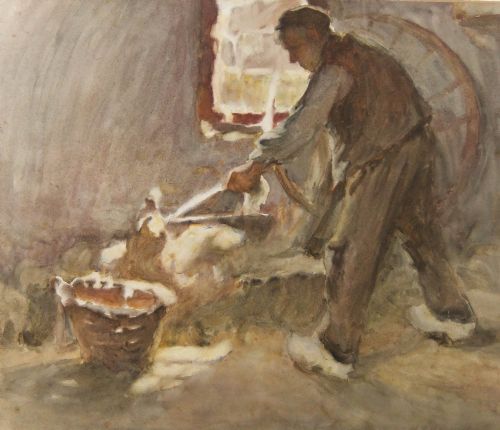
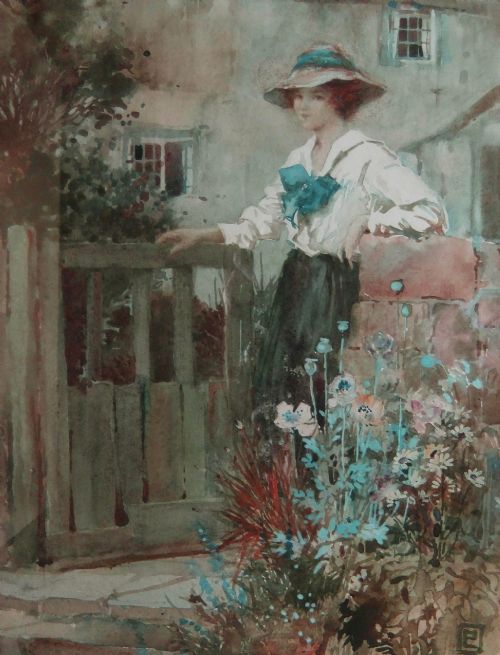
The pieces on this page span the Victorian era, the Edwardian period, and the decades leading up to the nineteen fifties. You encounter rural views of Yorkshire and Nottinghamshire, marine scenes from Cornwall, Norfolk, and Whitby, alongside urban glimpses of London. Artists working in these traditions recorded everyday life, from farmyards and blacksmiths to cottage gardens and market places.
Materials and technique
These works rely upon watercolour paint and pigment applied directly to paper supports. Artists utilised the white of the unpainted paper to capture bright light and luminous skies, building depth through transparent washes rather than heavy opaque layers. Painters manipulated wet-on-wet techniques to soften edges in depictions of evening light, mist, and coastal spray.
Surviving examples are typically presented behind glass within wooden frames, frequently finished in gilt wood to complement the palette of the picture. The combination of delicate pigments on paper required protective mounting to preserve the vitality of outdoor sketches and finished studio watercolours alike.
Listings feature works executed on paper using watercolour paint, housed within wood and gilt wood frames.
Qualities of distinction
The distinction between standard examples and exceptional works rests on the confidence of the brushwork and the management of natural light. Superior watercolours demonstrate a sure hand in capturing transient atmospheric effects, such as low tide on the coast or evening shadows across a Yorkshire valley, without overworking the pigment. The rhythm of the washes determines whether a landscape feels flat or possesses genuine spatial depth.
Compositional ambition also separates the output of these artists. Works that integrate figures naturally into a bustling market place, a harvest field, or a garden path demand greater skill than static topographical views. The best paintings convey a specific sense of place and time through economical marks that suggest movement and air.
William Banks Fortescue·Henry Silkstone Hopwood·Percy Lancaster·Edgar Woollatt·Arthur Reginald Smith·Fred Lawson·George Graham·Arthur Tucker·John Atkinson·Florence Hess·Owen Bowen·Lilian Stannard·Frederick William Hattersley·Sir Herbert Hughes-Stanton·Rowland Henry Hill·Frederick Mayor·W. Tatton Winter·William Hoggatt·David Woodlock·Frederick William Jackson·Fred Stead·Frank Rousse·Herbert John Finn·Robert Leslie Howey·George Frederick Nicholls
The English Impressionist Watercolour Glossary
- British Impressionism
- A painting style developed around the late nineteenth and early twentieth centuries characterised by a focus on light, everyday subjects, and plein-air observation. Practitioners adapted continental techniques to capture domestic landscapes and coastal environments.
- Watercolour
- A paint consisting of pigment suspended in a water-soluble vehicle, applied to paper. It allows for translucent washes and luminous effects that rely on the reflective quality of the paper underneath.
- Topographical
- Pertaining to the accurate depiction of a specific place or locality. Many artists in this tradition recorded recognisable towns, castles, and river valleys across Britain.
- Gilt wood
- Wood that has been coated with a thin layer of gold leaf or gold-coloured pigment. It forms the traditional finish for framing fine art watercolours from the Victorian and Edwardian periods.
- Plein air
- The practice of painting outdoors to capture direct observations of light, atmosphere, and weather. Artists took their paper and pigments into fields, harbours, and gardens.
English Impressionist Watercolour: Frequently Asked Questions
What subjects appear in these watercolours?
The selections focus on British landscapes, coastal harbours, rural farmyards, and urban street scenes. Artists painted Yorkshire dales, Norfolk shores, Cornish fishing ports, and London parks.
These compositions document gardens, cottages, markets, and regional working life from the Victorian era onward.
How should I frame and hang a watercolour?
Watercolours require framing behind glass with acid-free mounts to protect the paper and pigments from atmospheric moisture and handling damage. Frames in traditional gilt wood or simple timber complement the period aesthetic.
Keep these artworks away from direct sunlight to prevent the watercolour pigments from fading over time.
Which periods do these paintings represent?
The listings span from the late nineteenth century through the Edwardian era into the mid twentieth century. Dates extend from Victorian works through to the nineteen fifties.
Most pieces date from the early decades of the twentieth century when British impressionist landscape painting flourished.