




English Glass Table Lamp
An English glass table lamp brings heavy crystal, coloured fonts and warm brass mounts together to anchor a room.
English Glass Table Lamp
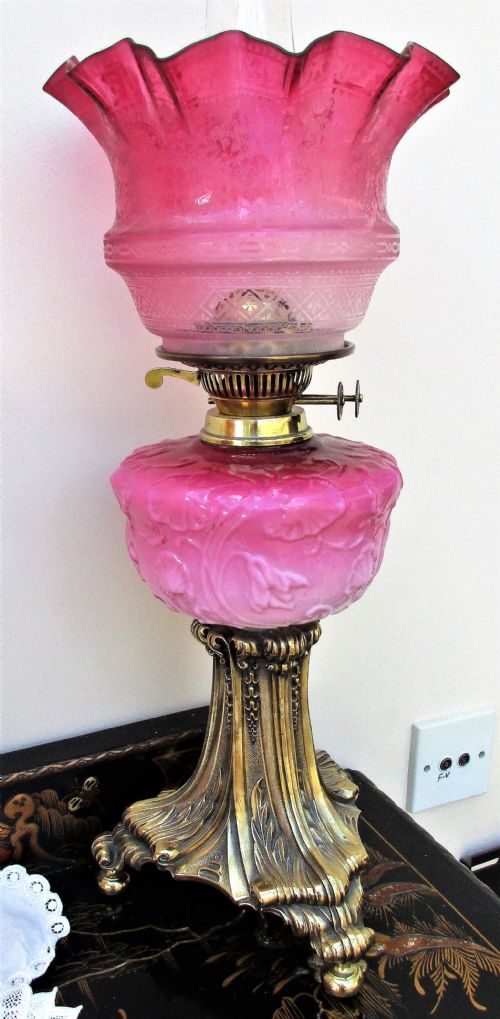
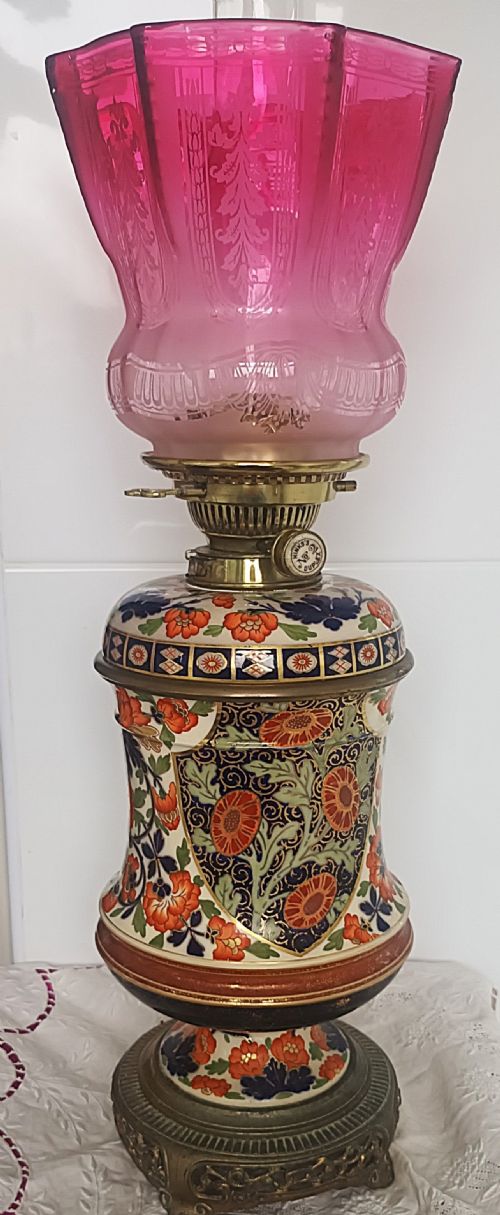
An English glass table lamp brings together the heavy optical clarity of cut crystal, the vibrant hues of cranberry and opaline glass, and the gleam of brass or gilt metal mounts. These pieces range from converted Victorian and Edwardian oil and paraffin lamps to Georgian twisted vessels and Art Deco designs.
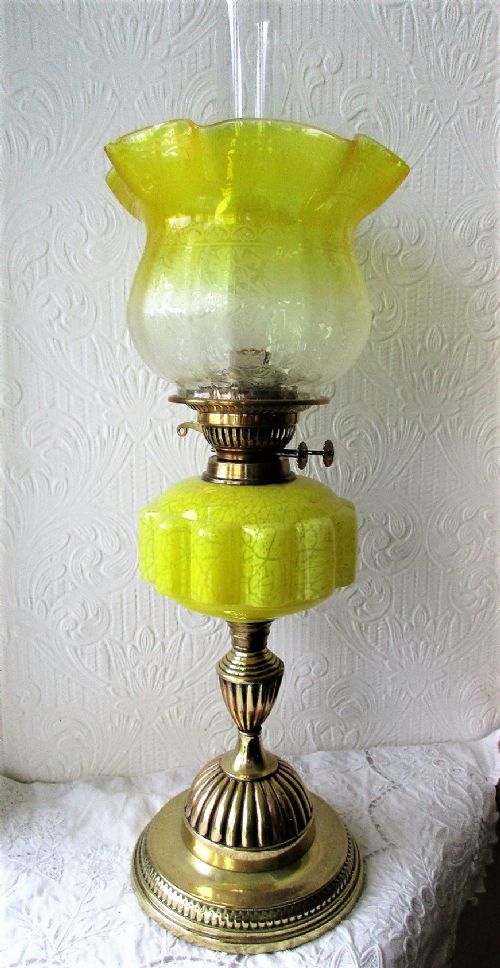
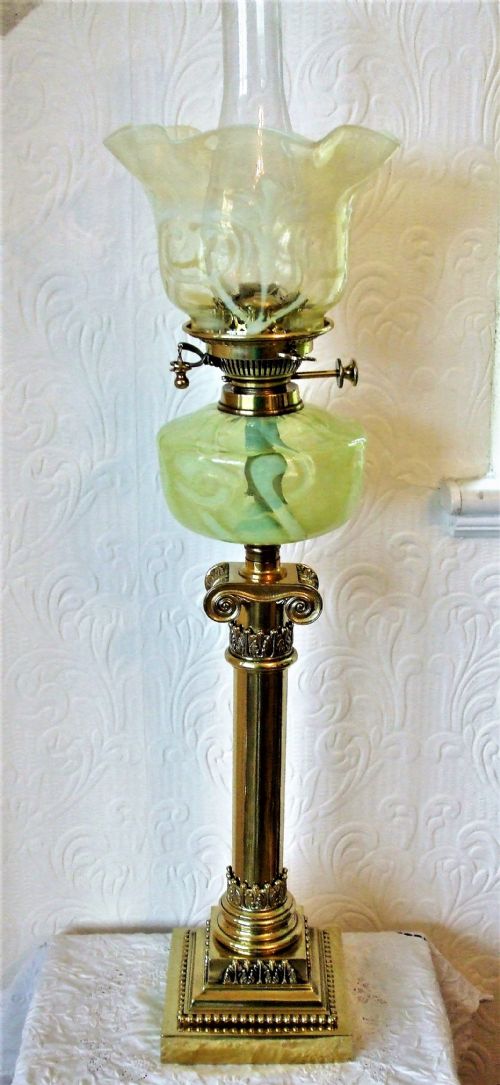
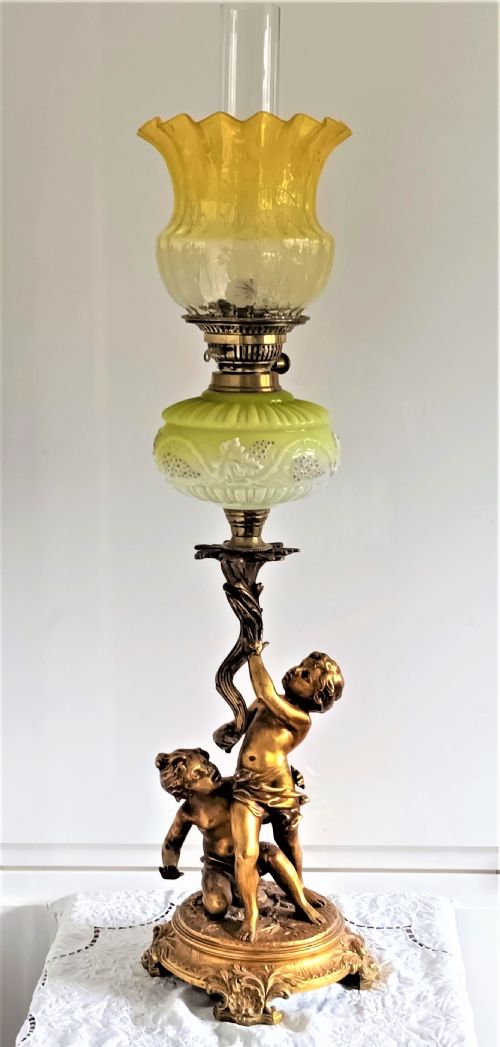
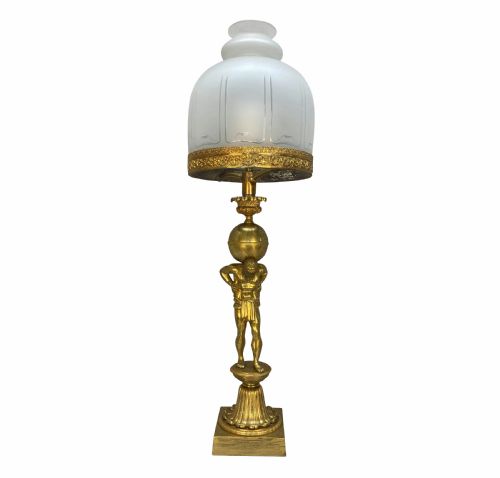
The most common examples on this page are Victorian and nineteenth-century glass column oil lamps, often mounted on brass bases with elaborate opaline or cut glass fonts. Buyers also encounter Regency gilt-bronze and milk glass examples alongside twentieth-century mercury glass and art deco pieces.
Materials and construction
Makers combined blown or moulded glass with heavy cast brass, gilt bronze, and chrome to give these lamps structural stability and visual weight. Cut glass components required skilled hand-wheel cutting to create deep facets that catch and refract light.
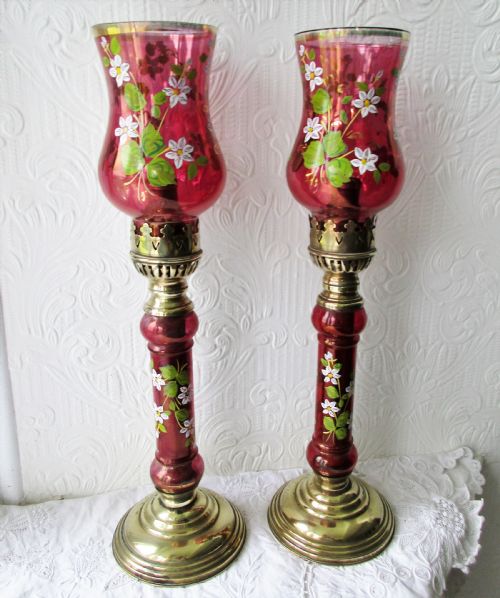
Vessels utilise cranberry glass, blue cut glass, frosted finishes, and white milk glass, frequently embellished with enamel or gilt decoration. Metal mountings, columns, and burners were threaded or pinned securely to the glass bodies.
Listings feature pieces spanning the eighteenth century, Regency period, Victorian era, Edwardian period, and Art Deco design movements.
Assessing quality
The distinction between ordinary production and finer work lies in the depth of the glass cutting, the crispness of the brass or gilt-bronze casting, and the overall proportion of the piece. Heavy lead crystal columns with sharp, hand-polished facets stand apart from lighter moulded glass.
Maker attribution and the integrity of the original mounts, burners, and collars elevate a piece significantly. Finer examples retain matching pairs, substantial metal bases, and unblemished enamel or gilt highlights.
Hinks·Taylor Tunnicliff·Messenger·Harrods·Osler
The English Glass Table Lamp Glossary
- Cranberry glass
- A rich red transparent glass coloured with gold chloride during the manufacturing process. It appears frequently in nineteenth-century fonts and shades.
- Opaline glass
- An opaque or translucent pale glass, often white or pink, used to create soft light diffusion in Victorian and Edwardian lamps.
- Mercury glass
- A double-walled blown glass object silvered on the interior with a liquid mercury amalgam, creating a reflective mirror finish popular in the twentieth century.
- Cut glass
- Glass decorated by grinding facets and patterns into the surface using a rotating wheel. Deep, sharp cutting indicates higher quality craftsmanship.
- Font
- The oil or fuel reservoir portion of a lamp, typically made of coloured or cut glass resting upon a column or base.
English Glass Table Lamp: Frequently Asked Questions
How do I date an English glass table lamp?
Dating relies on examining the materials, manufacturing techniques, and burner mechanisms. Nineteenth-century examples often feature heavy brass collars and hand-cut crystal columns, whereas Edwardian and Art Deco pieces introduce opaline shades and chrome or simpler metalwork.
Looking at the construction of the base and the type of glass helps place a piece within periods ranging from the Georgian era through to the 1930s.
Were these lamps originally oil lamps?
Many glass and brass table lamps from the nineteenth century started life as paraffin or oil burning lamps before being converted to electricity later in their lives. Burner assemblies and threaded galleries often remain intact even after rewiring.
Later twentieth-century examples, particularly from the Art Deco period, were frequently manufactured specifically as electric table lights from the outset.
How should I clean a vintage glass lamp?
Glass components benefit from gentle washing with warm soapy water and a soft cloth to remove dust and grime without damaging enamel or gilt details. Brass and gilt-bronze mounts require careful dusting and should be kept dry to preserve their natural patination.
Harsh chemical cleaners must be avoided around painted or gilded surfaces to prevent accidental removal of the original decoration.
Are pairs difficult to find?
Matched pairs of nineteenth-century glass and brass table lamps or candle-lamps appear less frequently than single examples due to the high attrition rate over time. When matching columns or cut crystal fonts survive together, they form a striking decorative set for sideboards or mantels.
Single lamps dominate the selection, making matched pairs particularly notable when they become available.