



English Glass Lantern
An English glass lantern brings a clean architectural presence to a hallway, built from brass, bronze, and glass to catch the light.
English Glass Lantern
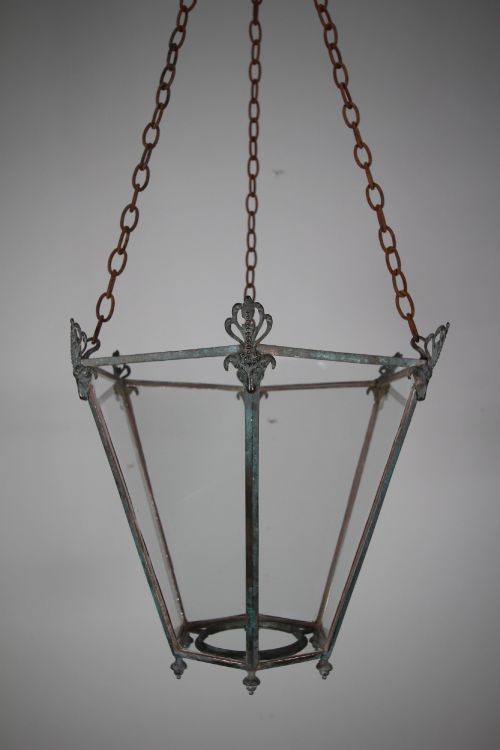
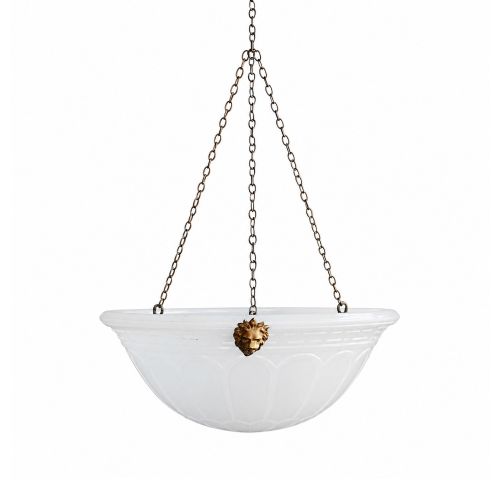
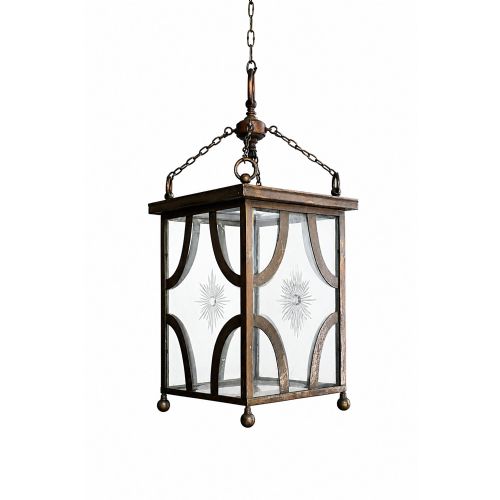
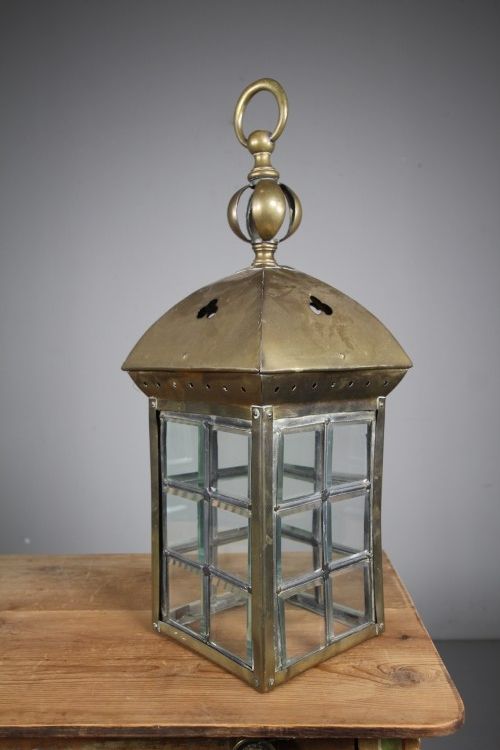
An English glass lantern serves primarily as overhead illumination for corridors, vestibules, and entrance halls, utilising hanging frames of brass, iron, and copper. The examples found here span the nineteenth and early twentieth centuries, capturing periods from Victorian and Edwardian to Arts and Crafts and Gothic Revival.
The most common form met on this page is the brass hall lantern, often housing multiple lights behind convex or leaded glass panes. These pieces range from simple single-light wrought iron fixtures to grand gilded bronze and convex designs intended for substantial spaces.
Materials and construction
Frames are constructed from cast or polished brass, wrought iron, bronze, and copper, joined to hold glazed panels securely in place. Glass elements vary from clear convex panes and cut glass to moonstone and stained leaded glass.
Metal components are frequently gilded, bronzed, or left in their natural polished state, while leaded glass panels rely on traditional soldered came work to bind individual coloured pieces together.
English Glass Lantern Retail Price Guide 2026
Typical asking prices for english glass lantern among the pieces listed under this phrase on Sellingantiques today, from the lower quarter to the upper quarter. They describe what is for sale here now, not the wider market.
Design influences across the inventory include Gothic Revival, Arts and Crafts, Aesthetic Movement, and Rococo Revival styles.
Gradations in quality
Quality rests in the weight of the metal casting, the thickness of the glass, and the crispness of decorative detailing such as crestings or ceiling bands. Substantial cast brass frames and heavier gauge copper or bronze indicate superior workshop production.
The sophistication of the glass work further separates standard examples from finer pieces, particularly where convex lenses, heavy cut glass, or intricate leaded stained glass are employed.
The English Glass Lantern Glossary
- Convex glass
- Curved glass panels that project outward, designed to diffuse light more widely across a hallway. They require specialised moulding techniques.
- Hall lantern
- A ceiling-hung lighting fixture specifically scaled for narrow entryways and corridors. These fixtures often feature enclosed glass sides to protect the flame or bulb from drafts.
- Came
- A slender strip of lead, cast with a grooved channel, used to hold together pieces of stained or leaded glass. It provides both structural support and linear definition.
- Moonstone glass
- An opalescent white glass that softens and diffuses illumination without heavy colouration. It appears frequently in early twentieth-century lighting.
- Cloche
- A bell-shaped or domed glass cover originally designed to protect garden plants, occasionally found in quarter-inch glass and copper frames. These share the protective glazing methods of hanging lanterns.
English Glass Lantern: Frequently Asked Questions
How do I hang a heavy brass lantern?
These fixtures require direct attachment to ceiling joists using a suitable mounting hook or bracket capable of supporting the combined weight of metal and glass.
Professional electrical installation ensures that the internal wiring safely connects to your mains supply while maintaining the structural balance of the hanging chain.
Are these lanterns wired for modern bulbs?
Many examples arrive with modern electrical fittings or have been adapted to accept standard contemporary bulbs while retaining their historic frames.
Checking individual listings confirms whether a piece retains its original wiring or has been recently updated for domestic use.
How do I clean stained leaded glass?
Gentle dusting with a soft cloth keeps leaded glass panels clear without placing undue pressure on the delicate soldered joints.
Avoid harsh chemical cleaners that might degrade the historic finish of the brass frame or loosen the lead came.
What defines an Edwardian lantern?
Edwardian lighting from the early twentieth century often favours lighter brass frames, clear glass pendants, and refined proportions suited to suburban homes.
These pieces typically display less heavy ornamentation than their Victorian predecessors, leaning towards cleaner lines and brighter metallic finishes.